Trump Faces Renewed Impeachment Push as Political Battle Intensifies in Washington
President Donald Trump is once again at the center of impeachment efforts as Democratic lawmakers revive calls for his removal over alleged abuses of presidential power. Here's what the latest impeachment campaign means and its prospects in Congress.
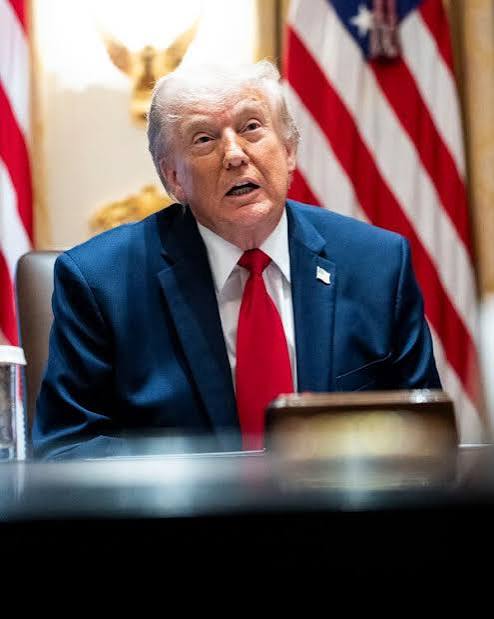
President Donald Trump has once again found himself at the center of an impeachment battle, as Democratic lawmakers renew efforts to remove him from office over allegations that he has exceeded his constitutional authority.
The latest impeachment campaign has reignited one of the most divisive debates in American politics, reviving memories of Trump's historic first term when he became the only U.S. president to be impeached twice by the House of Representatives. While the renewed push has energized critics of the president, political analysts say the chances of a successful removal remain slim given the current balance of power in Congress. (Factually)
Fresh Articles of Impeachment
Several Democratic members of the House of Representatives have introduced articles of impeachment against Trump, accusing him of violating the Constitution through actions they argue amount to abuse of presidential authority.
Among the allegations are claims relating to executive actions, foreign policy decisions, and the exercise of presidential powers that critics contend exceeded constitutional limits. Lawmakers backing the resolutions insist that Congress has a duty to hold the president accountable regardless of political consequences.
Supporters of the impeachment effort argue that the Constitution provides Congress with the authority to investigate and, where necessary, impeach a president accused of committing "high crimes and misdemeanors."
However, the filing of impeachment articles does not automatically trigger removal proceedings. Any resolution must first secure approval in the House before moving to the Senate, where a two-thirds majority is required for conviction and removal from office.
Political Reality
Despite renewed calls for impeachment, analysts believe the effort faces steep political hurdles.
Republicans continue to hold significant influence in Congress, making it highly unlikely that impeachment articles would receive sufficient bipartisan support to pass the House, let alone achieve the supermajority needed in the Senate.
Constitutional experts note that impeachment is as much of a political process as it is a legal one, requiring lawmakers to weigh constitutional principles alongside electoral considerations.
"As things stand, the numbers simply do not appear to favor removal," one Washington-based political analyst observed, reflecting a view shared by many congressional observers. (Factually)
White House Rejects Allegations
The Trump administration has dismissed the renewed impeachment campaign as politically motivated.
White House officials argue that the president has acted within the powers granted by the Constitution and accuse Democratic lawmakers of attempting to overturn the results of the presidential election through legislative means rather than at the ballot box.
Administration spokespersons have repeatedly described impeachment efforts as partisan attacks designed to distract from policy achievements and energize political opponents ahead of the 2026 midterm elections. (The Guardian)
Trump himself has consistently maintained that previous impeachment proceedings against him were "witch hunts," insisting that he committed no impeachable offense during either his first or current administration.
Historic Background
Trump occupies a unique place in American political history.
During his first term, he became the first U.S. president to be impeached twice.
The first impeachment, in 2019, centered on allegations that he pressured Ukraine to investigate then-presidential candidate Joe Biden while withholding military aid. The Senate acquitted him in early 2020.
His second impeachment followed the January 6, 2021, attack on the U.S. Capitol, when the House accused him of inciting an insurrection. Although most senators voted to convict, the total fell short of the two-thirds threshold required for removal. (The Guardian)
Those two impeachments remain defining moments in modern American political history.
Trump's Bid to Erase Impeachment Record
In a separate but related political development, Trump and several Republican allies have reportedly been pushing for Congress to adopt a symbolic resolution seeking to "expunge" his two earlier impeachments.
Legal scholars, however, have pointed out that the U.S. Constitution provides no mechanism for erasing an impeachment once the House has voted to adopt articles against a president.
As a result, any such congressional action would carry symbolic rather than legal significance.
Supporters say the proposal would correct what they regard as politically motivated impeachments, while critics argue it would merely reopen contentious chapters of American political history. (The Guardian)
Constitutional Process
Under the U.S. Constitution, impeachment begins in the House of Representatives, which has the sole authority to approve articles of impeachment by a simple majority vote.
If approved, the process moves to the Senate, where senators conduct a trial presided over by the Chief Justice when the president is the accused.
Conviction and removal require the support of two-thirds of senators present.
Only three U.S. presidents - Andrew Johnson, Bill Clinton and Donald Trump - have been impeached by the House. Richard Nixon resigned before the House voted on articles of impeachment during the Watergate scandal. No elected U.S. president has ever been removed from office through impeachment and Senate conviction. (congress.gov)
Political Implications
The renewed impeachment debate is expected to intensify partisan divisions ahead of the 2026 congressional midterm elections.
Democrats argue that congressional oversight remains essential to protecting constitutional governance, while Republicans contend that repeated impeachment efforts risk undermining democratic institutions by turning an extraordinary constitutional remedy into a routine political weapon.
Political observers say the debate is likely to dominate Washington in the coming months, regardless of whether the impeachment resolutions ultimately advance.
For Trump, the renewed scrutiny represents another chapter in a political career marked by unprecedented legal and constitutional battles. For Congress, it poses another test of its ability to balance partisan politics with constitutional responsibility.
Whether the latest impeachment effort gains momentum or fades in committee, it has once again thrust one of America's most contentious constitutional processes back into the national spotlight.