Trump Admits Mass Deportation Policy Was “Too Tough” After Republican Midterm Setbacks
US President Donald Trump admits his mass deportation campaign may have gone too far, acknowledging that strict immigration enforcement hurt Republicans in the 2026 midterm elections as he signals willingness to negotiate a deal with Democrats.
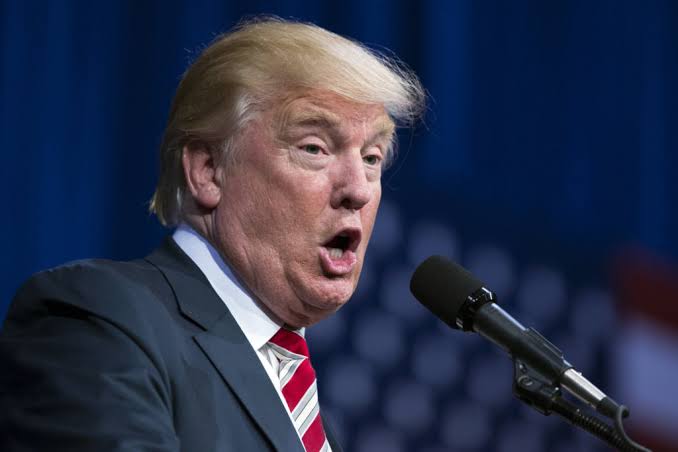
US President Donald Trump has acknowledged that his administration’s aggressive mass deportation policy may have been too harsh, admitting that the approach could have cost Republicans political support following the party’s disappointing performance in the 2026 midterm elections.
In an interview with CBS News’ 60 Minutes, which aired on Sunday, November 8, Trump conceded that his administration’s immigration crackdown had both helped and hurt his political standing. He acknowledged that deporting undocumented immigrants who had established jobs, paid taxes and built lives in the United States had generated public opposition.
Asked by correspondent Ross Douthat whether his deportation policy had gone too far, Trump replied: “I think it was too tough. I think it might be too tough, yeah.”
The admission represents a notable qualification of one of the defining promises of his political career: removing millions of undocumented immigrants and strengthening border enforcement.
Trump also suggested that he was willing to work with congressional Democrats on an immigration agreement that could allow some long-term undocumented residents to remain in the country under certain conditions.
Trump acknowledges political cost of deportation campaign
During the interview, Trump defended his administration’s record on border security, maintaining that his strict approach had delivered results.
“I think I got an A-plus for closing up the border,” he said, adding that he received “very high marks for getting the bad ones out.”
However, the president acknowledged that the administration’s enforcement operations had also affected people who were not involved in serious criminal activity.
He specifically referred to undocumented immigrants working in landscaping companies, hotels and other businesses, some of whom had lived in the country for years and paid taxes.
Trump said public opinion was divided over whether such individuals should be deported simply because they entered or remained in the United States unlawfully.
He admitted that this aspect of the policy had created political difficulties for his administration.
“I get hurt because we also took people that had good jobs,” he said, explaining that the deportation campaign had extended beyond individuals accused or convicted of serious crimes.
The president subsequently acknowledged that the approach may have alienated voters and contributed to Republican losses.
Trump described the policy as one that had simultaneously strengthened his support among some voters while creating opposition among others.
Midterm setbacks raise questions about immigration strategy
Trump’s comments came after Republicans suffered significant setbacks in the November 2026 midterm elections, losing control of both chambers of Congress to Democrats.
The results have increased scrutiny of the administration’s major policy decisions, including immigration enforcement, the economy and the war with Iran.
Immigration had been central to Trump’s political message, particularly during his successful 2024 presidential campaign. He repeatedly promised to secure the US-Mexico border, expand deportations and remove people he described as criminal immigrants.
Since returning to the White House, his administration has expanded Immigration and Customs Enforcement operations, including arrests and raids in workplaces, homes and public spaces.
Although the administration has defended the operations as necessary to protect public safety and enforce immigration laws, critics have raised concerns about the treatment of detainees, family separations and the targeting of people without criminal convictions beyond immigration violations.
The political implications have been particularly significant in some heavily Latino areas, where support for Republicans had increased during the 2024 presidential election but subsequently weakened.
The figures suggest that although border security remains an important issue for many voters, the methods used to enforce immigration laws can also influence public support.
Trump proposes possible immigration deal with Democrats
Beyond acknowledging the shortcomings of his deportation strategy, Trump indicated that he would consider negotiating with Democrats to establish a compromise on immigration.
He suggested that undocumented immigrants who had lived in the United States for 10 or 15 years, maintained employment and contributed to the economy could be considered for an arrangement allowing them to remain.
At the same time, he maintained that people involved in serious crimes, including murder, rape and drug trafficking, should continue to face deportation.
Trump described the possibility of reaching an agreement with Democrats as achievable, expressing confidence that members of the opposition party could cooperate with his administration.
“I would love to do something on immigration with the Democrats,” he said.
However, the president did not provide a detailed proposal outlining eligibility requirements, legal protections or the conditions under which undocumented immigrants might qualify to stay.
Any agreement would also require negotiations with the incoming Democratic-controlled Congress, where lawmakers are expected to pursue stronger oversight of federal immigration agencies.
Stephen Miller appointment raises questions over policy change
Despite Trump’s suggestion that his administration may need a less aggressive approach, his recent appointment of Stephen Miller as White House chief of staff has raised questions about whether a significant policy change is imminent.
Miller has been one of the principal architects of Trump’s hardline immigration agenda and has consistently advocated strict enforcement measures.
His elevation to the powerful position came shortly before the president’s 60 Minutes interview was broadcast.
The appointment has drawn criticism from Democratic leaders, who argue that promoting a key figure behind the deportation campaign does not demonstrate a genuine change in direction.
Senate Democratic Leader Chuck Schumer questioned the president’s remarks, pointing to Miller’s appointment as evidence of the contradiction between Trump's public acknowledgment and his personnel decisions.
Meanwhile, Democrats have indicated that oversight of Immigration and Customs Enforcement and the Department of Homeland Security will be among their priorities when the new Congress takes office.
Will Trump change his mass deportation policy?
Trump’s admission has opened a new debate about the future of his immigration programme, particularly whether the administration will distinguish more clearly between undocumented immigrants with serious criminal records and those who have lived and worked in the country for extended periods.
For businesses, immigrant communities and families affected by the crackdown, the possibility of a negotiated arrangement could have significant consequences.
However, the president’s comments should not yet be interpreted as a formal reversal of his deportation policy. He has not announced a suspension of enforcement operations or introduced a specific legal pathway for undocumented residents.
His administration continues to defend border security and the removal of people who are unlawfully present in the country.
The central question is whether the president’s acknowledgment of the political and social costs of mass deportation will translate into changes in enforcement priorities or legislation.
For now, Trump has conceded that his approach may have been too tough, while leaving the details of any proposed compromise unresolved. The coming congressional negotiations will provide a clearer indication of whether his remarks signal a policy adjustment or simply an acknowledgment of the political consequences of his immigration strategy. (CBS News)