Tinubu’s Temporary Petrol Discount Sparks Mixed Reactions in Nigeria
Tinubu’s government has introduced a 30-day petrol discount through NNPC Retail to ease rising fuel costs, but opposition parties question its impact, timing and sustainability.
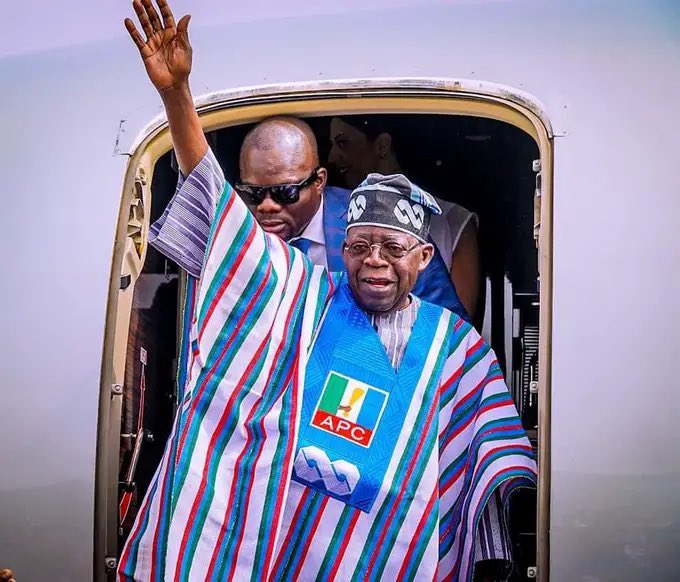
Plans by President Bola Tinubu’s administration to introduce temporary relief on petrol prices have sparked mixed reactions across Nigeria, with the Federal Government describing the measure as necessary support for struggling households while opposition parties and economic observers question its adequacy, timing and long-term implications.
The intervention, implemented through the Nigerian National Petroleum Company Limited (NNPC Ltd), comes amid growing public frustration over rising petrol prices, transportation costs and the wider cost-of-living crisis. While the government insists that the measure does not amount to a return to the controversial fuel subsidy regime abolished in May 2023, critics argue that the intervention raises questions about the consistency of its economic reform agenda.
According to the Presidency’s October 9 announcement, NNPC Retail has agreed to forgo its petrol retail profit margin and sell fuel at cost for an initial 30-day period to cushion the effects of global crude oil price volatility on Nigerian households. The government is also negotiating measures to moderate petrol supply costs.
How the temporary petrol discount will work
The latest intervention follows a ₦66-per-litre discount introduced by NNPC Retail on October 1 to mark Nigeria’s 66th Independence anniversary. The company subsequently announced that the promotion would continue until October 31.
Finance Minister and Coordinating Minister of the Economy, Taiwo Oyedele, said the government’s latest arrangement was designed to provide relief without restoring the blanket subsidy system that previously placed a substantial financial burden on public finances.
Under the arrangement, NNPC Retail would relinquish its retail profit margin rather than sell petrol above its cost price. The government hopes other fuel marketers will consider similar measures to help ease pressure on consumers.
The Presidency illustrated the arrangement with a hypothetical example: if NNPC’s landing cost for petrol is ₦1,300 per liter, the company would sell at that price instead of adding its usual retail margin.
However, the example is not a nationwide pump-price guarantee. The actual price motorists pay may vary according to supply costs, location and the terms under which individual outlets operate.
Government proposes ₦1,350 petrol supply-cost ceiling
Beyond the temporary discount, the Federal Government is negotiating a proposed ceiling of approximately ₦1,350 per litre on petrol’s ex-gantry or landing cost. Under the proposed arrangement, refiners and importers would initially absorb costs above the ceiling and recover the difference later when market conditions become more favorable.
The government says this approach could help reduce sudden price increases caused by volatility in international crude oil markets and foreign exchange movements. Reuters reported on October 8 that the proposed measure would require refiners and importers to absorb temporary increases in supply costs, with the possibility of recovering losses when costs decline.
Nevertheless, the final terms, recovery mechanism and financial implications of the proposed ceiling remain important questions for consumers and market participants. The ceiling also concerns supply costs, not necessarily the final pump price.
Opposition parties reject the initiative
The announcement has attracted criticism from opposition figures and political movements, many of whom argue that a short-term discount cannot adequately address the economic difficulties Nigerians have experienced since the removal of fuel subsidies.
Former Vice-President Atiku Abubakar questioned the timing and effectiveness of the initiative, describing it as an election-driven measure that offers temporary relief without addressing the underlying problems affecting fuel prices and household purchasing power.
The Obidient Movement, the Nigeria Democratic Congress and the presidential campaign organisation of Oyo State Governor Seyi Makinde have also rejected the proposal, describing it as inadequate and politically motivated. The Social Democratic Party and the Obi-Kwankwaso Movement subsequently joined the criticism, arguing that Nigerians need lasting solutions to high energy and transportation costs rather than short-term interventions.
Their concerns reflect a broader debate about whether temporary price relief can deliver meaningful economic benefits without creating uncertainty about the government’s commitment to market-based fuel pricing.
APC defends Tinubu’s decision
The Lagos State chapter of the All Progressives Congress (APC), however, has defended the administration’s decision.
The party criticized opposition groups for rejecting the initiative, arguing that efforts to reduce the burden of rising transportation and living costs should be assessed on their practical benefits to citizens. The Lagos APC maintained that temporary interventions could play a legitimate role in economic management, particularly when households and businesses face sudden increases in essential expenses.
It also urged the government to ensure transparency, explain how beneficiaries would access the relief and communicate what would happen when the initial intervention expires. The party acknowledged that the discount alone would not resolve Nigeria’s wider economic challenges, including high transport costs, distribution inefficiencies and pressure on household incomes.
Will Nigerians feel the impact?
For millions of Nigerians, the central question is whether the initiative will translate into noticeably lower transport fares, food prices and business operating costs. Petrol remains an important input for commercial transport operators, small businesses and households that depend on petrol-powered generators. Consequently, sustained increases in fuel prices can affect the cost of moving goods, running businesses and meeting everyday expenses. However, the size of the benefit will depend on the actual discount available, how widely it is implemented and whether transport operators and businesses pass any savings on to consumers. There are also concerns about accessibility. Reports have highlighted differences in the prices available to customers using NNPC’s digital payment arrangements and those paying directly at the pump at some locations. Such differences could affect who benefits most from the promotion.
The challenge beyond a 30-day discount
Nigeria’s fuel-price debate remains closely connected to the subsidy removal announced by Tinubu on May 29, 2023. That decision ended the government’s previous system of broadly subsidizing petrol consumption and shifted prices further towards market conditions.
The latest intervention therefore presents the administration with a policy challenge: providing immediate relief without creating uncertainty about future pricing arrangements or the financial risks borne by public enterprises and private suppliers.
Ultimately, the impact of the temporary petrol discount will depend on its implementation, transparency and measurable benefits to consumers. Nigerians will also be watching for clear information about the programme’s duration and any additional measures to address transportation expenses, inflation and household purchasing power.
For now, the policy has opened another debate over how the government can balance market-oriented reforms with demands for immediate relief from economic hardship.