Tinubu’s Reforms Push Monthly FAAC Allocations Above N2 Trillion, Oyedele Says
Finance Minister Taiwo Oyedele says President Bola Tinubu’s economic reforms have pushed monthly FAAC allocations above N2 trillion, with a record N2.8 trillion shared in June 2026.
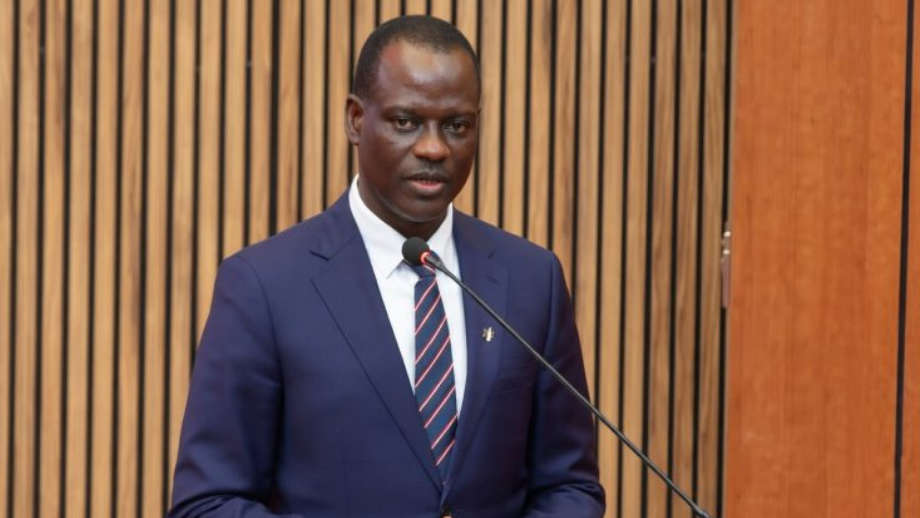
Nigeria’s monthly Federation Account Allocation Committee (FAAC) distributions have risen above the N2 trillion mark following economic reforms introduced by President Bola Ahmed Tinubu, Minister of Finance and Coordinating Minister of the Economy, Taiwo Oyedele, has said.
Oyedele attributed the sharp increase in funds available for distribution among the Federal Government, states and local government councils to key reforms, particularly the removal of the petrol subsidy and the unification of the foreign exchange market.
The minister disclosed on Monday in Owerri, Imo State, while declaring open the 2026 National Council on Finance and Economic Development retreat, themed “Strengthening Fiscal Federalism for Equity, Sustainable Development and Economic Resilience in a Volatile Global Economy.”
According to Oyedele, the increase represents a significant change from the average monthly FAAC allocations of about N300 billion under previous administrations.
FAAC allocations reach record levels
Oyedele said the reforms implemented by the Tinubu administration had significantly expanded government revenue and, consequently, the amount available for distribution through FAAC.
He pointed to June 2026, when FAAC recorded a record N2.8 trillion disbursement, as evidence of the transformation in Nigeria's fiscal position. (Vanguard News)
The development follows a series of FAAC meetings in which monthly distributions have repeatedly crossed the N2 trillion threshold.
For example, the three tiers of government shared N2.036 trillion from March 2026 revenue. The amount represented the second time in the year that FAAC disbursements exceeded N2 trillion.
The March distribution was drawn from gross revenue of N2.364 trillion, including N1.320 trillion in statutory revenue and N515.391 billion from Value Added Tax (VAT), alongside a N200 billion augmentation. (FMInfo)
Subsidy removal changes government revenue
One of the most consequential economic decisions taken by Tinubu after assuming office in May 2023 was the removal of the petrol subsidy.
The policy immediately changed the structure of government finances by eliminating a major expenditure associated with keeping petrol prices artificially low.
Although the reform triggered significant economic hardship, including higher transportation and living costs, the Federal Government has maintained that it was necessary to redirect resources towards more productive areas and strengthen public finances.
Oyedele's latest comments suggest that the revenue consequences of the reform are now becoming increasingly visible in FAAC distributions.
The minister also identified foreign exchange market unification as another major reform responsible for improving government revenue.
The policy ended multiple official exchange rates and moved the naira towards a more market-determined system, with significant implications for government revenue, particularly from dollar-denominated oil earnings.
States benefit from higher allocations
The increase in FAAC revenue has important implications for Nigeria's 36 states and 774 local government areas.
State governments depend heavily on monthly federal allocations to finance salaries, infrastructure, healthcare, education and other public services.
Oyedele said the increased revenue had helped ease the pressure on state governments, noting that for nearly three decades it had been common for many states to struggle to meet salary obligations.
According to him, no state currently faces the same level of salary-payment difficulty under the new revenue arrangement.
However, the minister warned that higher allocations should not be mistaken for sustainable economic prosperity.
‘Federation cannot share its way into prosperity’
Oyedele urged state and local governments to use the additional resources as a foundation for economic development rather than relying indefinitely on FAAC allocations.
He warned that simply receiving larger monthly allocations would not automatically translate into prosperity.
Instead, states should invest in local productivity, infrastructure, human capital and basic public services, while developing their own sources of revenue.
“Ultimately, the federation cannot share its way into prosperity,” Oyedele said, emphasising the need for governments to create productive economies rather than depend solely on distributing federally collected revenue.
He encouraged states to position themselves as economic platforms capable of attracting investors, supporting businesses and creating employment opportunities.
Call for stronger internally generated revenue
The minister also challenged states and local governments to increase their internally generated revenue (IGR).
Nigeria's heavy dependence on federally collected oil and non-oil revenues has long been identified as a structural weakness in the country's fiscal system.
Oyedele argued that states would be more resilient if they could generate a larger proportion of their resources internally.
A stronger IGR base would also help states withstand fluctuations in oil prices, production levels, global economic conditions and other factors that can affect federal revenue.
The minister's position is consistent with broader calls for Nigerian states to develop industries and economic sectors capable of generating sustainable employment and tax revenue.
Calls for review of revenue-sharing formula
Oyedele also called for an urgent review of Nigeria's revenue allocation formula to promote greater equity across the country's 774 local government areas.
The issue of revenue sharing has remained contentious, with debates over how resources should be distributed between the Federal Government, states and local governments.
The minister argued that the current fiscal arrangement should be examined in the context of equity, development needs and the responsibilities assigned to each level of government.
He also called for stronger fiscal responsibility and debt sustainability frameworks, particularly as increased revenue could encourage subnational governments to expand borrowing and spending.
Higher revenue amid economic hardship
The increase in FAAC allocations comes against the backdrop of Nigeria's difficult economic transition.
Tinubu's reforms have significantly altered the country's fiscal and monetary landscape, but they have also contributed to a painful adjustment for households and businesses.
The removal of the petrol subsidy initially drove up transport and energy costs, while exchange-rate reforms contributed to higher import costs and inflationary pressures.
The government has subsequently introduced several interventions designed to cushion vulnerable Nigerians.
Oyedele said the Federal Government had expanded targeted programmes, including cash transfers to 15 million vulnerable households and the NG-CARES programme, to mitigate the impact of the reforms.
The government has also introduced additional programmes under its broader Renewed Hope agenda aimed at strengthening social protection and human capital development. (State House Nigeria)
Revenue growth must translate into development
The central question now is whether the higher FAAC allocations will translate into measurable improvements in Nigerians' living standards.
For state governments, increased revenue creates an opportunity to address infrastructure deficits, improve healthcare and education, pay workers promptly and support local businesses.
But without effective financial management and accountability, higher allocations could simply result in higher government spending without corresponding improvements in public services.
Oyedele's warning that Nigeria cannot “share its way into prosperity” therefore highlights an important distinction: revenue growth is a means, not an end.
The ultimate objective is to transform increased public revenue into productive investments capable of expanding economic opportunities.
Tinubu reforms reshape Nigeria's fiscal landscape
The latest FAAC figures provide a clear indication that Nigeria's fiscal environment has changed considerably since Tinubu assumed office.
From the previous era of much smaller monthly distributions, allocations have now repeatedly crossed the N2 trillion threshold, with June 2026 reaching a reported record N2.8 trillion.
The Federal Government sees this as evidence that its reforms are strengthening revenue mobilisation and government finances.
Critics, however, continue to emphasise that revenue increases must be accompanied by measures that reduce the cost of living and improve household welfare.
For states and local governments, the challenge is equally clear: convert the additional resources into productive investment rather than simply increasing recurrent expenditure.
As Nigeria continues its economic transition, the sustainability of higher FAAC revenues will depend not only on federal reforms but also on stronger domestic production, efficient tax collection, responsible spending and economic diversification.
For Oyedele, the record allocations represent an opportunity but one that governments at every level must use wisely if higher revenue is ultimately to produce jobs, infrastructure, stronger public services and improved living standards for Nigerians.