Tinubu’s Gamble on Tunji Disu: Can New Police Chief Reset Nigeria’s Security Architecture?
President Bola Tinubu appoints Tunji Disu as Acting Inspector-General of Police amid rising insecurity. Can his reform agenda restore trust, tackle banditry, and modernize the Nigeria Police Force?
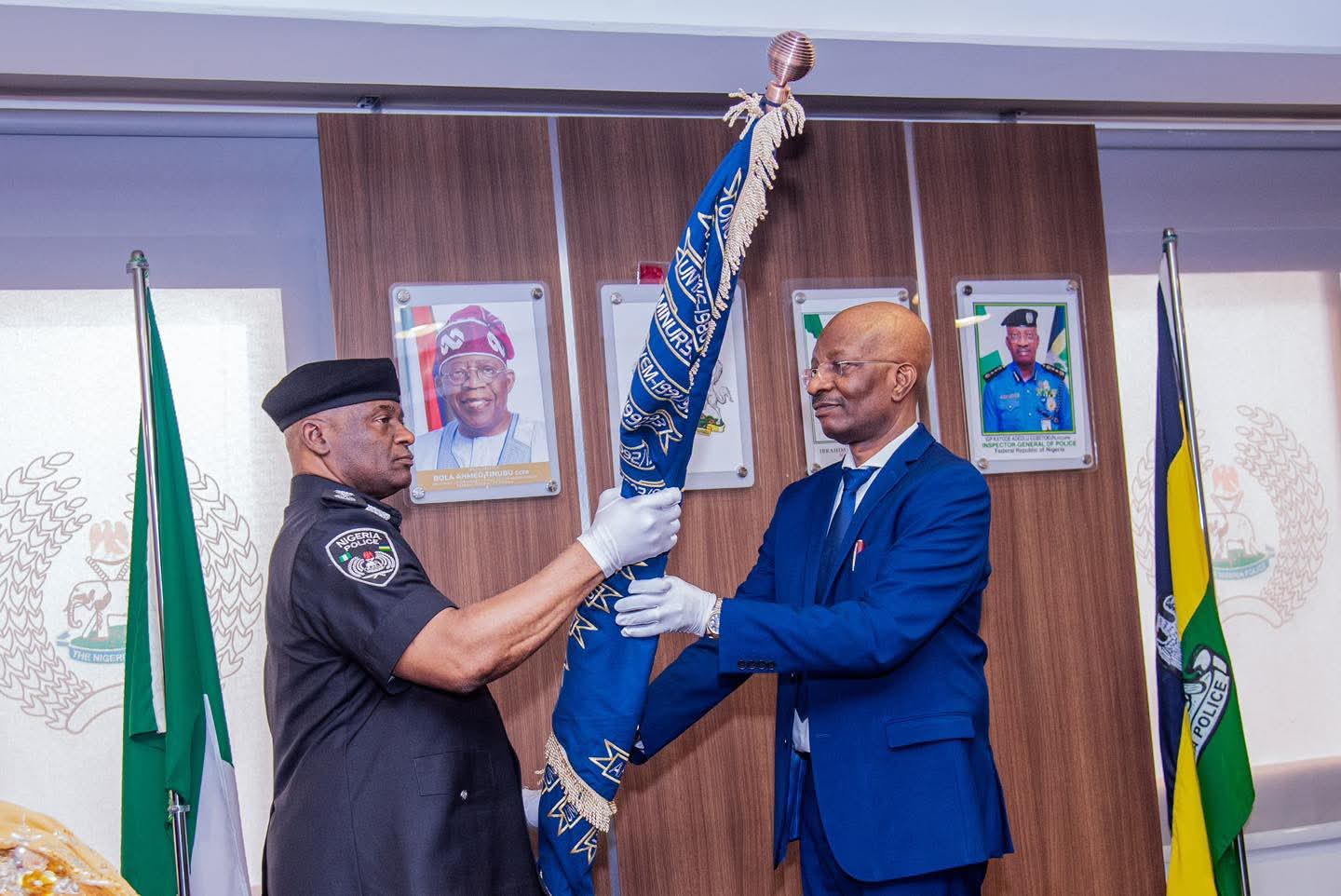
In a moment heavy with symbolism and urgency, Bola Tinubu personally decorated Tunji Disu as Acting Inspector-General of Police at the State House in Abuja on Wednesday, charging him to leave the Nigeria Police Force better than he met it.
But beyond the ceremony and commendations lies a deeper question: Is Disu’s appointment a turning point in Nigeria’s fight against banditry, terrorism, and institutional decay - or simply another leadership reshuffle in a Force long burdened by structural challenges?
A Leadership Change at a Critical Juncture
Tinubu described Disu’s elevation as coming at “a defining moment for our nation’s security.” Nigeria continues to grapple with armed banditry in the North-West, insurgency in the North-East, oil theft in the Niger Delta, and violent crime across urban centres.
“You assume this responsibility at a defining moment for our nation’s security,” the President said, referencing his prior working relationship with Disu during his tenure as Governor of Lagos State (1999 – 2007).
Tinubu’s expectations were explicit: discipline, professionalism, inter-agency cooperation, and restoration of public confidence.
The outgoing Inspector-General, Kayode Egbetokun, resigned barely 24 hours before the decoration ceremony, officially citing family reasons. However, Presidency sources indicated he was asked to step aside following a meeting at the Presidential Villa
The transition underscores the high stakes surrounding Nigeria’s internal security management.
The Disu Profile: Operational Credibility or Political Continuity?
Born on April 13, 1966, Disu joined the Police Force in 1992. He gained national prominence as Commander of the Rapid Response Squad (RRS) in Lagos, where the unit won the Best Anti-Crime Squad award in West Africa in 2016.
In 2021, he was appointed head of the Intelligence Response Team, replacing suspended officer Abba Kyari. Prior to his new role, Disu served as Assistant Inspector-General in charge of the Force Criminal Investigation Department (FCID) Annex, Alagbon.
However, his appointment comes just 48 days before his scheduled retirement at age 60 on April 13, 2026. Under the amended Police Act 2020, an Inspector-General can serve a single four-year tenure regardless of age, potentially allowing Disu to remain in office until 2030.
Critics argue that the timing raises questions about succession planning within the Force, while supporters say his experience makes him a stabilizing choice.
Reform Promises: Zero Tolerance and Human Rights
In his acceptance speech, Disu struck an emotional and reform-driven tone. “The days of impunity are over,” he declared. “The citizen is the boss.” He acknowledged long-standing institutional weaknesses: a trust deficit with communities, outdated systems, resource gaps, and misconduct within ranks.
His reform blueprint rests on three pillars:
- Professionalism and Modernization – Embracing intelligence-led policing, forensic investigation, digital tools, and evidence-based practices.
- Accountability and Integrity – Strengthening internal oversight mechanisms and enforcing discipline without regard to rank.
- Community Partnership – Making community policing central to operations.
The emphasis on human rights compliance signals an attempt to distance the Force from past allegations of abuse, particularly during the 2020 #EndSARS protests.
The Structural Challenge: Beyond Leadership
While Tinubu’s endorsement provides political backing, Nigeria’s policing crisis is structural, not merely managerial.
The Nigeria Police Force remains Africa’s largest, yet one of its most overstretched. With an estimated officer-to-citizen ratio below UN recommendations, funding constraints, and outdated equipment, reform requires more than rhetoric.
Inter-agency rivalry between the police, military, DSS, and civil defence corps has historically hampered coordinated security responses. Tinubu’s directive to “enhance inter-agency collaboration” acknowledges this institutional friction.
Moreover, insecurity today is increasingly transnational - arms trafficking, cybercrime, and cross-border insurgency demand intelligence sophistication and technological investment.
Whether Disu can secure adequate budgetary support and political insulation to implement reforms remains uncertain.
Political Undertones and Power Dynamics
Disu’s rise also triggers immediate institutional consequences. At least nine Deputy Inspectors-General are expected to retire in line with tradition when a junior officer becomes the IGP. Such shake-ups can either inject fresh momentum or create internal discontent.
Tinubu’s remarks linking Egbetokun’s legacy to Disu’s success suggest continuity rather than rupture. “You have not succeeded without a good successor,” the President said, positioning the transition as evolutionary rather than corrective.
Yet political analysts note that leadership changes in Nigeria’s security architecture often carry strategic undertones tied to broader governance recalibration.
Public Trust: The Hardest Battle
Perhaps Disu’s most formidable task is restoring public confidence. Public perception of the Police Force has suffered from allegations of corruption, extortion checkpoints, and delayed justice processes. Disu’s pledge of zero tolerance for corruption must translate into visible disciplinary action to gain credibility.
Community policing, if effectively institutionalized, could bridge the trust gap. But previous attempts have faltered due to inadequate funding and inconsistent policy direction.
Disu’s assertion that “no police anywhere in the world can succeed without the cooperation of members of the public” reflects global best practice, but operationalizing that philosophy in Nigeria’s complex socio-political environment will test his leadership.
The Renewed Hope Security Pillar
Tinubu tied Disu’s appointment to the “Renewed Hope” agenda - his administration’s governance framework. Security reform is foundational to economic recovery. Persistent banditry and terrorism disrupt agriculture, investment, and transportation corridors. Without stabilization, economic reforms risk being undermined.
By personally decorating Disu, Tinubu signaled that policing reform is central to his presidency’s legacy.
A Four-Year Window, or a Brief Tenure?
Much hinges on the Nigeria Police Council and Senate confirmation process, expected soon. If confirmed for full tenure under the Police Act, Disu could have until 2030 to pursue structural reforms. If not, his tenure may be transitional.
Either way, the symbolism of his first salute at Force Headquarters - returning from the Villa to assume command- marked more than a ceremony. It marked a transfer of responsibility over Africa’s largest police institution at a time of unprecedented security complexity.
Conclusion: Reform or Reinvention?
Tinubu’s charge was simple but profound: “Make it better than you met it.” For Disu, success will not be measured by speeches or strategic documents but by tangible outcomes - reduced crime statistics, disciplined ranks, improved public perception, and stronger institutional credibility.
Nigeria’s security challenges are layered and deeply rooted. Whether this appointment becomes a watershed moment or another chapter in cyclical reform efforts will depend on political will, institutional discipline, and public accountability. The truth remains that the baton has changed hands, and the real test begins now.