Tinubu’s 2026 Democracy Day Address, National Honours and Reform Message Spark Praise and Criticism Across Nigeria.
President Bola Ahmed Tinubu's 2026 Democracy Day address has continued to dominate national discourse days after he delivered a speech celebrating Nigeria’s democratic journey and announced the conferment of national honours on 50 individuals who played significant roles in the country’s struggle for democracy. The President addressed a joint session of the National Assembly as part of activities marking Nigeria’s 27th consecutive Democracy Day celebration.
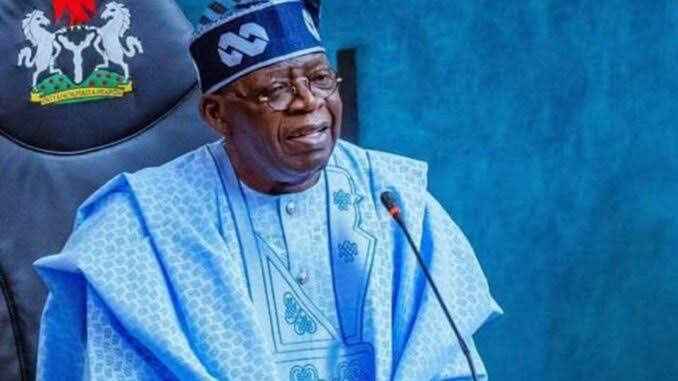
At the heart of the discussion is Tinubu’s decision to honour 50 individuals, both living and deceased, for their contributions to the struggle against military rule and their roles in advancing democratic governance in Nigeria. The awards were announced during his Democracy Day address and included several pro-democracy activists, journalists, labour leaders, and political figures.
Among the recipients were members of the National Democratic Coalition (NADECO), journalists, lawyers, activists, labour leaders, and political figures who played critical roles during the turbulent years following the annulment of the June 12, 1993 presidential election, widely believed to have been won by the late MKO Abiola. Tinubu said the honourees endured persecution, exile, incarceration, and other hardships to defend democratic ideals. (Thisdaylive)
The President described the award recipients as heroes whose sacrifices helped restore civilian rule and strengthen democratic institutions. According to him, Nigeria’s democratic gains were built on the courage of individuals who challenged authoritarian rule and fought for accountable governance.
The recognition was welcomed by many democracy advocates who viewed it as a long-overdue acknowledgment of the sacrifices made by pro-democracy activists. Political analysts also noted that the inclusion of activists, journalists, and civil society leaders reflected an effort to broaden the narrative of Nigeria’s democratic history beyond traditional political actors.
However, not everyone was impressed. Critics argued that while the honours were commendable, the selection process appeared selective and left out several notable figures who contributed significantly to the June 12 struggle and the eventual return to democratic governance. Opposition voices also used the Democracy Day occasion to raise concerns about governance and democratic accountability. (The Guardian Nigeria)
The President’s broader Democracy Day speech generated divergent reactions. Tinubu defended his administration’s economic reforms and urged Nigerians to remain committed to the country despite current challenges. He argued that difficult reforms were necessary to secure long-term economic prosperity and national stability.
While supporters applauded the President’s determination to pursue structural reforms despite political risks, critics maintained that many Nigerians were yet to experience the promised benefits, citing inflation, rising living costs, and economic hardship. The mixed reactions were evident across traditional and social media platforms following the address.
The speech’s emphasis on credible elections and democratic institutions also attracted attention. Tinubu urged the Independent National Electoral Commission (INEC), political parties, and security agencies to ensure peaceful and credible elections, stressing that democracy suffers when citizens lose confidence in the electoral process.
Several commentators observed that Democracy Day provides an opportunity not only to celebrate democratic achievements but also to reflect on unresolved challenges such as insecurity, corruption, unemployment, and public trust in institutions. The mixed reactions underscore the complex state of Nigerian democracy nearly three decades after the country’s return to civilian rule.
Whether viewed as a celebration of democratic progress or a reminder of unfinished aspirations, Tinubu’s 2026 Democracy Day address has stimulated nationwide debate about governance, national recognition, economic reforms, and the future of democracy in Nigeria.