Tinubu Approves Recruitment of 28,000 Soldiers, 50,000 Police Officers to Strengthen Nigeria's Security
President Bola Tinubu has approved the recruitment of 28,000 additional soldiers and 50,000 police officers as Nigeria intensifies efforts to tackle terrorism, banditry, kidnapping and other security threats.
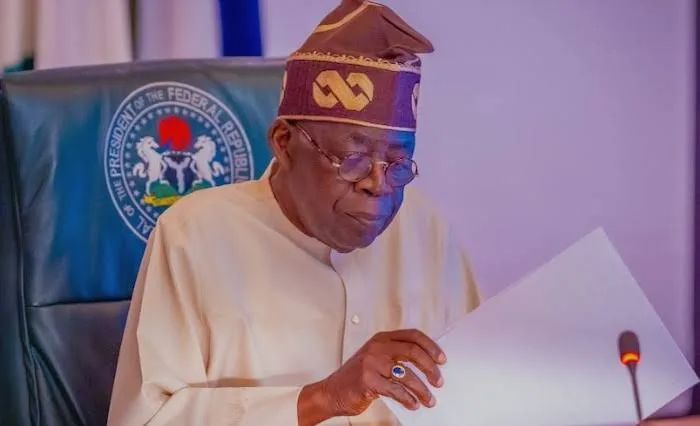
Nigeria's efforts to confront its worsening security challenges have received a significant boost following President Bola Ahmed Tinubu's reported approval for the recruitment of 28,000 additional soldiers and 50,000 police officers.
The proposed recruitment, which would significantly expand the country's security workforce, comes amid persistent threats from terrorists, armed bandits, kidnappers and other criminal groups operating across different parts of the country.
The move reflects the Federal Government's determination to strengthen the capacity of the Nigerian Armed Forces and the Nigeria Police Force to protect lives, secure communities and restore public confidence in the country's security architecture.
With insecurity continuing to affect communities, agricultural activities, businesses and economic development, the proposed recruitment is expected to provide additional manpower for military operations, intelligence gathering, policing and internal security responsibilities.
Tinubu's five-year strategic defence plan
The approval was disclosed on Sunday, November 15, by the All Progressives Congress (APC) Presidential Campaign Council through its spokesperson, Dele Alake, who described the recruitment as part of President Tinubu's proposed Five-Year Strategic Defence Operations Plan.
According to the council, the plan is designed to provide a long-term framework for aligning defence priorities, operational requirements, personnel development and government expenditure with Nigeria's present and anticipated security challenges.
The strategy is expected to combine increased manpower, improved military infrastructure, modern technology, intelligence-led operations and non-military interventions.
The announcement represents an important component of the administration's wider security policy, which seeks to improve the ability of security agencies to prevent attacks, respond to emerging threats and maintain a stronger presence in vulnerable communities.
However, the latest announcement should be understood in the context of earlier recruitment decisions. President Tinubu had already authorised additional military recruitment and set a police recruitment target of 50,000. Consequently, the November announcement reiterates and consolidates existing manpower commitments rather than necessarily representing 78,000 entirely new positions.
The 50,000 police officers include an earlier additional recruitment approval of 20,000 officers, while the 28,000 military personnel had also been approved previously.
Four new Army divisions to expand military operations
Beyond the recruitment of additional personnel, the administration has established four new Army divisions as part of efforts to decentralise military operations and improve security coverage across the country.
The new formations are headquartered in:
- Makurdi, Benue State.
- Ilorin, Kwara State.
- Jalingo, Taraba State.
- Benin City, Edo State.
The expansion increases the Nigerian Army's divisional structure from eight to 12 divisions, providing additional operational formations to respond to security threats across different geographical locations.
The development is particularly significant for the North-Central region, where communities have experienced persistent attacks, communal violence and farmer-herder conflicts.
The new formations are also expected to improve the military's ability to respond to threats in the North-East, North-West and southern parts of the country.
In July 2026, Reuters reported that President Tinubu had approved the Army's expansion from eight to 12 divisions alongside the recruitment of 28,000 additional personnel.
The restructuring is intended to improve operational readiness, strengthen troop deployment and reduce the pressure on existing military formations.
New Army depots to increase recruitment and training capacity
Another major component of the security expansion is the establishment of two additional Army training depots in Osogbo, Osun State, and Amasiri-Edda, Ebonyi State.
According to Dele Alake, each facility can accommodate 6,000 recruits at a time, giving the two depots a combined training capacity of 12,000 soldiers.
The Osogbo facility already had 5,210 recruits undergoing training at the time of the announcement.
The additional training infrastructure is expected to accelerate the process of preparing new soldiers for deployment while reducing pressure on existing military training institutions.
This is particularly important because increasing recruitment without expanding training capacity could create bottlenecks in the process of producing adequately trained personnel.
The government has also highlighted investments in military accommodation, including a 700-unit barracks project in Ikere-Ekiti, Ekiti State.
Improved accommodation and operational infrastructure are essential to personnel welfare, morale and effectiveness, particularly for troops serving in challenging security environments.
Government highlights achievements in counterterrorism operations
The APC Presidential Campaign Council also highlighted what it described as significant achievements recorded by the Tinubu administration in its fight against terrorism and banditry.
According to Alake, military operations across the country had resulted in the elimination of more than 15,000 Boko Haram terrorists and bandits over the preceding three years.
He further claimed that more than 130,000 Boko Haram fighters and their dependants had surrendered through Operation Safe Corridor, the Federal Government's rehabilitation programme for repentant insurgents.
The figures were presented by the campaign council as evidence of the administration's combination of military operations and non-kinetic interventions.
However, these figures are government-aligned campaign council claims and should not be interpreted as independently verified assessments of the overall security situation.
Operation Safe Corridor was established to support the rehabilitation and reintegration of former insurgents who voluntarily surrender and meet the programme's requirements.
The initiative reflects the government's recognition that military operations alone may not completely resolve the country's security challenges.
Rehabilitation, community reconciliation, intelligence gathering and addressing the socioeconomic conditions that encourage recruitment into criminal organisations remain important elements of a sustainable response.
Police recruitment targets internal security challenges
The proposed expansion of the Nigeria Police Force is equally important, particularly as the country continues to experience kidnapping, armed robbery, communal violence and other forms of criminality.
The recruitment target of 50,000 officers is expected to strengthen policing capacity, improve law enforcement coverage and increase the number of personnel available for crime prevention and investigation.
President Tinubu had announced the recruitment of an additional 20,000 police officers in November 2025 while declaring a nationwide security emergency. At the time, he stated that the exercise would bring the police recruitment target to 50,000.
The November 2026 announcement reinforces that target as part of the administration's broader five-year security strategy.
The Federal Government is also considering reforms to improve the distribution of police personnel, particularly by reducing the number assigned to static protection duties and redeploying more officers to communities requiring security attention.
There have also been renewed discussions about state policing as a possible solution to Nigeria's complex security challenges.
In his November 2025 security emergency announcement, Tinubu called on the National Assembly to review existing laws to enable states that require state police to establish them.
Funding, implementation and accountability remain critical
Despite the scale of the proposed expansion, the success of the initiative will depend on more than the number of personnel recruited.
Nigeria must ensure that new soldiers and police officers receive adequate training, modern equipment, intelligence support and operational resources.
Recruitment must also be accompanied by transparent selection procedures to prevent political interference, favouritism and the infiltration of security institutions by individuals with questionable backgrounds.
The government will equally need to provide sufficient funding for salaries, allowances, healthcare, accommodation, transportation, weapons, surveillance equipment and other operational requirements.
Another major consideration is personnel deployment.
Increasing the number of security officers will have limited impact if newly recruited personnel are concentrated in administrative positions or assigned to locations that do not reflect the country's most pressing security needs.
The proposed Five-Year Strategic Defence Operations Plan therefore needs clear implementation timelines, measurable performance indicators and regular public reporting.
There must also be effective coordination among the Army, Police, Department of State Services, Nigeria Security and Civil Defence Corps and other security organisations.
The Federal Government must ensure that military and police operations respect human rights, protect civilians and comply with established laws.
Can additional security personnel end Nigeria's insecurity?
Nigeria's security challenges are complex and cannot be resolved through recruitment alone.
The country continues to battle Boko Haram and Islamic State West Africa Province insurgents in the North-East, armed banditry and kidnapping in the North-West, communal violence in the North-Central region and other forms of criminality across the country.
These challenges have disrupted economic activities, displaced communities, affected agricultural production and weakened public confidence in government institutions.
Consequently, expanding the security workforce represents an important step, but the government must also address the underlying conditions that sustain insecurity.
Poverty, unemployment, weak local intelligence networks, inadequate border surveillance, illegal arms trafficking and limited access to education and economic opportunities all contribute to the country's security difficulties.
A comprehensive approach combining military operations, effective policing, intelligence gathering, judicial accountability, economic development and community engagement will be necessary to achieve lasting results.
The proposed recruitment could significantly improve Nigeria's security capacity if supported by the right policies, resources and institutional reforms.
Conclusion
President Tinubu's reported approval for the recruitment of 28,000 additional soldiers and a 50,000-officer police recruitment target represents a major component of the administration's efforts to strengthen Nigeria's security architecture.
Together with the creation of four new Army divisions, additional training depots and investments in military infrastructure, the proposed Five-Year Strategic Defence Operations Plan signals an attempt to address longstanding manpower and operational challenges.
However, Nigerians will ultimately judge the initiative by its results rather than the number of recruitment approvals announced.
The real test will be whether the expansion translates into fewer terrorist attacks, reduced kidnappings, safer highways, protected farming communities and improved security across the country.
For millions of Nigerians who continue to live with the fear of violence and abduction, the expectation is clear: the government must turn its security promises into tangible improvements in everyday life.