Thousands of European Troops to Rehearse Ukraine Deployment if Peace Deal Is Reached
Britain and France will lead 2,800 European troops in Exercise Koalicja in Poland to rehearse a possible post-war deployment to Ukraine, strengthen security guarantees and prepare for Russia-related threats.
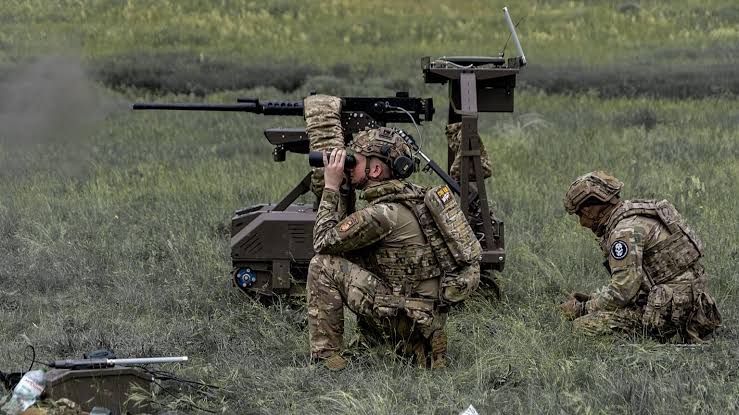
Britain and France are preparing to lead thousands of European troops in a major military exercise in Poland designed to test how a multinational force could be deployed to Ukraine if a peace agreement ends the war with Russia.
The exercise, named Exercise Koalicja, is scheduled to take place from November 9 to November 22, 2026, and will involve approximately 2,800 military personnel from 11 participating nations, according to the British Ministry of Defence.
The military rehearsal represents a significant step in Europe's preparations for Ukraine's post-war security arrangements, as Western governments consider how to prevent another Russian invasion after a possible ceasefire.
The initiative will be led jointly by Britain and France under the Multinational Force-Ukraine (MNF-U), the military component of the Coalition of the Willing, an international grouping of countries committed to supporting Ukraine.
The proposed force would only enter Ukraine after hostilities have ended and at the request of the Ukrainian government. Its mission would focus on strengthening Ukraine's military capabilities, supporting the reopening of commercial airspace and maritime routes, and helping establish conditions for long-term security.
Britain and France Lead Major European Military Exercise
According to the British Ministry of Defence, approximately 2,800 troops will participate in Exercise Koalicja, including 300 British military personnel.
France is expected to provide the largest contingent, contributing approximately 1,100 troops, while other participating countries include Belgium, Estonia, Germany, Lithuania, the Netherlands, Poland, Spain, Sweden and Türkiye.
The exercise will involve land, air and maritime components, allowing participating militaries to test their ability to coordinate operations across different national military structures.
British Army personnel from the 7 Brigade, popularly known as the Desert Rats, will rehearse logistical movements, including the transportation of personnel, military equipment and supplies.
The Royal Air Force will also deploy Typhoon fighter jets and a Voyager air-to-air refuelling aircraft to simulate operations that could help restore confidence in commercial aviation once Ukraine's airspace becomes safe for civilian use.
The exercise will test command-and-control arrangements, communication systems, military coordination and the ability of different national contingents to operate as a unified force.
Turkish forces will lead the maritime component from Istanbul, concentrating on arrangements for mine clearance in the Black Sea to facilitate the eventual resumption of commercial shipping through Ukrainian ports.
What Would the European Force Do in Ukraine?
The Multinational Force-Ukraine is intended to provide security support following the conclusion of hostilities rather than participate directly in combat operations against Russia.
Its primary responsibilities would include supporting the rebuilding and strengthening of Ukraine's armed forces, helping restore safer conditions in Ukrainian airspace and facilitating maritime security.
The force is also expected to provide reassurance against another potential Russian military offensive by demonstrating that European countries remain committed to Ukraine's long-term security.
However, British military officials have emphasised that the proposed deployment would not constitute a traditional peacekeeping operation or a ceasefire-monitoring mission.
Lieutenant General Tom Bateman, commander of the Multinational Force-Ukraine, said the exercise would demonstrate that the coalition had developed a capable force that could be deployed when the fighting ends.
He explained that the objective was to ensure Ukraine's armed forces would be in a strong position to deter future aggression and defend the country's sovereignty.
British Defence Secretary Wes Streeting similarly described the exercise as a practical demonstration of European commitment to Ukraine's future security.
The force is also expected to operate independently of NATO command structures, although the alliance has been informed about the exercise.
European Countries Seek Stronger Security Guarantees for Ukraine
The planned deployment reflects growing European concerns about what could happen after a potential peace agreement between Kyiv and Moscow.
Ukraine has repeatedly argued that any settlement must include credible security guarantees capable of preventing Russia from launching another invasion.
President Volodymyr Zelenskyy has maintained that ending the fighting without establishing reliable protection for Ukraine could leave the country vulnerable to renewed aggression.
European governments supporting the initiative believe that maintaining an international military presence could help discourage further Russian attacks.
However, the participating countries have not reached complete agreement on the exact structure, size and responsibilities of the proposed force.
France has supported the possibility of deploying troops inside Ukraine, while Britain has emphasised air support and other security arrangements. Germany has favoured keeping its forces in neighbouring countries rather than placing them directly inside Ukraine.
These differences demonstrate the political and military complexities involved in establishing a multinational security arrangement.
Russia Opposes Foreign Troops in Ukraine
Moscow is expected to view the proposed deployment with considerable suspicion, particularly because Russia has consistently opposed the presence of Western military forces inside Ukraine.
Russian President Vladimir Putin has previously warned that foreign troops stationed in Ukraine would be considered legitimate military targets.
The warning presents a major challenge for European governments attempting to establish a force capable of providing security guarantees without provoking another confrontation with Moscow.
Military analysts have also questioned whether European countries could adequately protect their personnel if Russia launched missile, drone or other attacks against deployed positions.
The issue becomes more complicated because the proposed force is expected to operate with limited direct American military involvement.
Although the United States has participated in discussions concerning Ukraine's future security, Washington has not committed troops to the proposed multinational deployment.
European governments therefore face the challenge of developing military arrangements that can operate effectively without relying entirely on American support.
Peace Agreement Remains the Biggest Obstacle
Despite the preparations, an actual deployment remains dependent on a peace agreement between Russia and Ukraine.
The war, which began with Russia's full-scale invasion in February 2022, continues to generate military and humanitarian consequences, with both sides maintaining significant disagreements over territory, security arrangements and the future of occupied regions.
Diplomatic efforts have yet to produce a comprehensive settlement acceptable to both countries.
The United States has continued efforts to encourage negotiations, while European governments are seeking to ensure that Ukraine's security concerns are incorporated into any eventual agreement.
The planned exercise is therefore intended to prepare participating countries for a possible post-war scenario rather than signal that a ceasefire is imminent.
The Associated Press has also highlighted concerns about the uncertainty surrounding American security guarantees, the stalled peace negotiations and political disagreements within Europe.
These issues could complicate the implementation of the proposed mission even if an agreement is eventually reached.
Conclusion
Exercise Koalicja represents an important development in Europe's preparations for Ukraine's future security, bringing together thousands of military personnel to test the practical requirements of a possible multinational deployment.
By coordinating land, air and maritime operations, Britain, France and their European partners hope to establish a force capable of supporting Ukraine's military recovery and discouraging renewed Russian aggression.
However, the success of the initiative will depend on several unresolved issues, including the achievement of a ceasefire, agreement among participating countries, the extent of American support and Russia's response to the proposed deployment.
For Ukraine, the preparations offer the prospect of stronger international security commitments beyond the battlefield.
For Europe, they represent an effort to assume greater responsibility for continental security at a time when the future of the Russia-Ukraine war remains uncertain.
Whether the proposed force eventually enters Ukraine will depend on the outcome of diplomatic negotiations and the willingness of participating countries to turn their military preparations into a lasting security commitment. (The Guardian)