Thailand School Shooting: Teen Kills Five Staff, Wounds More Than 30 in Deadliest School Attack
A 14-year-old student opened fire at a school near Bangkok, killing five staff members and injuring more than 30 people after allegedly killing his grandparents. The Thailand school shooting has renewed concerns over gun violence and firearm controls.
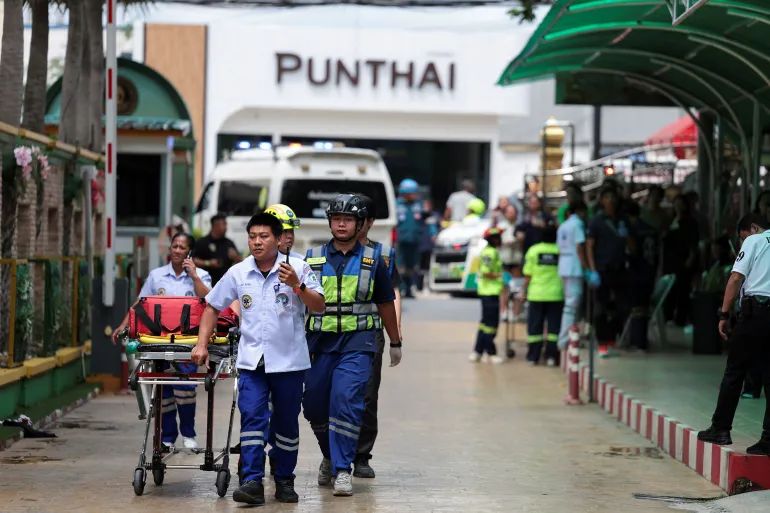
Thailand has been left reeling after a teenage student opened fire at a school near Bangkok, killing five teachers and other staff members and injuring more than 30 people in one of the country's deadliest school shootings.
The attack occurred on Friday, August 7, at Debsirin Nonthaburi School in Nonthaburi province, northwest of Bangkok. Authorities said the 14-year-old suspect was a student at the school and later died after turning the weapon on himself.
The shooting was part of a wider sequence of violence. Police said the teenager had allegedly killed his grandparents at their home before going to the school and opening fire. Including the two grandparents and the suspected gunman, the overall death toll reached eight. (Reuters)
Five School Staff Members Killed
The teenager reportedly entered the school carrying a handgun and began shooting, sending students and staff fleeing for safety.
Five members of the school's staff were killed in the attack. More than 30 people were wounded, with several victims reportedly suffering critical injuries and requiring emergency medical treatment.
Emergency responders and police rushed to the school as authorities attempted to secure the premises and evacuate students.
The incident triggered panic among pupils, teachers and parents, with images and accounts from the scene showing students attempting to escape as security forces moved into the area.
The school was placed under lockdown while police searched the premises and worked to ensure that no further threat remained. (The Guardian)
Teenager Allegedly Killed Grandparents Before Attack
Investigators said the violence began before the school shooting.
The teenager allegedly shot and killed his grandparents at their home before travelling to Debsirin Nonthaburi School.
Police are investigating how the teenager obtained the firearm. Reports indicate that the weapon was believed to have belonged to his grandfather and had been legally registered.
The circumstances surrounding the teenager's access to the gun are expected to form an important part of the investigation as authorities examine whether existing firearm-storage and access rules were breached.
Authorities have not established a definitive motive for the attack, and officials have cautioned against drawing conclusions while the investigation remains ongoing.
Gunman Dies After School Rampage
After opening fire at the school, the teenager ultimately turned the weapon on himself and died. His death means investigators will have to rely heavily on witness accounts, digital evidence and information from his family and schoolmates to establish what led to the attack.
A classmate reportedly described the teenager as troubled and said he had experienced bullying, although authorities have not officially confirmed bullying as the motive.
The case has therefore raised wider questions about how schools and families identify warning signs among young people and whether more effective systems are needed to intervene when teenagers display signs of distress or violent behaviour.
Thailand Faces Renewed Gun Violence Concerns
The attack has reignited debate about gun ownership and firearm regulation in Thailand.
The country has experienced several high-profile mass shootings in recent years, including the 2022 massacre at a childcare centre in northeastern Thailand, which killed dozens of people.
Thailand has relatively high levels of civilian firearm ownership compared with many other countries in Southeast Asia. The latest shooting is likely to intensify pressure on authorities to strengthen controls over firearms, particularly measures designed to prevent children and other unauthorised individuals from accessing weapons.
Prime Minister Anutin Charnvirakul said the government would consider tougher firearm restrictions following the attack. The prime minister also indicated that the consequences could have been even worse because the suspect reportedly still had ammunition when the attack ended.
Questions Over Firearm Storage
One of the central issues emerging from the investigation is how a 14-year-old was able to gain access to a firearm. Authorities are expected to examine whether the gun was securely stored and whether its owner complied with Thailand's firearm regulations.
Experts have previously argued that gun ownership regulations are only effective when licensing, storage, monitoring and enforcement mechanisms operate together.
The incident has therefore renewed calls for stricter checks on firearm owners and stronger safeguards to prevent weapons from falling into the hands of minors.
Students and Teachers Traumatized
Beyond the deaths and physical injuries, the attack has left students and teachers facing significant psychological trauma.
Witnesses described scenes of confusion and fear as pupils attempted to escape the school.
For many students, the school environment normally associated with learning and safety, has become connected with a traumatic act of violence.
Mental-health professionals are likely to play an important role in helping survivors and families cope with grief, fear and post-traumatic stress following the incident.
The need for psychological support also extends to emergency workers and teachers who witnessed the attack and assisted students during the crisis.
Calls for Stronger School Safety Measures
The shooting is expected to prompt renewed discussions about security at Thai schools.
Possible measures could include improved emergency response procedures, better communication systems, staff training, controlled access to school buildings and stronger cooperation between schools and local security agencies.
However, security experts caution that school safety cannot depend solely on armed security personnel.
They argue that prevention must also involve mental-health support, early intervention, responsible firearm ownership and mechanisms for students to report threats or concerning behaviour.
A National Moment of Grief
The attack has generated widespread grief across Thailand, particularly among families connected to the school.
The deaths of five school staff members have devastated the educational community, while the additional deaths of the teenager's grandparents have made the tragedy even more complex.
Authorities are continuing to investigate the sequence of events, the source of the firearm and the circumstances that preceded the shooting.
What Happens Next?
The immediate priority for authorities is supporting survivors, determining the full circumstances of the attack and establishing how the teenager obtained the firearm.
The government also faces pressure to translate expressions of concern into concrete measures capable of reducing firearm-related violence.
For Thailand's education sector, the tragedy is a painful reminder that schools are not immune from wider social problems involving violence, firearms and mental-health challenges.
The Debsirin Nonthaburi shooting has become a national tragedy not only because of the number of lives lost but because a teenager was allegedly able to turn a legally owned firearm into a weapon of mass violence.
As Thailand mourns the victims, attention will now turn to whether the country can strengthen firearm controls, improve early intervention and make schools safer for students and teachers.
The incident has also highlighted the importance of treating school safety as a comprehensive issue involving families, educators, health professionals, law-enforcement agencies and policymakers.
For the victims' families and the wounded, however, the focus remains on recovery and justice as Thailand comes to terms with one of its most devastating school shootings in recent years.