Tensions Rise at Jerusalem’s Holiest Site as Israeli Nationalists Challenge Longstanding Status Quo
Growing visits and public prayers by Israeli nationalist groups at Jerusalem’s Temple Mount/Haram al-Sharif are raising fears that the decades-old status quo governing the sacred site could unravel, deepening tensions between Israelis and Palestinians.
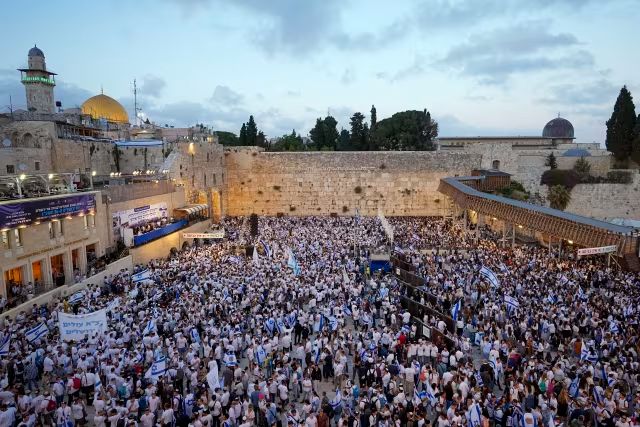
The fragile balance that has governed one of the world's most contested religious sites is facing renewed pressure as increasing numbers of Israeli nationalist activists openly challenge longstanding restrictions at Jerusalem's Temple Mount, known to Muslims as Haram al-Sharif.
The developments have heightened concerns among religious leaders, regional governments and international observers that the decades-old arrangement preserving relative stability at the sacred compound could be steadily eroding, with potentially serious consequences for the already volatile Israeli - Palestinian conflict.
At the centre of the dispute is the historic "status quo" agreement that has regulated access and worship at the site since Israel captured East Jerusalem during the 1967 Six-Day War.
Under the arrangement, the Islamic Waqf - administered by Jordan - maintains religious authority over the compound, while Israel oversees overall security. Muslims are permitted to pray freely at the site, whereas non-Muslims, including Jews and Christians, may visit during designated hours but are traditionally prohibited from conducting organized prayers.
In recent years, however, the boundaries of that understanding have increasingly been tested.
Groups advocating greater Jewish religious rights at the site have become more visible, with some visitors openly praying, singing religious hymns and performing symbolic rituals despite official restrictions.
Videos circulating on social media have shown worshippers bowing in prayer and reading from religious texts under the protection of Israeli police, actions that many Palestinians and Islamic authorities say violate the longstanding arrangement.
The Temple Mount holds profound significance for both Judaism and Islam.
For Jews, it is regarded as the location of the First and Second Temples and is considered the holiest place in Judaism.
For Muslims, Haram al-Sharif is home to the Al-Aqsa Mosque and the Dome of the Rock, making it Islam's third-holiest site after Mecca and Medina.
Because of its dual religious importance, even minor changes to access arrangements have historically triggered widespread unrest.
Palestinian officials argue that the growing number of nationalist visits and increasingly public displays of Jewish prayer represent a deliberate effort to gradually alter the site's religious character.
The Jordanian government, which serves as custodian of Muslim holy sites in Jerusalem, has repeatedly warned against actions that could undermine the status quo, describing them as provocative and dangerous.
Officials from the Islamic Waqf have also accused Israeli authorities of failing to enforce existing regulations consistently, claiming police have become more tolerant of activities that were once swiftly prevented.
Israeli officials maintain that there has been no formal policy change regarding the site.
Government representatives continue to state that the status quo remains official policy and insist that security forces intervene whenever necessary to preserve public order.
However, critics argue that enforcement has become increasingly inconsistent, allowing gradual changes in practice even without formal legal amendments.
The issue has become more politically sensitive as members of Israel's nationalist and religious parties openly advocate expanded Jewish worship rights at the compound.
Several politicians have publicly visited the site while calling for broader access, arguing that Jewish worship should be permitted at what they consider Judaism's holiest location.
Those visits have often drawn strong condemnation from Palestinian leaders and neighbouring Arab states, who warn they inflame already heightened tensions.
Security experts say the dispute extends far beyond questions of religious practice.
The compound has long been viewed as a symbolic flashpoint capable of triggering wider violence across Israel, the occupied West Bank and Gaza.
Previous confrontations at the site have contributed to major outbreaks of unrest, including clashes that escalated into broader military conflicts.
Analysts therefore caution that even seemingly isolated incidents involving worship or access restrictions can rapidly acquire political and security dimensions.
Residents of Jerusalem have expressed mixed reactions to the recent developments.
Some Jewish worshippers argue that freedom of religion should apply equally to everyone visiting the compound, while many Muslim worshippers fear that incremental changes are intended to permanently reshape the site's governance.
For many Palestinians, concerns are rooted not only in current events but also in the cumulative impact of gradual policy shifts over recent years.
International diplomatic attention has also intensified.
The United Nations and several foreign governments have repeatedly urged all parties to respect existing arrangements and avoid unilateral actions that could alter the site's legal or religious status.
Diplomats warn that preserving the status quo remains essential to maintaining relative calm in Jerusalem, particularly as broader regional tensions continue to simmer.
Jordan has consistently emphasized its custodial role under international agreements and has called on Israel to ensure full compliance with the existing framework governing access and worship.
Religious scholars note that the site's importance transcends politics.
Millions of Jews, Muslims and Christians worldwide view Jerusalem's holy places as central to their faith traditions, making developments there closely watched across the globe.
As a result, local disputes frequently attract international attention and can influence diplomatic relations throughout the Middle East.
The current controversy also reflects broader changes within Israeli society, where support for expanded Jewish prayer rights at the Temple Mount has grown among nationalist and religious constituencies.
Opponents fear that continued challenges to established practices could gradually replace informal understandings with new realities on the ground, even without official government declarations.
Supporters, meanwhile, argue that religious freedoms should evolve alongside changing public attitudes.
Despite the competing narratives, security analysts broadly agree that preserving stability at the sacred compound remains one of the most delicate challenges facing Israeli authorities.
Any perception that longstanding agreements are being abandoned could provoke widespread demonstrations, deepen mistrust between communities and complicate already fragile diplomatic efforts aimed at reducing tensions.
As pilgrims continue arriving in Jerusalem and political rhetoric intensifies, the future of the historic status quo remains uncertain.
Whether existing arrangements endure or gradually give way to new realities may shape not only access to one of the world's holiest religious sites but also the broader prospects for peace and stability in one of the globe's most enduring conflicts. (Reuters)