Swiss Woman Evacuated from Nigeria Over Ebola Recovers, Discharged from Geneva Hospital
A Swiss woman evacuated from Nigeria after testing positive for the deadly Bundibugyo Ebola virus has fully recovered and been discharged from Geneva University Hospitals.
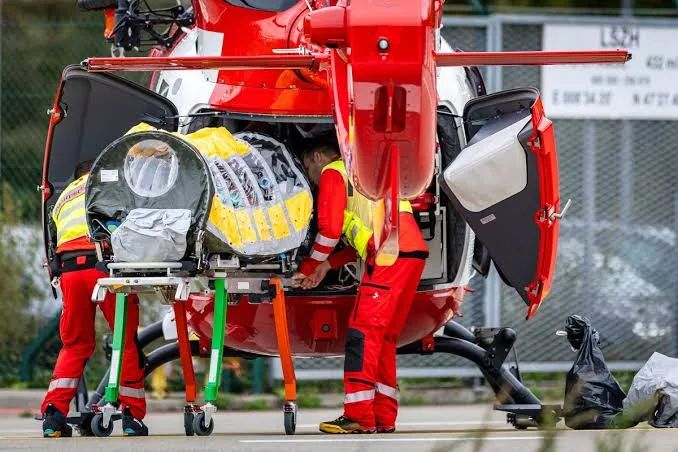
A Swiss woman who tested positive for the rare Bundibugyo strain of the Ebola virus in Nigeria has recovered and been discharged from Geneva University Hospitals (HUG) in Switzerland, bringing relief following international concerns over the potential spread of the disease.
The woman, who was medically evacuated from Nigeria alongside her husband in October, was discharged on Wednesday, November 11, 2026, after doctors confirmed her full recovery.
Geneva University Hospitals confirmed her discharge in a statement, explaining that the decision followed an assessment by the medical team and authorisation from the cantonal physician.
The hospital said the patient had completed treatment after being admitted for specialist care following her evacuation from Nigeria.
Her recovery means that Switzerland no longer has any Ebola patients receiving hospital treatment from the incident.
The development comes amid an ongoing Ebola outbreak across parts of Africa, particularly the Democratic Republic of the Congo (DRC), where the Bundibugyo strain has caused thousands of infections and deaths.
How the Swiss Woman Contracted Ebola
The woman, who was born in Uganda and is married to a Swiss diplomat working at the Swiss Embassy in Abuja, tested positive for Ebola in Nigeria on October 20.
Reports indicate that she had travelled to Uganda for a two-week holiday before returning to Abuja, Nigeria, where she subsequently developed symptoms.
She reportedly developed symptoms on October 7, four days after arriving in Nigeria, and sought medical attention on October 11.
Following medical investigations, she was confirmed to have contracted the Bundibugyo strain of the Ebola virus on October 20.
Her infection raised concerns among public health authorities because Nigeria had not previously reported an active case associated with the ongoing outbreak.
On October 26, the woman and her husband were medically evacuated from Nigeria to Switzerland aboard a specialised air ambulance operated by Rega, the Swiss air rescue service.
While the infected woman was transferred to Geneva for treatment, her husband was isolated at the University Hospital of Zurich as a precautionary measure because of his close contact with her.
The husband did not develop symptoms and subsequently tested negative for the infection. His quarantine was lifted on November 4.
Supportive Treatment Leads to Full Recovery
During her hospitalisation in Geneva, the patient received supportive medical care aimed at managing the symptoms and complications associated with Ebola virus disease.
Benoit Carpentier, spokesperson for Geneva University Hospitals, confirmed that the woman had recovered and was discharged after the medical team completed its assessment.
Her treatment included hydration and medical interventions to manage potential complications arising from the infection.
Although there is currently no specifically approved vaccine or targeted treatment for the Bundibugyo strain, supportive care remains essential in managing infected patients.
Such treatment involves maintaining adequate hydration, monitoring vital organs and addressing complications as they arise.
The woman's successful recovery is an encouraging development, particularly given the seriousness of Ebola infections and the challenges associated with treating the Bundibugyo variant.
Her discharge also highlights the importance of specialised medical facilities, early diagnosis and close monitoring in managing infectious diseases.
Nigeria Records One Confirmed Ebola Case
The incident triggered heightened public health surveillance in Nigeria, with authorities working to identify and monitor individuals who might have come into contact with the infected woman.
According to the Nigeria Centre for Disease Control and Prevention (NCDC), 62 contacts were identified following confirmation of the case.
As of November 11, 52 of the identified contacts had completed the mandatory 21-day monitoring period, while 10 remained under surveillance.
Nigeria had recorded one confirmed case at the time, while seven suspected cases had tested negative.
No Ebola-related deaths had been recorded in the country.
The situation nevertheless required close monitoring because of the possibility of secondary transmission, particularly among healthcare workers, family members and other individuals who might have had direct contact with the patient.
The authorities' response included contact tracing, disease surveillance and public health monitoring to prevent further transmission.
The case also raised questions about how the infection was acquired, considering the woman's recent travel history to Uganda before returning to Nigeria.
Experts, including Africa Centres for Disease Control and Prevention Director-General Jean Kaseya, have indicated that investigations are necessary to establish the source of infection.
Bundibugyo Ebola Outbreak Spreads Across Africa
The woman's infection is connected to the wider Bundibugyo Ebola outbreak that has affected several African countries, with the Democratic Republic of the Congo bearing the greatest burden.
According to the European Centre for Disease Prevention and Control (ECDC), the DRC had recorded 11,114 confirmed cases and 5,433 related deaths as of November 11, based on data available up to November 10.
Kenya has also reported nine confirmed cases, including two deaths, although all affected patients had reportedly recovered by November 11.
The outbreak has raised significant concerns among international health authorities because of its geographical spread and the challenges associated with controlling the virus.
The Bundibugyo strain belongs to the Ebola virus family but differs from the Zaire strain, which has been responsible for some of the largest recorded Ebola outbreaks.
Importantly, vaccines and treatments developed specifically for the Zaire strain cannot automatically be assumed to provide protection against Bundibugyo.
There are currently no licensed vaccines or specific approved therapeutics for Bundibugyo virus disease, although research and clinical development efforts are ongoing.
International Health Authorities Maintain Vigilance
The Swiss woman's recovery is a positive development, but health authorities continue to monitor the wider outbreak and strengthen measures to prevent further international transmission.
The incident demonstrates how international travel can complicate disease surveillance, particularly when infected individuals travel between countries before symptoms are recognised.
For Nigeria, the priority remains ensuring that all identified contacts complete the required monitoring period while maintaining surveillance at healthcare facilities and points of entry.
Public health experts continue to emphasise early reporting of suspected infections, appropriate protective measures for healthcare workers and rapid contact tracing.
The successful treatment of the Swiss woman also demonstrates the importance of international cooperation in responding to infectious disease emergencies.
Although her recovery has brought relief to Switzerland and Nigeria, the wider outbreak in Central and East Africa remains a significant public health challenge.
For now, the discharge of the patient from Geneva University Hospitals marks an important milestone in the management of the imported Ebola case, even as authorities continue working to contain the disease across affected African countries.