Supreme Court Restores Final Forfeiture of Emefiele’s Properties, $2.045 Million in Landmark EFCC Victory
Nigeria’s Supreme Court has restored the final forfeiture of seven properties, $2.045 million, and share certificates linked to former CBN Governor Godwin Emefiele, overturning an earlier Court of Appeal ruling.
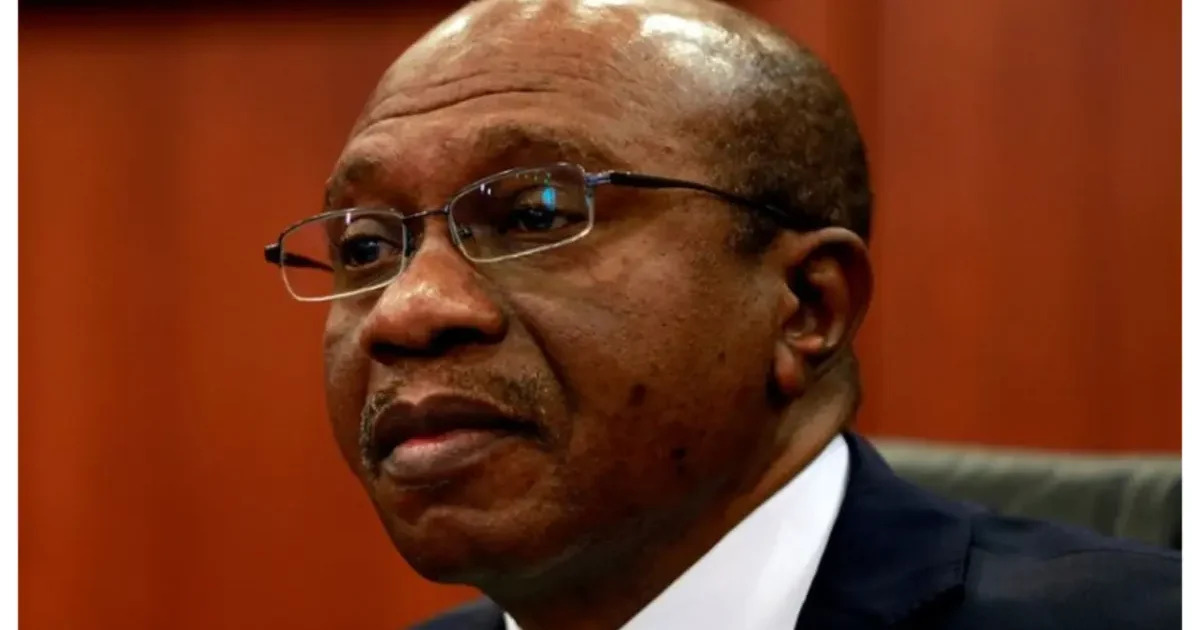
Nigeria's Supreme Court has delivered a major victory to the Economic and Financial Crimes Commission (EFCC) by restoring the final forfeiture of high-value assets linked to former Central Bank of Nigeria (CBN) Governor Godwin Emefiele.
In a unanimous judgment delivered by a five-member panel led by Justice Ibrahim Mohammed Saulawa, the apex court overturned an earlier decision of the Court of Appeal, Lagos Division, and reinstated the judgment of the Federal High Court, which had ordered the permanent forfeiture of seven luxury properties, $2.045 million in cash and share certificates to the Federal Government.
The ruling marks another significant chapter in the legal proceedings involving Emefiele, who has faced multiple criminal and civil actions since leaving office as CBN governor in 2023. The Supreme Court held that the Court of Appeal erred when it nullified the forfeiture order and directed that the case be heard afresh.
Supreme Court Reverses Appeal Court Decision
The apex court unanimously allowed the EFCC's appeal and restored the November 1, 2024, judgment of the Federal High Court in Lagos delivered by Justice Deinde Dipeolu.
The trial court had ruled that the commission had established that the assets were reasonably suspected to have been acquired with proceeds of unlawful activities and therefore qualified for final forfeiture under Nigeria's asset recovery laws.
However, the Court of Appeal had earlier set aside that decision, holding that the matter should be retried by the Federal High Court.
Dissatisfied with that outcome, the EFCC approached the Supreme Court, arguing that the appellate court wrongly interfered with the findings of the trial court. The Supreme Court agreed with the anti-graft agency and restored the original forfeiture order.
Assets Covered by the Forfeiture
The judgment affects several valuable assets allegedly linked to the former CBN governor.
The forfeited assets include:
- Seven high-value landed properties located in prime areas.
- Cash amounting to $2.045 million.
- Share certificates belonging to Queensdorf Global Fund Limited Trust.
According to court records, the Federal High Court had earlier concluded that the EFCC provided sufficient evidence showing that the assets were reasonably suspected to be proceeds of unlawful activities. The Supreme Court has now affirmed that conclusion.
Background to the Case
The forfeiture proceedings originated from investigations conducted by the EFCC following Emefiele's departure from office.
The anti-corruption agency filed an application seeking the permanent forfeiture of the assets, arguing that they could not be linked to legitimate sources of income.
Justice Dipeolu subsequently granted the application after reviewing affidavits and documentary evidence presented by the commission.
Emefiele challenged that judgment before the Court of Appeal, which ruled in his favour by nullifying the forfeiture order and directing a fresh hearing.
The EFCC then exercised its right of appeal before the Supreme Court, leading to Friday's landmark decision.
Significance of the Judgment
Legal experts say the Supreme Court's ruling reinforces the principle that appellate courts should not lightly interfere with findings of fact made by trial courts where the evidence supports those conclusions.
The judgment is also viewed as another important milestone in Nigeria's asset recovery efforts.
Civil forfeiture proceedings differ from criminal trials because the primary issue is whether assets are reasonably suspected to represent proceeds of unlawful activities rather than whether an individual has been convicted of a criminal offence.
Lawyers note that forfeiture cases are generally decided on the evidence relating to the assets themselves, although affected persons retain the right to contest such proceedings in court.
EFCC Strengthens Asset Recovery Drive
The judgment represents another significant success for the EFCC in its campaign to recover assets allegedly acquired through unlawful means.
In recent years, the commission has increasingly relied on civil forfeiture proceedings to recover properties, cash and investments linked to corruption and financial crimes.
The agency has consistently argued that recovering illicit assets is an essential component of Nigeria's anti-corruption strategy because it deprives offenders of the financial benefits of alleged criminal conduct.
The Supreme Court's ruling is expected to strengthen the commission's confidence in pursuing similar cases involving high-profile public officials.
Implications for Emefiele
The forfeiture judgment is separate from the criminal cases currently pending against the former CBN governor.
Emefiele continues to face multiple charges in different courts relating to alleged abuse of office, procurement irregularities and financial offences.
He has consistently denied wrongdoing and pleaded not guilty to the criminal charges brought against him.
Legal analysts emphasize that the Supreme Court's decision relates specifically to the civil forfeiture proceedings and does not determine the outcome of the ongoing criminal prosecutions.
Those criminal cases will continue independently based on the evidence presented during the trial.
Public and Legal Reactions
The judgment has attracted widespread attention within legal and political circles.
Supporters of the anti-corruption campaign describe the ruling as evidence that Nigeria's judicial system remains committed to ensuring accountability in the management of public resources.
Some legal commentators also believe the decision clarifies important principles governing civil asset forfeiture proceedings.
Others have stressed the importance of preserving the constitutional rights of defendants while ensuring that assets proven to be proceeds of unlawful activities are recovered in accordance with the law.
The ruling is expected to become a significant judicial precedent for future forfeiture litigation.
Looking Ahead
With the Supreme Court's decision, the Federal Government is now legally entitled to retain the forfeited assets unless any further constitutional issues arise.
The judgment effectively ends the dispute over the forfeiture proceedings after the apex court restored the original decision of the Federal High Court.
Meanwhile, attention is likely to shift to the remaining criminal cases involving the former CBN governor, which are still before various courts.
For the EFCC, the ruling represents another notable achievement in its efforts to recover assets suspected to have been acquired unlawfully.
For Nigeria's legal system, the verdict underscores the Supreme Court's role as the final arbiter in disputes involving public accountability and asset recovery.
As anti-corruption enforcement continues to evolve, the decision is expected to influence future civil forfeiture proceedings and reinforce judicial guidance on the evidential standards required in recovering assets linked to alleged unlawful activities.