Student Loan Has No Political Bias, NELFUND Boss Says
NELFUND boss Akintunde Sawyerr says Nigeria’s student loan scheme has no political, ethnic, religious or gender bias, insisting applications are processed electronically based on eligibility.
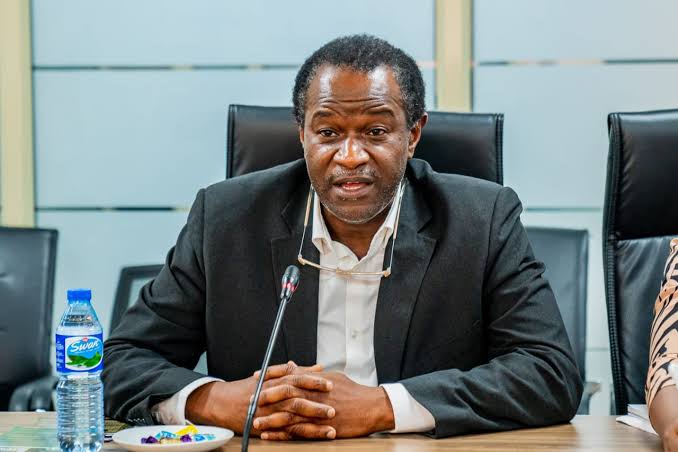
The Managing Director and Chief Executive Officer of the Nigerian Education Loan Fund (NELFUND), Akintunde Sawyerr, has dismissed allegations that Nigeria’s student loan scheme is politically biased, insisting that the programme is designed to support eligible students regardless of their political, ethnic, religious or gender affiliations.
Sawyerr described claims that the Federal Government's student loan programme favours supporters of the ruling party as “completely ridiculous”, arguing that the electronic application system used by NELFUND has no mechanism for identifying or rewarding students based on political affiliation.
He clarified during an interview on Channels Television's Sunday Politics programme, amid public debate over the administration and beneficiaries of the Federal Government's student loan initiative. (Punch Newspapers)
NELFUND Says Application System Cannot Detect Party Membership
According to Sawyerr, the student loan application process is based on information required to establish a student's identity and eligibility, rather than political connections.
He explained that applicants provide basic information, including their names and matriculation numbers, as part of the electronic application process. The system, he said, was not programmed to identify whether an applicant belongs to a political party.
The NELFUND boss questioned how such political affiliation could reasonably be used as a criterion when many beneficiaries are young Nigerians who have not yet reached voting age or have never joined a political party.
“We are talking about students; many of them are yet to vote, some of them are going to be voting for the first time,” Sawyerr said, according to reports of the interview. (Punch Newspapers)
He added that even under a manual system, determining the political affiliation of millions of students would be difficult and would not provide a credible basis for deciding who should receive an education loan.
No Ethnic, Religious or Gender Discrimination
Sawyerr also rejected suggestions that NELFUND's operations discriminate based on ethnicity, religion or gender.
He said the system is designed around eligibility requirements and does not take account of whether an applicant is Christian, Muslim or adheres to an African traditional religion.
The NELFUND chief executive similarly stated that the system does not distinguish applicants according to their tribe or gender.
The position is consistent with NELFUND's stated objective of providing accessible, interest-free financial support to eligible Nigerian students and promoting equal access to higher education. The Fund's official Student Loan Initiative describes equal opportunity and the reduction of financial barriers as core objectives of the programme. (Nigerian Education Loan Fund)
How NELFUND Student Loan Works
The Nigerian Education Loan Fund administers interest-free loans to eligible students, with support covering institutional fees and, where applicable, student upkeep.
NELFUND's official application portal describes the programme as an interest-free loan with no hidden charges. It also states that repayment begins two years after completion of the National Youth Service Corps (NYSC) programme, subject to the applicable rules. (NELFUND Student Loan Portal)
The programme was created to address one of the major barriers to tertiary education in Nigeria: the inability of students and families to meet rising education-related expenses.
NELFUND's mandate focuses on students in eligible tertiary institutions, with the scheme designed to provide financial assistance without requiring beneficiaries to pay interest on the loans.
The official NELFUND website says the programme is intended to “break financial barriers” to higher education and provide equal access to eligible Nigerian students.
Student Loan Demand Remains High
Sawyerr's comments come as demand for the student loan programme continues to increase.
Recent reports indicate that NELFUND has processed a growing number of applications and expanded its financial intervention across universities, polytechnics and colleges of education.
In August 2026, Vanguard reported that NELFUND had disbursed more than ₦303 billion to about 850,000 students over approximately two years of operation. The report said the Fund had recorded more than 1.5 million loan disbursements because some students receive separate payments for institutional fees and monthly upkeep. (Vanguard News)
The figure illustrates the scale of the programme and the financial commitment involved in supporting students across Nigeria's public tertiary institutions.
Earlier, in June 2026, NELFUND was reported to have recorded more than 1.6 million direct beneficiaries, with more than ₦282 billion disbursed. The National Assembly and NELFUND were also discussing plans to expand the programme and eventually reach as many as seven million beneficiaries. (The Guardian Nigeria)
Transparency Becomes Critical
While NELFUND insists that the student loan scheme has no political bias, transparency will remain crucial to maintaining public confidence in the programme.
As billions of naira are committed to education financing and the number of applicants increases, students and members of the public are likely to demand clear information about eligibility, application processing, approval, disbursement and repayment.
NELFUND's reliance on an electronic application system could help reduce opportunities for arbitrary decisions by limiting unnecessary human intervention. The Fund also collects information such as institutional and matriculation details to assess eligibility and administer loans.
However, maintaining public confidence will require the agency to continue publishing credible data and responding quickly to allegations of favouritism, discrimination or financial impropriety.
Scheme Designed to Reach More Nigerians
The Federal Government's student loan initiative is becoming an increasingly important component of Nigeria's education financing strategy.
With tuition and other education-related costs placing pressure on households, an interest-free loan programme could provide an alternative source of funding for students who might otherwise struggle to remain in school.
NELFUND has also indicated that its long-term ambitions extend beyond conventional university education. Plans have been discussed to expand support to technical, vocational education and training and skills-acquisition programmes, potentially widening the number of Nigerians who can benefit from the intervention.
For the scheme to achieve those objectives, equitable access will remain fundamental.
Political Neutrality Under Public Scrutiny
Sawyerr's declaration that the NELFUND student loan scheme has no political bias is ultimately a claim that will be judged by the experience of applicants across Nigeria.
The Fund's position is that eligibility, not political loyalty, ethnicity, religion or gender, determines access to the programme.
With millions of Nigerian students potentially eligible for education financing, the system's effectiveness and credibility will depend not only on the amount of money disbursed but also on whether students across regions and backgrounds can access the programme under the same rules.
For now, NELFUND maintains that its electronic application system provides the framework for such neutrality, while encouraging eligible students to take advantage of the interest-free education financing available to them.