Strait of Hormuz Ship Attacks Hit Record as Oil Exports Slow
Ship attack reports near the Strait of Hormuz reached a record 12 in one week in October 2026, according to BBC Verify. Rising maritime insecurity is slowing oil shipments and threatening global energy markets.
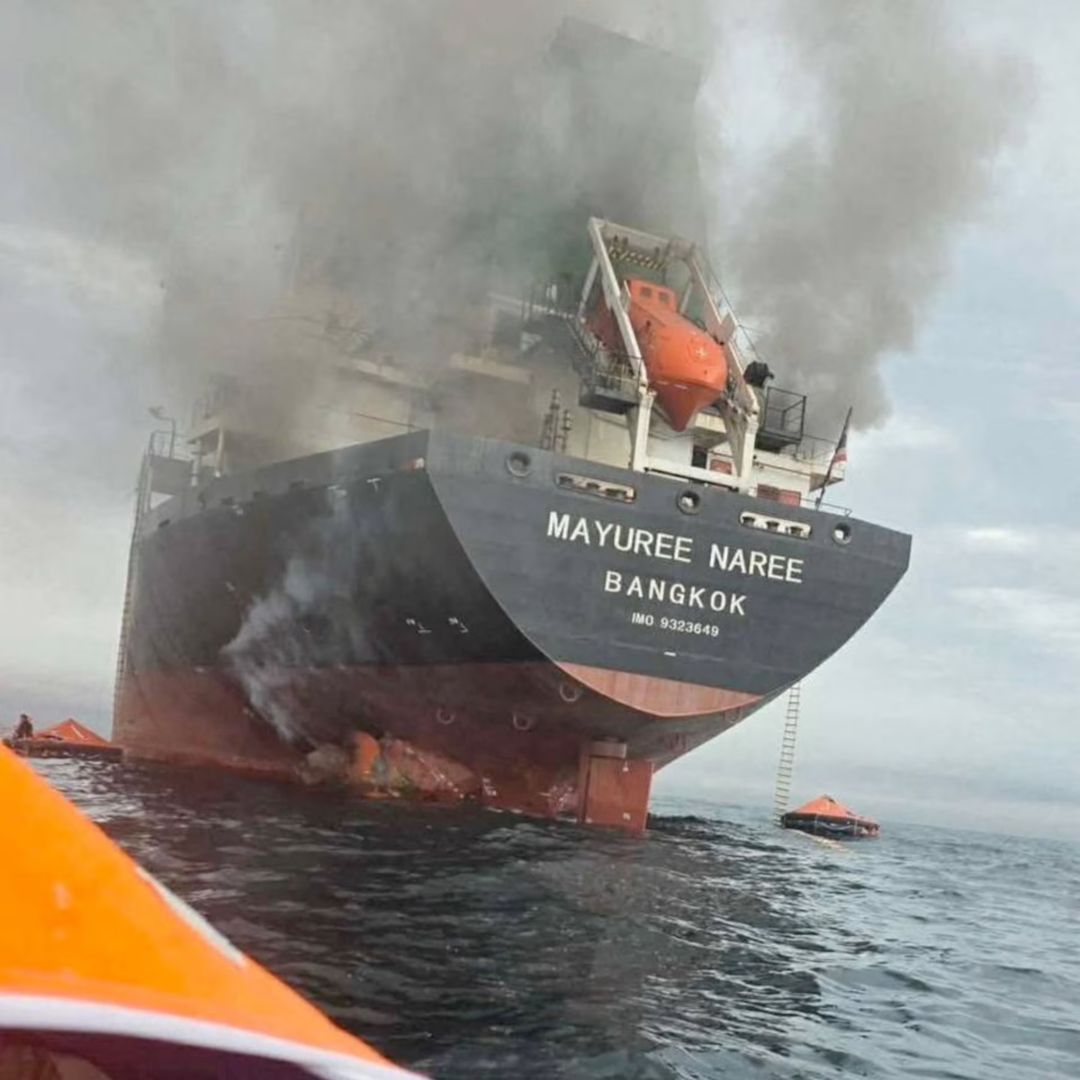
The number of reported attacks on vessels near the Strait of Hormuz has reached its highest weekly level since the US-Israeli war with Iran began, raising fresh concerns about the security of global energy supplies and the future of commercial shipping through one of the world's most important maritime corridors.
Data analysed by BBC Verify from the United Kingdom Maritime Trade Operations (UKMTO) agency showed that 12 vessels reported attacks between October 5 and 11, 2026, surpassing the 10 incidents recorded during the preceding week. Six vessels were reportedly targeted on October 11 alone, marking the highest daily total in the period examined.
The surge in maritime incidents comes as oil shipments through the strategic waterway have slowed following a recovery in September. Shipping intelligence data cited by BBC Verify indicated that approximately 12.6 million barrels of oil per day passed through the strait on October 13, down from about 15 million barrels per day at the end of September.
Before the conflict, flows through the waterway stood at roughly 17 million barrels per day, according to the same report. The decline highlights how escalating military tensions and risks to commercial vessels can disrupt the movement of energy even when the shipping route remains open.
The latest figures have intensified concerns among energy traders, shipping companies and governments that further attacks could increase transport costs, delay deliveries and place additional upward pressure on global oil prices (BBC)
Two ships sink as attacks intensify
The rising number of incidents has been accompanied by increasingly serious damage to commercial vessels.
On October 14, maritime officials reported that two ships had sunk near the Strait of Hormuz following separate projectile strikes. One was the Singapore-flagged container ship GFS Pride, which caught fire and subsequently sank while transiting the strait. Singapore's Maritime and Port Authority confirmed that all 21 crew members were evacuated safely, with no injuries reported.
The second vessel, the Antigua and Barbuda-flagged bulk carrier Cape Dao, sank after sustaining damage from an earlier attack on September 23. One crew member was reported killed in that incident, while the remaining crew were evacuated.
The incidents demonstrated that the danger extends beyond oil tankers to container ships and other commercial vessels carrying essential goods.
The United Kingdom Maritime Trade Operations agency has continued to publish alerts concerning attacks and suspicious activity in and around the waterway. In several cases, the projectiles' origins or the precise circumstances of the incidents were not immediately established.
Iran has said it is stepping up action against vessels in response to the US blockade of Iranian ports and tighter sanctions. Tehran has also sought to assert greater control over maritime movements through the strait.
The United States and its allies, meanwhile, face the challenge of protecting commercial shipping without triggering a wider military confrontation.
Why the Strait of Hormuz matters to the global economy
The Strait of Hormuz connects the Persian Gulf to the Gulf of Oman and the Arabian Sea. It is a vital export route for major oil and gas producers, including Saudi Arabia, Iraq, Kuwait, Qatar and the United Arab Emirates.
Before the current conflict, approximately one-fifth of global oil and liquefied natural gas trade passed through the waterway, making its security a major concern for energy-importing countries in Asia, Europe and elsewhere.
A sustained reduction in traffic can have consequences far beyond the Middle East. Refineries depend on reliable crude deliveries, while manufacturers, airlines, transport companies and households are exposed to changes in fuel prices.
When shipowners consider a route too dangerous, they may delay departures, seek military protection, arrange alternative routes where available or demand higher freight rates to compensate for the additional risk.
These decisions can reduce the number of vessels willing to enter the area, even when oil supplies remain available at export terminals.
According to Reuters reporting published by The National, only seven commodity vessels passed through the strait on October 6, the lowest daily figure in more than two months at that point. Kpler data also indicated that crude flows through the strait had fallen to around 10.1 million barrels per day, approximately 74 per cent of their pre-war level.
The figures illustrate how security threats can affect shipping volumes even without a complete closure of the route.
Oil exports slow despite alternative shipping routes
The slowdown in Hormuz shipments does not necessarily mean that all Middle Eastern oil exports have fallen by the same amount.
Some producers have expanded shipments through alternative routes, including terminals on the Gulf of Oman and the Red Sea. These alternatives can help maintain exports, but their capacity, infrastructure and geographical reach limit how much disrupted traffic they can replace.
Reuters reported in early October that Middle Eastern crude exports had exceeded pre-war levels on several days in late September, supported by stronger shipments from alternative terminals. However, sustaining those volumes has become more difficult as attacks have intensified and shipping logistics have deteriorated.
Ship-to-ship transfers, in which oil is moved between vessels at sea, have also faced disruption. These transfers can help exporters move cargoes when conventional routes are constrained, but they require suitable vessels, safe operating conditions and reliable insurance.
The result is a market in which export capacity may exist, yet delivering oil to international buyers becomes more expensive and less predictable.
For oil-importing countries, the distinction matters. Even if overall supply does not immediately collapse, rising freight rates, insurance premiums and delays can increase the final cost of imported fuel.
Rising attacks put further pressure on oil prices
The growing threat to shipping has contributed to volatility in international oil markets as traders weigh the risk of supply disruptions against the availability of alternative exports.
On October 14, Reuters reported that Brent crude futures rose to $106.32 per barrel during trading, while US West Texas Intermediate crude reached $94.80 per barrel. The price movements followed attacks on vessels near Hormuz and reports that Iranian officials were using new tactics to target ships.
The possibility of further attacks creates uncertainty for oil producers, refiners and consumers. Traders must assess not only current export volumes but also the likelihood of additional disruptions, the availability of spare shipping capacity and the cost of protecting vessels.
Shipping expenses have also increased as operators compete for available tankers and factor security risks into their rates. Longer journeys, delays and the need to reposition vessels can reduce the effective availability of ships for other routes.
For consumers, sustained increases in crude oil and freight costs can eventually feed into petrol, diesel, aviation fuel and transport expenses. The speed and scale of these effects vary between countries, depending on exchange rates, government policies, refining capacity and local fuel supply arrangements.
In Nigeria, international oil-market movements are relevant because changes in crude prices and refined-product costs can affect domestic fuel prices, inflation and transport expenses. However, the effect is not automatic: local prices also depend on exchange rates, supply arrangements and domestic market conditions.
Further escalation around Hormuz could therefore complicate efforts by governments to contain living costs, particularly in countries heavily dependent on imported refined petroleum products.
International response and maritime security challenges
The rising threat has increased pressure on governments and maritime security agencies to protect commercial traffic and prevent further attacks on civilian vessels.
The UKMTO continues to serve as a reporting and advisory channel for commercial shipping, providing alerts that help operators assess risks before entering affected waters.
Naval monitoring and escort arrangements can provide additional protection, but securing a busy international shipping corridor during an active conflict is a complex task. Vessels may travel under different flags, carry cargoes for multiple countries and operate across a broad geographical area.
The wider conflict also complicates diplomatic efforts. Iran's restrictions and attacks have been linked to its confrontation with the United States, including Washington's blockade of Iranian ports. Meanwhile, attacks on vessels and threats to regional infrastructure risk drawing additional countries into the crisis.
The Associated Press report on Iran's expanding threat to Hormuz shipping outlines the wider security concerns surrounding commercial vessels and oil transfers in the region.
A durable solution will require more than naval patrols. Diplomatic engagement, clear maritime rules, protection for civilian crews and measures to reduce the risk of further escalation will all be important in restoring confidence.
Outlook: Will oil shipments recover?
The latest figures point to a difficult period for international shipping. Record weekly attack reports, sinking vessels and declining oil flows suggest that commercial operators face substantial uncertainty around the Strait of Hormuz.
Nevertheless, the available figures do not establish that the waterway has been completely closed or that global oil supplies have suffered an equivalent decline. Alternative export routes and changes in shipping schedules can offset some losses, although they cannot eliminate the risks.
The central question is whether the latest surge represents a temporary escalation or the beginning of a prolonged period of disruption.
If attacks continue, shipowners could become increasingly reluctant to enter the region, pushing insurance and freight costs higher. Oil prices could also remain elevated as markets factor in the possibility of a more severe supply interruption.
Conversely, a sustained reduction in hostilities and credible security guarantees could encourage shipping companies to resume more regular operations.
For now, the record number of reported attacks is a warning that the security of the Strait of Hormuz remains closely linked to global energy stability.
Conclusion:
The surge in ship attacks near Hormuz is slowing the recovery in oil shipments and increasing uncertainty across international energy markets. Whether the disruption develops into a wider supply crisis will depend on the course of the conflict, the effectiveness of maritime protection and the ability of regional and international powers to prevent further escalation.
SEO Keywords: Strait of Hormuz ship attacks, oil exports slow, Hormuz shipping crisis, global oil prices, Iran war, maritime security, tanker attacks, Middle East oil exports, UKMTO, global energy supply.