Spain Beat Argentina 1-0 After Extra Time to Win 2026 FIFA World Cup, Clinch Second Global Title
Spain defeated defending champions Argentina 1-0 after extra time to win the 2026 FIFA World Cup, securing their second world title with a dramatic victory powered by Ferran Torres' decisive goal.
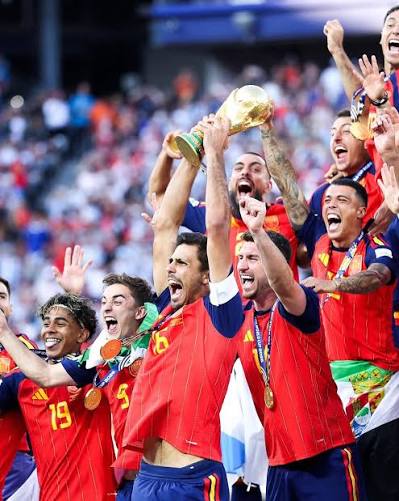
Spain were crowned 2026 FIFA World Cup champions after edging defending champions Argentina 1-0 after extra time in a tense and dramatic final at the MetLife Stadium in East Rutherford, New Jersey.
A decisive goal from Ferran Torres in the 108th minute separated the two football giants in a match that showcased tactical discipline, defensive resilience, and moments of individual brilliance. The victory handed La Roja their second FIFA World Cup title, 16 years after their maiden triumph in South Africa in 2010, while denying Argentina the chance to successfully defend the crown they won in Qatar in 2022.
The triumph sparked jubilant celebrations across Spain, with millions of fans flooding city squares, streets, and public viewing centres to celebrate another historic milestone in the nation's football history.
A Closely Contested Final
The championship match lived up to expectations, with both teams creating chances but struggling to find a breakthrough during regulation time.
Spain dominated possession for long periods, relying on their trademark passing game to stretch Argentina's defence. Midfield maestro Pedri orchestrated attacks, while teenage sensation Lamine Yamal repeatedly threatened down the flanks with his pace and creativity.
Argentina, meanwhile, remained dangerous on the counterattack. Led by captain Enzo Fernández and striker Julián Álvarez, the South Americans produced several promising opportunities but found Spain's organised backline difficult to penetrate.
Goalkeepers Unai Simón and Emiliano Martínez each produced crucial saves to keep the score level through 90 minutes, forcing the contest into extra time.
Ferran Torres Delivers the Winner
With penalties appearing increasingly likely, Spain finally broke the deadlock midway through extra time.
After a flowing team move, Ferran Torres received a precise pass inside the penalty area before calmly slotting the ball past Martínez to send Spanish supporters into wild celebration.
The goal proved decisive despite Argentina's determined late push for an equaliser.
Spain's defenders held firm during the closing minutes, successfully repelling a series of Argentine attacks before the final whistle confirmed their place atop world football once again.
Torres' winner instantly became one of the most memorable goals in Spanish football history.
Spain's Golden Generation Delivers Again
Spain's World Cup triumph reflects years of investment in youth development and technical football.
The squad blended experienced international players with a new generation of emerging stars, including Lamine Yamal, Nico Williams, Pedri, Gavi and others who have revitalised Spanish football.
Head coach Luis de la Fuente received widespread praise for building a balanced team capable of controlling possession while remaining defensively compact and tactically flexible.
Throughout the tournament, Spain impressed with disciplined performances against some of the world's strongest national teams, demonstrating consistency that ultimately carried them to the title.
Their success also reinforced Spain's reputation as one of international football's elite nations.
Argentina Falls Short of Historic Defence
For Argentina, defeat marked a disappointing end to an otherwise impressive campaign.
Having entered the tournament as defending champions, the Albiceleste once again demonstrated resilience and attacking quality throughout the competition.
Manager Lionel Scaloni praised his players' commitment despite the heartbreaking defeat, acknowledging Spain's quality while expressing pride in Argentina's efforts.
Although unable to retain the trophy, Argentina remained among the tournament's standout teams and further strengthened its position as one of football's global powerhouses.
Supporters applauded the team after the match despite the painful loss.
Celebration Across Spain
The final whistle triggered emotional celebrations across Spain.
Thousands of supporters gathered in Madrid's Plaza de Cibeles, Barcelona, Valencia, Seville and numerous other cities waving national flags, singing traditional football chants and setting off fireworks.
Government leaders congratulated the national team, describing the victory as a moment of national unity and pride.
King Felipe VI also praised the players and coaching staff for their determination, professionalism and outstanding representation of Spain on the global stage.
Victory parades are expected to attract hundreds of thousands of supporters in the coming days.
Tournament Sets New Records
The 2026 FIFA World Cup, jointly hosted by the United States, Canada and Mexico, became the largest tournament in FIFA history.
Expanded to 48 participating nations, the competition featured a record number of matches, unprecedented attendance figures and billions of television viewers worldwide.
The tournament also showed advances in sports technology, including enhanced video assistant referee (VAR) systems, artificial intelligence-assisted broadcasting and improved fan engagement through digital platforms.
FIFA President Gianni Infantino described the competition as a historic success that demonstrated football's unmatched global appeal.
Individual Stars Shine
Several players produced outstanding performances throughout the tournament.
Spain's Lamine Yamal emerged as one of football's brightest young talents, while Pedri controlled matches with remarkable composure in midfield.
Goalkeeper Unai Simón played a crucial role with a series of match-saving interventions during the knockout stages.
For Argentina, Emiliano Martínez once again proved to be one of the world's finest goalkeepers, while Julián Álvarez and Enzo Fernández delivered consistently strong performances despite falling short in the final.
The tournament also highlighted the emergence of several young stars expected to dominate international football for years to come.
A New Chapter in Football History
Spain's victory marks the beginning of a new era for one of football's most successful nations.
After years of rebuilding following the decline of the generation that won the 2010 World Cup and back-to-back European Championships, La Roja have returned to the summit of world football with another gifted group of players.
For Argentina, the defeat ends their reign as world champions but does little to diminish their remarkable achievements in recent years.
As the football world reflects on another unforgettable FIFA World Cup, Spain's triumph will be remembered as a victory built on teamwork, tactical intelligence and unwavering belief.
The 2026 tournament not only crowned a deserving champion but also reaffirmed football's unique ability to unite billions of people across cultures and continents through moments of extraordinary sporting drama. (FIFA)