South Korea Shortens US War Games After Washington Request as Trump Seeks North Korea Dialogue
South Korea and the United States have shortened the Ulchi Freedom Shield military exercises from 11 days to five after Washington requested a reduction, amid Donald Trump’s renewed push for talks with North Korea.
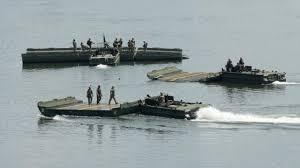
South Korea and the United States have agreed to shorten and scale back their annual joint military exercises, following a request from Washington that has raised fresh questions about the future of the US-South Korea security alliance and efforts to reopen dialogue with North Korea.
The Ulchi Freedom Shield (UFS) exercises, which began on August 17, were originally scheduled to run for 11 days until August 27. Under the revised plan, the exercises will end on August 21, cutting the duration by more than half. Some field-training activities have also been reduced or converted into computer simulations.
The decision follows US President Donald Trump's directive to significantly reduce American participation in the drills, announced shortly before the exercises began. Trump cited his relationship with North Korean leader Kim Jong Un, the cost of the exercises and Seoul's refusal to support US military efforts concerning Iran. (Reuters)
Washington requested a reduction in military exercises
South Korean military authorities confirmed Wednesday that the duration and scale of UFS would be reduced at Washington's request.
The change came after Trump ordered the Pentagon to substantially scale back the exercises. The decision reportedly caught some officials in Seoul by surprise because the annual drills had already been planned and were scheduled to begin the following day when Trump made his announcement. (koreajoongangdaily)
The US president has repeatedly criticised large-scale military exercises as expensive and potentially provocative.
Trump also pointed to what he described as his positive relationship with Kim Jong Un, arguing that North Korea had not posed the same level of threat during his administration.
His latest move has therefore been interpreted partly as an attempt to create conditions for renewed engagement with Pyongyang.
Ulchi Freedom Shield shortened from 11 days to five
The UFS exercise is one of the most important annual military drills conducted by the United States and South Korea.
This year's exercise was initially planned for August 17 to August 27, with approximately 18,000 South Korean troops participating alongside US forces and personnel connected to the United Nations Command. (AP News)
Under the revised arrangement, the exercise will be concluded on August 21.
The second phase, which would have involved counterattack operations, has reportedly been cancelled. Some field exercises have also been scaled back or transformed into simulations.
Despite the reductions, American and South Korean officials have maintained that the core objectives of the exercise will continue to be addressed.
The drills are designed to test the allies' ability to respond to a potential conflict on the Korean Peninsula, including emerging threats involving drones, cyberattacks and GPS interference.
Why the exercises matter
The annual exercises are considered an important component of the US-South Korea alliance.
South Korea and the United States have maintained a military alliance since the Korean War, with roughly 28,500 US troops stationed in South Korea.
The joint exercises provide an opportunity for the two militaries to practise command procedures, coordinate operations and prepare for potential contingencies involving North Korea.
They also allow commanders and troops to become familiar with operational procedures, particularly as personnel rotate regularly.
Military experts have warned that reducing such exercises could eventually affect readiness if the scale-back becomes a recurring policy.
The exercises have consequently become more than military training. They are also viewed as a visible demonstration of Washington's commitment to South Korea's defence.
Trump wants to reopen dialogue with Kim
Trump's decision comes amid renewed speculation about his desire to restart direct engagement with Kim Jong Un.
Trump and Kim held three meetings during Trump's first presidency, beginning with their historic 2018 summit in Singapore.
Although those meetings failed to produce a lasting agreement over North Korea's nuclear programme, Trump has continued to speak positively about his relationship with the North Korean leader.
The US president's latest decision to reduce military exercises could therefore be intended to lower tensions and encourage Pyongyang to return to negotiations.
Reports have suggested Trump is interested in meeting Kim again during a possible trip to Asia later this year. (The Guardian)
However, North Korea has not indicated that it is prepared to resume negotiations.
North Korea condemns the drills
Despite the reduction, North Korea has strongly criticised the exercises.
Before UFS began, Pyongyang described the planned drills as increasingly provocative and warned that it would respond by strengthening its nuclear deterrent.
North Korean state media accused Washington, Seoul and Tokyo of deepening military cooperation and described the exercises as evidence of what it considers an increasingly hostile security environment.
North Korea has traditionally condemned US-South Korea military exercises as rehearsals for an invasion.
Washington and Seoul, however, insist that UFS is defensive and designed to prepare for a possible attack rather than initiate one.
The latest reduction has not persuaded Pyongyang to abandon its criticism.
Seoul caught between deterrence and diplomacy
The decision places South Korea in a delicate position.
President Lee Jae Myung's government has supported efforts to improve relations with North Korea while maintaining the country's alliance with Washington.
Following Trump's announcement, Lee reiterated the importance of strengthening South Korea's independent defence capabilities while maintaining the US alliance.
He has also supported the long-term goal of transferring wartime operational control, or OPCON, of South Korean forces from the United States to Seoul. (The Guardian)
The reduction in exercises could therefore accelerate South Korea's efforts to develop greater military independence.
At the same time, Seoul does not want any reduction in joint training to weaken the credibility of US extended deterrence.
Iran also factors into Trump's decision
Trump's decision was not solely about North Korea.
The US president also criticised South Korea over its refusal to participate in American efforts concerning Iran.
Washington has been seeking greater support from allies as its confrontation with Tehran continues.
South Korea has resisted becoming directly involved in the US military campaign, preferring to avoid expanding its military commitments beyond the Korean Peninsula.
Trump's dissatisfaction with Seoul's position on Iran has added another layer to the already complicated US-South Korea relationship.
The development demonstrates how American military priorities in one region can increasingly affect alliance arrangements in another.
Concerns about the future of the alliance
The sudden reduction has generated concerns among some South Korean politicians and security experts.
Conservative lawmakers have argued that weakening joint military exercises could undermine deterrence at a time when North Korea continues expanding its nuclear and missile capabilities.
Some have gone further, calling for South Korea to reconsider its own nuclear capabilities following Trump's decision.
Supporters of the reduction, however, argue that the move could create an opening for diplomacy.
They point to Trump's relationship with Kim and suggest that reducing exercises could remove one of Pyongyang's longstanding complaints about US military activity on the peninsula.
Military readiness remains a central concern
The US military has sought to reassure allies that the reduction does not mean Washington is abandoning South Korea.
Some exercises will continue, while others have been converted into simulations.
US officials maintain that core training and readiness objectives can still be achieved despite the shortened schedule.
However, analysts caution that live exercises provide experiences that computer simulations cannot completely reproduce.
Field exercises allow troops to practise logistics, communications and coordination under realistic conditions.
That distinction could become increasingly important if the scale of future exercises is reduced further.
A significant shift in regional security policy
The shortening of the US-South Korea war games is a significant development in the security environment of East Asia.
For Washington, it could represent an effort to balance military preparedness with Trump's preference for diplomacy and his longstanding relationship with Kim Jong Un.
For Seoul, it raises difficult questions about maintaining deterrence while pursuing greater military independence.
For Pyongyang, the reduction may be interpreted as a positive signal, but North Korea's continued criticism shows that it has not abandoned its opposition to US military involvement on the peninsula.
The immediate change is clear: Ulchi Freedom Shield has been reduced from 11 days to five at Washington's request.
The larger question is what happens next.
If Trump succeeds in reopening dialogue with Kim, the reduction could become part of a broader diplomatic strategy.
But if talks fail and North Korea continues expanding its nuclear and missile capabilities, South Korea and the United States could face growing pressure to restore or even increase the scale of joint military training.
For now, the shortened exercises represent another important test of the delicate balance between military readiness, alliance commitments and diplomacy on the Korean Peninsula.