South Korea Jails American YouTuber for Public Nuisance: Inside the Case of ‘Johnny Somali’
South Korea has sentenced American YouTuber Johnny Somali to prison for public nuisance and disruptive behavior, sparking debate over online content, free speech, and accountability abroad.
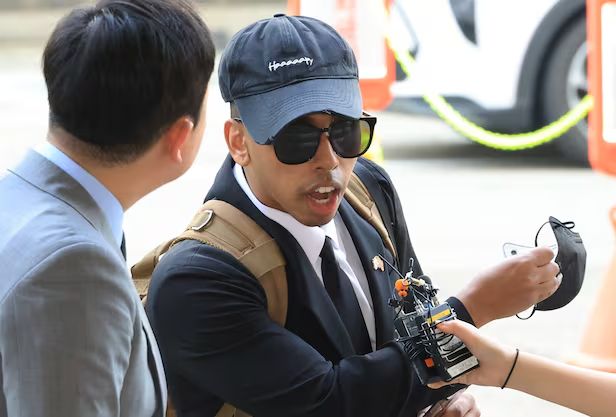
A controversial case involving an American content creator has drawn global attention after South Korea sentenced a YouTuber to prison for public nuisance and disruptive conduct.
The individual at the center of the storm is Ramsey Khalid Ismael, widely known online as “Johnny Somali,” whose provocative livestream antics across multiple countries have repeatedly sparked outrage. His latest legal troubles in South Korea, however, have proven far more serious ending in a prison sentence that underscores growing intolerance for “nuisance streaming” in Asia.
Sentence and Charges
In April 2026, a court in Seoul sentenced Ismael to six months in prison with labor, alongside additional penalties including short-term detention and restrictions on future employment involving minors. (Wikipedia)
The court found him guilty of multiple offenses, including:
- Public nuisance and disorderly conduct
- Obstruction of business
- Violations of public order laws
- Distribution of inappropriate or false media content
Prosecutors had initially sought a much longer sentence up to three years, arguing that his actions were deliberate and profit-driven.
Ultimately, the court concluded that his behavior repeatedly disrupted public life and showed “disregard for Korean law.”
What Did He Do?
Ismael gained notoriety for filming himself engaging in provocative and often offensive acts in public spaces across South Korea.
Among the incidents cited in court:
- Disrupting a convenience store by spilling food and blasting loud music
- Causing disturbances on buses and subways while livestreaming
- Harassing pedestrians and engaging in confrontations
- Performing lewd acts at sensitive public sites, including the “Statue of Peace”, a memorial honoring victims of wartime sexual slavery (BERNAMA)
He also reportedly shouted offensive remarks, played inappropriate content in public, and staged disruptive stunts designed to provoke reactions for online viewers. (아시아경제)
These actions were broadcast to his audience, forming the basis of his content strategy - one that ultimately led to legal consequences.
The Rise of “Nuisance Streaming”
Ismael is part of a growing category of online creators sometimes referred to as “nuisance streamers” - individuals who generate content by deliberately provoking or disturbing the public.
This trend has become particularly controversial in countries like South Korea and Japan, where social norms strongly emphasize respect, order, and public decorum.
Authorities in these countries have increasingly taken a hardline stance, moving from warnings and fines to criminal prosecution. (Japan Times)
In Ismael’s case, his repeated offenses and refusal to adjust his behavior escalated the situation from controversy to criminal liability.
A Pattern of Global Controversy
The South Korean case is not Ismael’s first encounter with law enforcement.
He has previously been:
- Arrested or detained in Japan for disturbing the peace
- Involved in incidents in Israel and other countries
- Banned or suspended from multiple streaming platforms
His online persona centered on shock value and confrontation, has consistently drawn backlash, but also attention.
However, South Korea’s legal response marks one of the most severe consequences he has faced to date.
Public Outrage in South Korea
Ismael’s actions sparked widespread anger among South Koreans, particularly his behavior at culturally and historically sensitive locations.
The Statue of Peace incident became a flashpoint, as the monument represents victims of Japan’s wartime sexual slavery - a deeply emotional issue in Korean society.
Many viewed his actions not just as disruptive but as deeply disrespectful.
Public sentiment played a significant role in shaping the case, with widespread calls for authorities to take firm action against what was seen as repeated disrespect toward Korean culture.
Free Speech vs. Cultural Respect
Following his arrest, Ismael framed the case as a matter of free speech, even comparing himself to political prisoners, a claim widely rejected by critics. (New York Post)
Legal experts, however, argue that the issue is not about expression, but conduct.
While freedom of speech is protected in many democracies, it does not extend to:
- Harassment or intimidation
- Disruption of businesses
- Public indecency or disorderly conduct
In South Korea, such actions fall squarely under criminal law.
The case highlights a broader tension between Western-style online content culture, often driven by shock value and stricter legal and cultural norms in other parts of the world.
Legal and Cultural Implications
The sentencing sends a clear message: foreign nationals are not exempt from local laws, especially when their actions disrupt public order.
It also reflects a broader shift in how countries are responding to disruptive online behavior.
Experts note that governments are increasingly recognizing the real-world impact of digital content particularly when it crosses into harassment, public disturbance, or exploitation.
In South Korea, where public harmony is highly valued, such behavior is taken seriously.
The Future of Influencer Accountability
The case of Johnny Somali may signal a turning point in how “extreme content” creators are treated internationally.
For years, some influencers have pushed boundaries for views, often assuming that consequences would be limited to online backlash or platform bans.
This case challenges that assumption.
It raises important questions:
- Should platforms be more responsible for regulating such content?
- Are current laws sufficient to address cross-border digital behavior?
- How should creators adapt when operating in different cultural contexts?
Conclusion
The jailing of Ramsey Khalid Ismael in South Korea is more than just a legal case because it reflects the evolving relationship between online culture and real-world accountability.
As digital creators continue to blur the lines between entertainment and disruption, governments are making it clear that public order still matters.
For influencers operating globally, the message is unmistakable: what may be considered “content” in one context can carry serious consequences in another.