Soludo Secures Second Term as Anambra Governor in Landslide Victory
Governor Chukwuma Charles Soludo of the All Progressives Grand Alliance (APGA) has been re-elected for a second term following a decisive win in the November 8 Anambra Governorship Election. This report provides a detailed breakdown of results, security concerns, voter turnout, and post-election reactions. Includes source links to INEC and major news outlets.
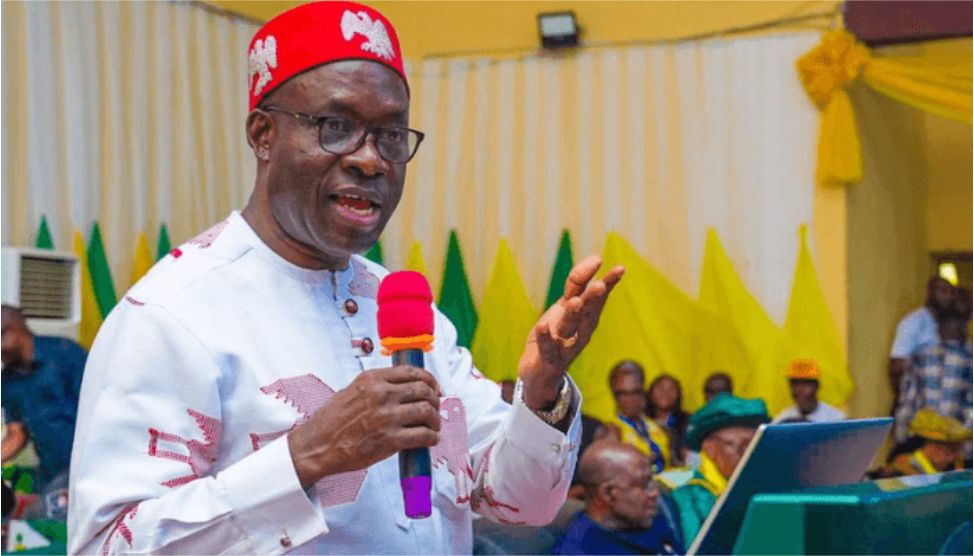
Governor Chukwuma Charles Soludo has been re-elected as the Governor of Anambra State and will remain in office until 2030 after securing a resounding victory in the November 8, 2025, governorship election. The Independent National Electoral Commission (INEC) officially declared the former Central Bank of Nigeria (CBN) governor the winner in the early hours of Sunday after concluding the collation of votes from the 21 local government areas (LGAs) in the state.
The State Returning Officer and Vice Chancellor of the University of Benin, Professor Omoregie Edoba, announced Soludo as the winner shortly after midnight at the INEC headquarters in Awka.
“I hereby declare that Soludo Charles Chukwuma of the APGA, having satisfied the requirements of the law, is hereby declared the winner and returned elected,” Prof. Edoba said, triggering celebrations among the governor’s supporters.
Massive Lead Over Opposition
Soludo, representing the All Progressives Grand Alliance (APGA), polled 422,664 votes, securing a wide margin over his closest challenger Nicholas Ukachukwu of the All Progressives Congress (APC), who scored 99,445 votes. the other major contenders included Paul Chukwuma of YPP with 37,753 votes, George Moghalu of LP with 10,576 votes, John Nwosu of ADC with 8,208 votes and Jude Ezenwafor of PDP with 1,401 votes
This landslide victory reaffirms APGA’s long-standing political dominance in Anambra, having governed the state since 2006.
Turnout Lower Than Previous Elections
Despite the enthusiasm among APC and APGA loyalists during campaigns, turnout remained relatively low. Out of 2,788,864 registered voters, only 598,229 were accredited. INEC reported a total of 595,298 votes cast, of which 584,054 were valid and 11,244 rejected.
Analysts attribute this decline in voter participation to persistent concerns about security, disillusionment, and a rising distrust in political processes in the South-East.
Celebrations and Political Messaging
Supporters flooded Soludo’s country home in Isuofia, Aguata LGA, chanting “Four More Years” as the governor addressed the jubilant crowd.
Soludo noted that his re-election represents a mandate to consolidate reforms and accelerate development projects initiated in his first tenure.
“We remain committed to building a liveable, prosperous Anambra. The work continues,” he told supporters.
Election Conduct: Tight Security and Persistent Vote-Buying Concerns
Security presence was heavy across the state, with the Nigeria Police Force deploying 45,000 personnel to forestall violence, especially in communities previously targeted by armed groups.
While the election was generally peaceful, both local and foreign observer groups raised concerns about alleged vote-buying across several polling units. Some candidates, including Soludo himself, acknowledged the widespread nature of electoral malpractice.
Nicholas Ukachukwu of the APC criticized both voters and political actors: “If there’s no seller, there cannot be a buyer. People are giving up their rights cheaply, and that hurts democracy,” he said.
Anti-Graft Intervention and INEC Response
The Economic and Financial Crimes Commission (EFCC) confirmed the arrest of three suspects linked to financial inducements at polling units. The agency vowed to prosecute them.
INEC, however, insisted that there was insufficient evidence to support broad allegations against specific parties. Anambra Resident Electoral Commissioner, Queen Agwu, urged citizens to present actionable proof: “Vote-buying is a serious offence. Vague claims on television cannot hold up legally,” she stated on Channels Television.
To promote transparency, INEC uploaded polling unit results to the Result Viewing Portal (IReV), a measure that received commendation from several civic groups.
Opposition Reactions: Mixed Acceptance
While no major candidate has rejected the outcome, several opposition party representatives expressed concerns about election credibility. Some indicated they would consult their legal teams before deciding on next steps.
Political analysts note that the wide margin of victory may discourage lengthy legal challenges.
Governance Challenges Ahead
Soludo’s second term begins amid significant social and economic issues:
Security: Escalating criminal attacks and separatist-related violence across the South-East
Infrastructure: Road damage and drainage failures affecting major towns
Economy: Declining local investment, youth unemployment, and tax disputes
Public Expectations: Pressure to deliver tangible improvements faster than in his first term
Residents interviewed in Onitsha and Nnewi shared divided feelings. Some praised Soludo’s urban renewal projects; others pointed to unfulfilled promises and worsening living costs.
Political Context: APGA’s Stronghold Continues
This result follows Soludo’s 2021 election victory, where he also won in 19 of 21 LGAs. His re-election extends APGA’s legacy since the days of former governors Peter Obi and Willie Obiano.
Analysts believe Soludo’s national relevance as a former CBN governor and vocal economic reform advocate contributed to his commanding lead.
Next Steps
Soludo and his deputy, Onyeka Ibezim, who ran on a joint ticket, are expected to receive their Certificates of Return from INEC within the week. The formal swearing-in is expected early next year, marking the start of his final constitutionally allowed term.