Shockwaves in Washington: General Randy George’s Exit and Warning Signal Deep Crisis in U.S. Military Leadership
The resignation of U.S. Army Chief of Staff Gen. Randy George amid Pentagon turmoil raises concerns over leadership, troop morale, and America’s global military strength. Full analysis.
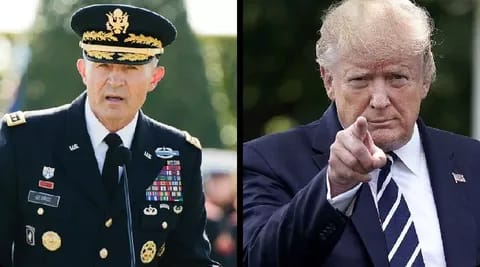
The abrupt resignation (effectively forced retirement) of Randy George as Chief of Staff of the U.S. Army marks one of the most dramatic military leadership shake-ups in recent American history. Reports indicate that he was asked to step down by Defense Secretary Pete Hegseth during an ongoing geopolitical crisis involving tensions with Iran. (Reuters)
General George, a seasoned combat officer with decades of service in Iraq, Afghanistan, and the Gulf War, was expected to remain in office until 2027. His sudden removal - alongside other senior officers - signals more than a routine leadership change; it reflects a deepening politicization and instability within the U.S. military command structure. (The Guardian)
More striking, however, are reports and circulating narratives suggesting that George left office with a deeply alarming sentiment - warning that “a mad man will lead the great U.S. Army to ruin.” While the exact phrasing remains unverified in official transcripts, the sentiment aligns with broader concerns voiced by insiders about erratic leadership decisions within the Pentagon.
Context: A Military Leadership Purge in Wartime
George’s exit did not occur in isolation. It is part of a wider purge of senior military officials under the current administration. Multiple top generals - including leaders from the Army, Navy, and Air Force - have been dismissed or forced into early retirement. (The Times)
This wave of removals is unprecedented in modern U.S. history, especially during an active conflict. Analysts warn that such rapid turnover could disrupt continuity of command, weaken institutional memory, and undermine strategic planning.
The timing is particularly sensitive. The U.S. military is currently engaged in high-stakes operations in the Middle East, where stability in leadership is critical. (Axios)
In this context, George’s departure - and his alleged warning - takes on a far more serious meaning.
Interpreting the “Mad Man” Warning
Even without official confirmation of the exact quote, the broader implication is clear: a senior military leader expressing concern about irrational or politically driven command decisions.
Historically, U.S. military doctrine is built on a strict separation between civilian political leadership and professional military judgment. When that balance is perceived to be breaking down, it creates several risks:
1. Politicization of the Military: If top generals are removed for not aligning with political ideology rather than strategic competence, the military risks becoming an extension of partisan power rather than a neutral national institution.
2. Erosion of Professional Advice: Senior officers may begin to self-censor, avoiding honest advice to political leaders out of fear of dismissal.
3. Strategic Miscalculations: Decisions driven by ideology rather than expertise increase the likelihood of operational failures - especially in complex war zones.
George’s alleged statement can therefore be interpreted as a warning about the dangers of impulsive or ideologically driven leadership in military affairs.
Impact on America as a Nation
The implications of this crisis extend far beyond the Pentagon.
1. National Security Risks: The United States relies on a stable and highly coordinated military leadership structure to project power globally. Frequent leadership changes weaken this structure, potentially emboldening adversaries such as Iran, Russia, and China.
2. Global Credibility: Allies depend on the reliability of U.S. military leadership. Sudden dismissals and internal turmoil may undermine confidence among NATO partners, complicate joint operations, and reduce America’s diplomatic leverage.
3. Institutional Integrity: The U.S. military has long been seen as one of the most professional institutions in the country. Perceptions of political interference could damage its credibility domestically and internationally.
Troop Morale: The Hidden Casualty
Perhaps the most immediate and profound impact of this crisis will be felt among rank-and-file soldiers.
1. Loss of Confidence in Leadership: Soldiers rely on a clear chain of command and trust in their leaders. When top generals are removed abruptly, it creates uncertainty and confusion.
2. Psychological Impact: The perception that leadership decisions are politically motivated can lead to frustration among officers, reduced motivation among enlisted personnel, and increased stress in already high-pressure environments
3. Operational Effectiveness: Low morale directly affects battlefield performance. Units that lack confidence in leadership are less cohesive and less effective.
Critics have already warned that the ongoing purge is “harming morale and undermining military readiness” at a critical time. (New York Post)
Civil-Military Relations Under Strain
The U.S. system is built on a delicate balance: civilian control of the military, combined with respect for professional military expertise. The current situation threatens that balance in two ways: First, overreach by civilian leadership, potentially sidelining professional advice, and second, a growing distrust within the military, which could lead to internal fractures
If not managed carefully, this tension could have long-term consequences for American democracy.
A Historical Perspective
While disagreements between military leaders and political authorities are not new, the scale and speed of recent dismissals are unusual. Past conflicts - such as the Iraq War - saw tensions between generals and political leaders but rarely resulted in widespread purges. The current situation, therefore, represents a significant departure from historical norms.
What Comes Next?
The immediate future will likely involve the appointment of new leadership aligned with current political priorities, continued scrutiny from Congress and defense analysts, and potential pushback from within the military establishment.
However, the long-term trajectory will depend on whether the U.S. can restore stability and confidence in its military institutions.
Conclusion: A Warning Beyond One Man
The resignation of General Randy George - and the warning attributed to him - should not be viewed as an isolated case. It is a symptom of a broader crisis within the U.S. military and political system.
At stake is not just the leadership of the Army, but the credibility, effectiveness, and unity of one of the world’s most powerful military forces.
For America, the challenge is clear: restore trust, preserve professionalism, and ensure that the armed forces remain guided by strategy - not instability.
If that balance is lost, the consequences could extend far beyond Washington - reshaping global power dynamics and redefining the role of the United States in an increasingly volatile world.