Ship Sinks in New Drone Attack off Bulgaria as Prime Minister Summons Russian Ambassador
A cargo ship has sunk after drone attacks near Bulgaria's Black Sea coast, leaving 11 sailors missing. Prime Minister Rumen Radev summoned Russia's ambassador as Sofia seeks NATO and EU assistance.
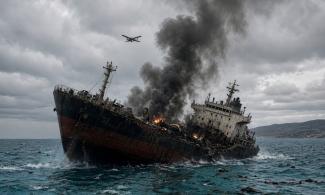
A cargo ship has sunk and 11 sailors are missing following fresh drone attacks on commercial vessels off Bulgaria's Black Sea coast, prompting Prime Minister Rumen Radev to summon Russian Ambassador Eleonora Mitrofanova for an explanation.
The attacks occurred in the early hours of Tuesday, October 13, 2026, when two merchant vessels were struck in Bulgaria's Black Sea exclusive economic zone, intensifying concerns about the growing threat to commercial shipping amid the Russia-Ukraine war.
According to Reuters, the Guinea-Bissau-flagged cargo ship HS Dignity sank after being hit, while a second vessel, the Maltese-flagged Chelsea 3, sustained damage in a separate drone attack.
Five crew members from the sunken ship were rescued, but 11 others remained missing as search-and-rescue operations continued. All 15 crew members aboard the damaged Chelsea 3 were rescued, although five reportedly required medical treatment for minor injuries.
The incidents have placed Bulgaria under renewed pressure to strengthen maritime surveillance and protect commercial vessels operating near its coastline.
Radev condemned the attacks as unacceptable and announced plans to seek explanations from the Russian ambassador. However, he acknowledged that Bulgarian authorities did not yet have conclusive evidence establishing which country was responsible for the drone strikes.
Bulgarian Prime Minister Demands Answers from Moscow
Following an emergency meeting of the government's Security Council, Radev said Bulgaria would intensify efforts to establish the origin of the drones and seek international assistance to improve its ability to monitor and respond to threats in the Black Sea.
He argued that the attacks on merchant vessels near Bulgarian territorial waters could not be allowed to continue without a determined response.
Although he stopped short of directly accusing Russia, Radev said the circumstances suggested that Moscow could benefit from the attacks.
“We do not have clear evidence to accuse any of the parties. But logic indicates that the result is in favour of the Russian Federation,” he said, according to the Bulgarian government's official statement.
The Russian ambassador was summoned for discussions as Sofia sought clarification and communicated with its representatives at the European Union and NATO.
Bulgaria also requested assistance in investigating the incidents and strengthening surveillance of its maritime and airspace, underscoring the seriousness with which officials are treating the attacks.
The diplomatic move reflects growing anxiety among Black Sea countries that the conflict between Russia and Ukraine is increasingly endangering civilian vessels and international trade routes.
Two Ships Hit in Separate Drone Attacks
Details released by Bulgarian authorities indicate that the attacks involved two commercial vessels operating off different parts of the country's northern and central Black Sea coastline.
The Chelsea 3, a Ukrainian-owned vessel sailing under the Maltese flag and registered in Odesa, was struck approximately 18 nautical miles east of Byala.
According to the crew, three aerial drones hit the ship's deck and hull at about 1:30 a.m. local time. Bulgarian maritime rescue services responded to the distress signal, and border police evacuated all 15 crew members to the port of Varna.
The crew included seven Ukrainian nationals and eight Azerbaijani nationals. Five received medical attention for minor injuries, while the vessel was brought to safety.
The second ship sank approximately 17 nautical miles east of Krapets, near Bulgaria's northern coastline. Five sailors were rescued, while 11 remained unaccounted for in the initial reports.
The sinking triggered an urgent search-and-rescue operation as authorities worked to locate the missing sailors and determine the circumstances surrounding the vessel's destruction.
The incidents were reported within Bulgaria's exclusive economic zone, rather than being confirmed as occurring inside its territorial waters. An exclusive economic zone carries specific maritime rights and responsibilities under international law, but it is not the same as territorial waters.
The distinction is important as investigators work to establish the location of the attacks, the origin of the drones and any potential violations of international law.
Latest Attacks Follow Earlier Incidents off Bulgaria
The latest attacks are part of a troubling series of incidents involving commercial shipping in the Black Sea.
On October 6, drones struck two other merchant vessels operating in Bulgaria's exclusive economic zone. One ship sank, while another was damaged. The search for missing sailors from the earlier incident was subsequently called off after rescuers failed to find survivors.
The recurrence of attacks has heightened concerns that commercial vessels are becoming increasingly exposed to the wider military confrontation involving Russia and Ukraine.
According to Euronews, the latest incidents have renewed scrutiny of Europe's ability to protect shipping routes and critical infrastructure in the Black Sea region.
The attacks also come amid broader hostilities involving ports, energy facilities and maritime logistics. Commercial ships transporting agricultural products, fuel and industrial goods depend on safe passage through the region, making further disruptions a concern for international markets.
While the identities of those responsible for the latest attacks have not been conclusively established, Ukrainian officials have previously blamed Russia for drone strikes against civilian vessels in the area.
Russia's responsibility for these particular incidents remains unverified by the available evidence.
Bulgaria Seeks NATO and European Union Assistance
Bulgaria's response extends beyond summoning the Russian ambassador. The government has also sought assistance from NATO and the European Union to investigate the attacks and strengthen its maritime security capabilities.
Radev announced plans to speak with NATO Secretary-General Mark Rutte about improving surveillance and response measures.
As a NATO member bordering the Black Sea, Bulgaria occupies a strategically important position on the alliance's eastern flank. The country must protect its coastline, monitor potential threats and maintain the safety of vessels operating near its maritime jurisdiction.
NATO's involvement could include enhanced information-sharing, surveillance coordination and other defensive measures, depending on consultations among member states.
European Commission President Ursula von der Leyen also condemned the attacks and expressed solidarity with Bulgaria, according to Euronews' report.
The European response reflects concern that repeated strikes against civilian shipping could undermine regional stability and threaten the movement of essential goods.
However, establishing responsibility remains critical. Investigators must determine the drones' origin and examine available evidence before attributing the attacks to a particular country.
Implications for Global Trade and Maritime Security
The Black Sea is an important commercial corridor connecting regional ports with international markets. Its shipping routes support the movement of grain, energy products, industrial materials and other commodities.
Attacks against merchant vessels can increase insurance premiums, raise freight costs and discourage shipping companies from operating in areas considered dangerous.
These additional expenses may eventually affect consumers and businesses far beyond the immediate conflict zone.
For countries dependent on imported agricultural products or energy commodities, continued instability in the Black Sea could contribute to uncertainty over supply chains and prices.
The attacks also raise questions about how international maritime law should be enforced when civilian vessels are endangered in waters close to NATO territory.
Bulgaria's request for greater surveillance assistance reflects the need for coordinated regional measures to protect shipping without unnecessarily escalating military tensions.
Conclusion
The sinking of a cargo ship and the disappearance of 11 sailors following drone attacks off Bulgaria have intensified concerns about the spread of the Russia-Ukraine conflict across the Black Sea.
Prime Minister Rumen Radev's decision to summon Russian Ambassador Eleonora Mitrofanova signals Sofia's determination to seek answers and strengthen protection for commercial shipping.
Nevertheless, Bulgarian officials have acknowledged that the available evidence does not conclusively identify the country responsible for the latest attacks.
The immediate priorities remain locating the missing sailors, investigating the strikes and improving maritime surveillance with support from NATO and the European Union.
Whether the incidents lead to a broader diplomatic confrontation or stronger regional security cooperation will depend partly on the findings of the investigation and the responses of the countries involved.
For now, the attacks underscore the growing risks facing civilian shipping and the importance of protecting maritime routes that serve both regional economies and global trade.