Seven Killed After Drone Strike Hits Bus in Russia-Controlled Part of Ukraine
At least seven people have been killed after a drone struck a civilian bus in a Russia-controlled area of Ukraine, escalating tensions in the ongoing war and raising concerns over civilian safety.
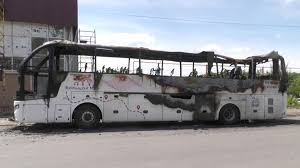
At least seven people have been killed after a drone struck a passenger bus in a Russia-controlled area of Ukraine, in one of the latest deadly incidents in the ongoing conflict between Kyiv and Moscow-backed forces.
The attack, which occurred in a territory currently under Russian military control, has further intensified concerns over the growing use of drones in the war and the increasing risk faced by civilians traveling through active conflict zones.
Authorities on the ground confirmed that the bus was carrying passengers when it was hit, resulting in multiple fatalities and several injuries, while emergency services rushed to evacuate survivors from the scene.
The incident adds to a rising toll of civilian casualties as the war between Ukraine and Russia continues with no immediate signs of de-escalation.
Deadly Drone Strike on Civilian Transport
According to preliminary reports from local officials in the Russia-controlled region, the drone struck the bus while it was traveling along a route frequently used by civilians.
Witnesses described an explosion that engulfed the vehicle, leaving it heavily damaged and causing panic among survivors and nearby residents.
Emergency responders arrived shortly after the strike, pulling victims from the wreckage and transporting the injured to nearby medical facilities for urgent treatment.
Authorities confirmed that at least seven people were killed instantly, while others sustained varying degrees of injuries.
Conflicting Claims Over Responsibility
As with many incidents in the ongoing conflict, responsibility for the attack has not been independently verified.
Russian-installed authorities in the occupied region blamed Ukrainian forces for the drone strike, describing it as a deliberate attack on civilian infrastructure.
Meanwhile, Ukrainian officials have in previous cases denied targeting civilians, often stating that their military operations are focused on strategic or military targets within occupied territories.
Independent verification of battlefield claims remains difficult due to restricted access to conflict zones and ongoing hostilities.
Growing Use of Drones in the War
The war between Russia and Ukraine has increasingly been defined by the extensive use of drone technology on both sides.
Drones have been deployed for surveillance, reconnaissance, and precision strikes on military assets, but incidents involving civilian casualties have raised global concern.
Military analysts say drone warfare has fundamentally changed the nature of the conflict, making it more unpredictable and extending its reach into areas previously considered less vulnerable.
The latest bus attack highlights the dangers posed to civilian transportation routes in contested or occupied territories. (BBC News)
Civilian Toll Continues to Rise
The conflict has resulted in thousands of civilian deaths since it began, with repeated strikes on residential areas, transport networks, and critical infrastructure.
Humanitarian organizations have repeatedly warned that civilians remain the most affected group in the ongoing war.
Aid agencies have called for greater protection of non-combatants and adherence to international humanitarian law, particularly regarding the distinction between military and civilian targets.
The latest incident is expected to renew calls for investigations into alleged wartime conduct violations. (Reuters)
Emergency Response and Local Impact
Following the drone strike, emergency teams in the affected region worked to clear debris and assist survivors.
Local hospitals reportedly received multiple injured passengers requiring urgent medical attention.
Transport services in the area were temporarily disrupted as authorities assessed security risks and investigated the attack site.
Residents in nearby communities expressed fear over continued instability and the risk of further strikes on civilian transport routes.
International Reaction Expected
Global reactions are expected as news of the incident spreads, particularly from Western governments and international organizations monitoring the war.
The United Nations has previously called for restraint and protection of civilians in the conflict, urging all parties to avoid targeting non-military infrastructure.
Human rights groups are also likely to investigate the circumstances surrounding the attack and document its impact on civilians.
Escalating Conflict with No End in Sight
The Russia-Ukraine war, now in its extended phase, continues to see shifting frontlines, heavy artillery exchanges, and increasing reliance on unmanned aerial systems.
Diplomatic efforts to break up peace have so far struggled to achieve lasting results, with both sides maintaining firm positions on territorial and security issues.
The continued targeting of transport routes and civilian areas underscores the persistent volatility of the conflict.
Calls for Accountability
International observers and human rights organizations are expected to push for accountability and independent investigations into the incident.
Previous attacks on civilian infrastructure in the war have led to allegations of war crimes, though formal conclusions often depend on lengthy investigations.
Experts say establishing verified facts remains challenging due to restricted access to affected regions.
Conclusion
The deadly drone strike on a passenger bus in a Russia-controlled area of Ukraine, which killed at least seven people, highlights the ongoing dangers faced by civilians caught in the conflict.
As both sides continue to trade blame and intensify military operations, the humanitarian toll of the war continues to rise, deepening global concern over civilian safety and the future of the region.
With no immediate resolution in sight, incidents like this underscore the urgent need for renewed diplomatic efforts and stronger protection for non-combatants.