SERAP Gives Akpabio and Abbas 7-Day Ultimatum to Refund ₦110 Billion Lawmakers’ Vehicle and Allowances
SERAP has issued a 7-day ultimatum to Senate President Godswill Akpabio and House Speaker Tajudeen Abbas to account for or refund ₦110 billion allegedly spent on lawmakers’ vehicles and allowances, sparking nationwide debate.
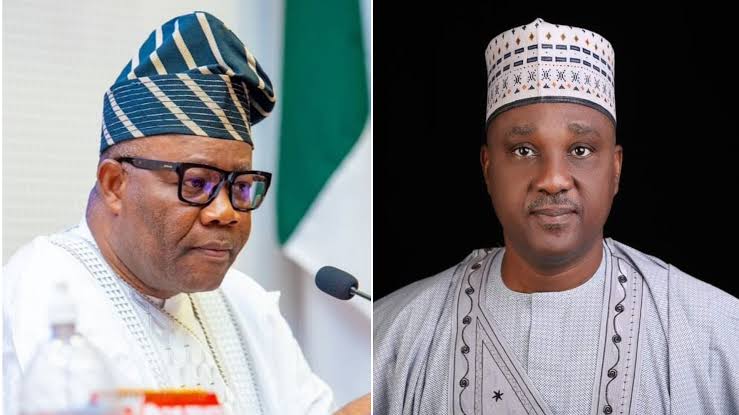
The Socio-Economic Rights and Accountability Project (SERAP) has issued a 7-day ultimatum to Senate President Godswill Akpabio and Speaker of the House of Representatives Tajudeen Abbas, demanding a full explanation or refund of an alleged ₦110 billion spent on lawmakers’ vehicle procurement and allowances.
The demand, contained in a formal letter reportedly sent to the leadership of the National Assembly, has sparked renewed public scrutiny over legislative spending amid Nigeria’s ongoing economic challenges and rising cost of governance concerns.
According to SERAP, the expenditure raises serious questions about transparency, accountability, and compliance with Nigeria’s public finance laws. The organisation insisted that the funds, if not properly justified, must be refunded to the national treasury without delay.
SERAP, a prominent civic advocacy group focused on transparency and anti-corruption, argued that public funds must be used strictly in public interest and in line with constitutional provisions governing appropriations and expenditure.
While details of the alleged spending have not been independently verified by this report, SERAP claims the funds were allocated to lawmakers under vehicle loans, allowances, and other controversial benefits (https://serap-nigeria.org).
Demand for Accountability Sparks National Debate
The ultimatum has triggered widespread discussion across political and civil society circles, with many Nigerians expressing concern over recurrent allegations of excessive legislative spending.
SERAP’s statement reportedly gives the National Assembly leadership seven days to respond, failing which it may pursue legal action to compel disclosure and recovery of the funds.
The organization maintained that public office holders must be held accountable for every naira spent, especially at a time when Nigeria faces mounting debt obligations, inflationary pressures, and cuts in public services.
Civil society advocates argue that legislative transparency is crucial to restoring public trust in democratic institutions.
A governance expert cited by various policy forums noted that “Nigeria’s budgetary credibility depends on strict adherence to appropriation laws and open disclosure of legislative expenditures.”
Lawmakers’ Vehicle Allowances Under Scrutiny
One of the central issues raised by SERAP concerns vehicle allowances and procurement packages provided to federal lawmakers. Over the years, such allocations have frequently drawn criticism from transparency advocates who argue that they are opaque and poorly accounted for.
Reports suggest that lawmakers receive various forms of car-related benefits, including vehicle loans and replacements, often embedded within broader budgetary allocations of the National Assembly.
However, details of how these funds are disbursed and accounted for remain limited in the public domain, fueling ongoing debates about legislative spending priorities.
The National Assembly has previously defended its budgetary allocations, arguing that lawmakers require adequate resources to perform oversight and constituency duties effectively (https://budgetoffice.gov.ng).
SERAP’s Position on Public Accountability
SERAP has consistently called for stronger transparency measures in governance, frequently engaging both executive and legislative institutions on issues of corruption, mismanagement, and fiscal responsibility.
In similar past actions, the organization has filed lawsuits and issued public demands regarding the management of recovered assets, budget padding allegations, and misuse of public funds.
The group maintains that failure to properly account for public expenditure undermines democratic accountability and worsens inequality in public service delivery.
Public Reaction and Political Implications
Reactions to SERAP’s ultimatum have been mixed. While many Nigerians on social media have supported the call for accountability, others argue that such issues should be resolved through formal legislative oversight processes rather than public ultimatums.
Political analysts suggest that the development could intensify scrutiny of the National Assembly’s budget, especially at a time when citizens are grappling with rising living costs and economic reforms.
Some observers believe the issue may also increase pressure on lawmakers to publish more detailed breakdowns of their allowances and constituency-related expenditures.
Meanwhile, the leadership of the National Assembly has yet to issue an official response to SERAP’s demand at the time of filing this report.
Constitutional and Legal Questions Raised
Legal experts note that Nigeria’s Constitution and public procurement laws require transparency in the use of public funds. However, the extent to which legislative spending is independently audited has long been a subject of debate.
The Office of the Auditor-General of the Federation is constitutionally empowered to review public expenditure, but enforcement mechanisms are often constrained by institutional limitations.
Advocacy groups argue that stronger compliance mechanisms and public access to budget details are necessary to prevent misuse of funds.
Broader Context: Cost of Governance Debate in Nigeria
The latest SERAP action comes amid renewed debate over Nigeria’s cost of governance, particularly following reports of increased budget allocations to federal institutions.
Critics argue that Nigeria’s large public sector expenditure leaves limited fiscal space for infrastructure, healthcare, and education investment.
Supporters of the current system, however, maintain that adequate remuneration for public officials is necessary to ensure effective governance and prevent corruption.
The debate continues to shape policy discussions at both federal and state levels.
Conclusion
As SERAP’s 7-day ultimatum to Senate President Godswill Akpabio and House Speaker Tajudeen Abbas unfolds, attention is now focused on whether the National Assembly will provide clarification, defend the expenditure, or initiate repayment of the alleged ₦110 billion.
The outcome of this dispute could have significant implications for transparency standards, public trust, and the broader conversation around governance accountability in Nigeria.
For now, Nigerians await an official response from the National Assembly as the deadline approaches.