Scandal Rocks Zambia Politics as Aspiring Female Candidates Allegedly Asked for Sexual Favours
A Zambian government official reveals allegations that aspiring female politicians are being asked for sexual favours in exchange for political adoption, raising concerns about gender equality and electoral integrity.
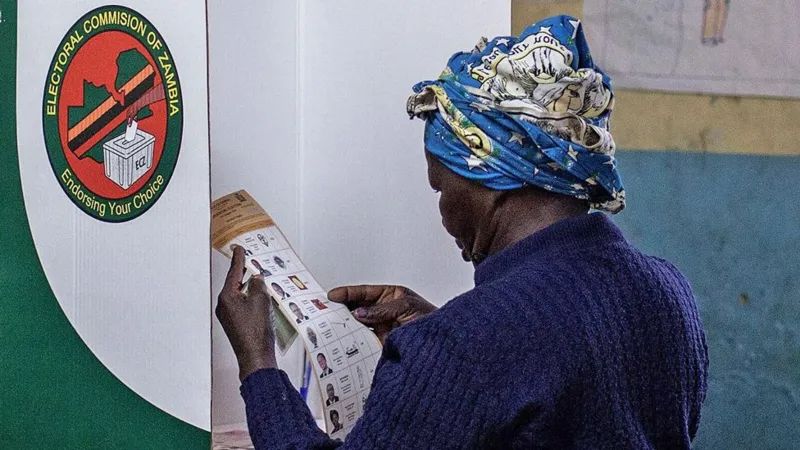
Zambia’s political landscape has been shaken by troubling allegations that aspiring female politicians are being asked for sexual favours in exchange for party adoption, exposing deep-rooted gender barriers ahead of the country’s upcoming elections.
The claims were disclosed by Mainga Kabika, a senior government official, who warned that such practices are undermining efforts to promote women’s participation in politics and weakening democratic processes.
Allegations Emerge Ahead of Elections
Speaking at a national event, Kabika revealed that her office has received multiple reports from women seeking political office who were allegedly pressured by party officials.
According to her, some officials - including individuals holding influential positions within political parties - have demanded “sexual favors in exchange for adoption” as candidates. (Zambia: News Diggers!)
In Zambia’s political system, “adoption” refers to the process by which a political party selects a candidate to represent it in elections - a critical step for anyone seeking public office.
Kabika urged affected women to document evidence and formally report such incidents, emphasizing that accountability would depend on verifiable complaints.
A Barrier to Women’s Political Participation
The revelations highlight a persistent challenge in Zambia: the underrepresentation of women in politics. Despite progress in gender advocacy, women remain significantly underrepresented in elective positions.
Activists argue that practices such as sexual coercion discourage women from contesting elections, reinforce systemic gender inequality, and undermine merit-based political participation
Kabika noted that these incidents are deterring many qualified women from entering politics, thereby widening the gender gap in governance.
Broader Context: Gender Inequality in Zambian Politics
Zambia has made efforts over the years to promote gender equality, including policies aimed at increasing female representation in leadership.
However, structural barriers persist, including limited access to campaign financing, cultural and societal biases, and political party gatekeeping. The latest allegations suggest that exploitative practices within party structures may be one of the most damaging obstacles.
Historically, women who have risen in Zambian politics - such as Victoria Kalima - have often had to navigate a male-dominated political environment. Their success stories, while inspiring, remain exceptions rather than the norm.
Civil Society Reacts
Civil society organizations and gender advocacy groups have reacted strongly to the allegations, calling for immediate investigations, protection for whistleblowers, and sanctions against perpetrators
Some groups have urged political parties to adopt clear codes of conduct and establish internal mechanisms to address harassment and abuse.
Advocates warn that failure to act decisively could erode public trust in Zambia’s electoral system and discourage future generations of women leaders.
Political Parties Under Scrutiny
The allegations have placed political parties under intense scrutiny, particularly regarding their internal processes for selecting candidates. Key concerns include a lack of transparency in candidate selection, concentration of power among party elites, and weak accountability mechanisms
Analysts argue that without reforms, these structures may continue to enable abuse and exploitation, as Kabika’s remarks suggest that the problem is not isolated to a single party but may be widespread across the political spectrum.
Legal and Institutional Implications
Zambia has laws addressing gender-based violence and sexual exploitation, but enforcement remains a challenge - especially in political contexts where victims may fear retaliation.
Legal experts say that if proven, such acts could constitute abuse of office, sexual exploitation, and violations of electoral laws.
However, the success of any legal action will depend on evidence and the willingness of victims to come forward - a significant hurdle given the stigma and risks involved.
The Role of Government and Institutions
As Permanent Secretary, Kabika’s intervention signals a willingness by government institutions to confront the issue. Her call for evidence-based reporting reflects a broader strategy to strengthen institutional response, encourage accountability, and protect victims.
However, critics argue that more proactive measures are needed, including independent investigations, stronger legal protections, and public awareness campaigns
Implications for Zambia’s Democracy
The allegations come at a critical time as Zambia prepares for upcoming elections. If left unaddressed, such practices could undermine the credibility of the electoral process, limit diversity in political representation, and reinforce public cynicism about politics
A democratic system thrives on fairness and equal opportunity. When access to political participation is conditioned on exploitation, it erodes the very foundation of democracy.
Voices of Reform and Hope
Despite the challenges, there is growing momentum for reform. Women’s groups, youth organizations, and civil society actors are increasingly advocating for gender quotas in political representation, transparent candidate selection processes, and stronger enforcement of anti-harassment laws
There is also a push to create safe spaces for women in politics, ensuring they can participate without fear of abuse or coercion.
What Happens Next?
The coming weeks will be critical in determining how Zambia responds to these allegations. Key developments to watch include whether formal complaints are filed, investigations by relevant authorities, and responses from political parties
The issue has already sparked national conversation, and how it is handled could shape the future of women’s participation in Zambian politics.
Conclusion
The allegations that aspiring female politicians in Zambia are being asked for sexual favours in exchange for party adoption have exposed a deep and troubling flaw within the political system.
While the claims remain under scrutiny, they highlight the urgent need for reform, accountability, and stronger protections for women.
As Zambia moves toward its next elections, the challenge will be ensuring that politics becomes a space defined by integrity, fairness, and equal opportunity - not exploitation.