Russian Strikes Destroy 12 million Books in Ukraine as Schools Prepare to Reopen
Russian strikes have destroyed an estimated 12 million books in Ukraine, including school textbooks, as millions of children prepare to return to classrooms amid the continuing war.
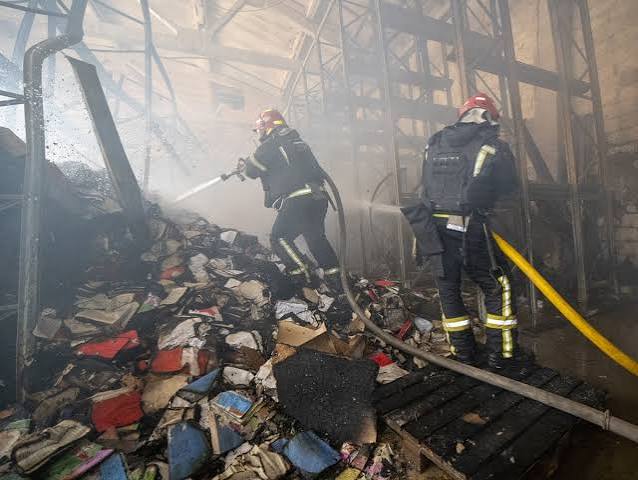
As Ukrainian children prepare to return to school, a devastating new consequence of Russia's war has emerged: Russian strikes have destroyed an estimated 12 million books, including a huge quantity of school textbooks needed for the new academic year.
The destruction has hit Ukraine's publishing and printing industry at a particularly sensitive moment, with schools preparing to reopen on September 1. The attacks have damaged printing facilities, publishing warehouses and book distribution centres across the country, threatening not only the supply of educational materials but also Ukraine's wider cultural and literary heritage. (Yahoo News)
The latest attacks have transformed what would normally be a routine period of preparation for a new school year into another test of Ukraine's ability to keep its education system functioning during wartime.
Printing plant destroyed as textbooks were being prepared
One of the most significant attacks struck a printing facility on the outskirts of Kyiv as workers were increasing production ahead of the new school term.
The plant had been preparing to deliver approximately 1.3 million books, equivalent to about 10% of Ukraine's schoolbooks, when it was hit by a Russian missile.
The resulting fire destroyed machinery and stock, leaving behind charred pages and debris. The facility was expected to play a crucial role in ensuring pupils receive their textbooks when classes resumed.
The destruction is particularly damaging because replacing books is considerably more complicated during wartime. Publishers must reproduce the books, secure paper and printing capacity, package the materials and then transport them through a country where missile and drone attacks remain a constant threat.
Millions of books already lost
The Kyiv printing plant is only one part of a much wider pattern.
Reuters reported earlier in August that a Russian drone attack on a Ranok publishing warehouse in Kharkiv destroyed approximately eight million books. The company is one of Ukraine's major publishers and produces large quantities of educational material, including school textbooks. (Reuters)
With the destruction of books at multiple facilities, losses across Ukraine have risen to roughly 12 million books.
Reports indicate that more than 35 publishing-related facilities have been hit in recent weeks, while book warehouses and distribution centres have also suffered damage.
The scale of the destruction has led Ukrainian publishers and officials to warn that the country's publishing industry is facing an existential challenge.
Children face a difficult return to school
The attacks come just as Ukrainian schools prepare to welcome students back.
Ukraine's academic year is scheduled to begin on September 1, but the continuing war means that reopening classrooms is far more complicated than simply providing desks, teachers and textbooks.
Schools must also consider air-raid shelters, emergency procedures and the possibility of classes being interrupted by missiles or drone attacks.
Some pupils will continue their education online, while others will attend schools equipped with shelters designed to protect students during air raids. (euronews)
The destruction of textbooks adds another obstacle.
For children, textbooks are more than ordinary commercial products. They are essential tools for maintaining educational continuity at a time when millions of Ukrainian pupils have already experienced disruption to their schooling because of displacement, damaged schools and repeated attacks.
Russia accused of targeting Ukrainian culture
Ukrainian officials and publishers have described the attacks on printing and publishing infrastructure as part of a broader assault on the country's national identity.
They argue that destroying books is different from destroying an ordinary warehouse because books carry Ukraine's language, history, literature and cultural memory from one generation to another.
Ukraine's Culture Minister Tetyana Berezhna has argued that the cultural and military dimensions of the war cannot be separated.
According to Ukrainian authorities, Russia has damaged or attacked thousands of cultural heritage sites and institutions since the full-scale invasion began.
The government says these attacks threaten symbols of Ukrainian identity as well as physical infrastructure. (Arise News)
Moscow, however, has repeatedly denied deliberately targeting civilians and cultural sites and has rejected accusations that it is conducting a campaign aimed at erasing Ukrainian identity.
The Russian Embassy in the United Kingdom has also blamed Ukraine for some damage to cultural heritage and alleged that cultural sites have been used for military purposes.
Kyiv's second-hand book market also hit
The damage has not been caused by large industrial printing plants.
A well-known second-hand book market in Kyiv was recently hit, destroying hundreds of stalls and large quantities of books.
For people who rely on such markets, the losses are both economic and emotional.
Books accumulated over many years can be irreplaceable, particularly when they include rare editions, family collections and works that are no longer easily available.
A book blogger searching through the wreckage reportedly found a water-damaged science-fiction novel among the remains.
The destruction illustrates the wider cultural cost of the war: some losses cannot simply be replaced by ordering another copy from a publisher.
Ukraine's publishing industry under pressure
The country's publishing sector had shown signs of resilience during the war.
Demand for Ukrainian-language books increased significantly as many Ukrainians sought literature in their own language and rejected Russian cultural influence.
But the industry now faces severe logistical and financial difficulties.
Printing equipment is expensive to replace; warehouses can be destroyed overnight, and transporting books across Ukraine requires navigating damaged infrastructure and security risks.
The destruction also comes at a time when Ukraine's wider economy is under severe pressure from the cost of the war.
Reuters reported that Ukraine's economic growth is expected to remain weak, while defence spending absorbs a huge share of government resources.
For publishers, this means that rebuilding destroyed facilities will require substantial investment.
Digital technology offers some protection
Ukraine is increasingly turning to digitisation as a way of protecting its educational and cultural resources.
Digital copies of books can be stored remotely and distributed electronically, allowing pupils and teachers to access educational material even when physical copies have been destroyed.
However, digital alternatives cannot completely replace printed books.
Many children still require physical textbooks, while internet access can be unreliable during power outages or attacks on energy infrastructure.
Consequently, Ukraine's education authorities face the difficult task of combining digital resources with emergency reprinting and redistribution.
Cultural heritage also under attack
The destruction of books is occurring alongside damage to museums, galleries, libraries and historic buildings.
One prominent example is the Kyiv-Pechersk Lavra, a major cultural and religious complex that includes Ukraine's museum of books and printing.
Parts of the historic complex have been damaged during the war, while Ukrainian authorities and international organisations have worked to protect valuable artefacts.
UNESCO has condemned attacks against protected cultural property and has listed the Kyiv-Pechersk Lavra among sites requiring special protection.
The broader concern is that even if Ukraine eventually rebuilds its cities, restoring cultural collections and historical materials could take decades.
A war affecting the classroom
The destruction of 12 million books demonstrates how deeply the war has penetrated everyday Ukrainian life.
The consequences are visible not only on battlefields but also in classrooms, libraries, warehouses and publishing houses.
For Ukrainian children returning to school, the immediate concern will be whether they have safe classrooms, functioning schools and the materials needed to learn.
For the publishing industry, the challenge is even greater: ensuring that Ukraine's books continue to be printed despite repeated attacks.
The Ukrainian government and publishers have vowed to rebuild and continue producing educational materials.
Their determination reflects a broader national effort to preserve Ukrainian language and culture despite the destruction caused by the war.
Education as an act of resilience
The reopening of Ukrainian schools on September 1 therefore carries significance beyond education.
It represents an attempt to maintain normal life in a country still experiencing daily attacks.
The destruction of millions of books may have deprived children of physical learning materials, but it has also reinforced the importance Ukrainians place on education, language and cultural identity.
As Russian attacks continue, Ukraine faces the enormous task of protecting its people while preserving the institutions and cultural resources that define the country.
The loss of 12 million books is therefore more than a staggering economic statistic. It represents millions of individual educational opportunities and pieces of cultural heritage put at risk.
Yet as Ukrainian schools prepare to reopen, publishers, teachers and families are attempting to ensure that the war does not dictate what the next generation can learn.
For Ukraine, keeping children in school and keeping Ukrainian books alive has become another form of resistance.