Russia Warns UK It Will Pay for Supplying Drones to Ukraine
Russia has warned Britain of unspecified consequences over reports that UK-made drones are being used in Ukrainian strikes inside Russian territory, escalating tensions between Moscow and London.
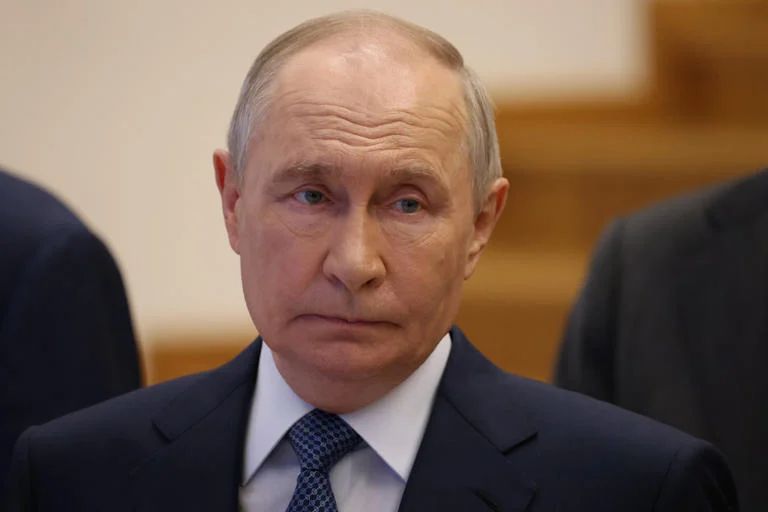
Russia has issued a fresh warning to the United Kingdom, saying Britain will face consequences for supplying drones to Ukraine that have reportedly been used in long-range strikes against targets inside Russian territory.
The warning, delivered through the Russian Embassy in London, comes after reports that British-made drones have been used by Ukrainian forces in attacks deep inside Russia. Moscow accused Britain of deliberately escalating the war and becoming directly involved in Ukraine's military campaign.
The UK, however, has reaffirmed its commitment to supporting Ukraine against Russia's invasion, signalling that the latest Russian warning is unlikely to alter London's military assistance to Kyiv. (Reuters)
The confrontation highlights the increasingly blurred line between Western military assistance to Ukraine and direct involvement in the four-year-old conflict.
Russia issues warning to Britain
The Russian Embassy in London said Britain would have to face the consequences of its decision to supply Ukraine with military equipment that is subsequently used against Russian targets.
The warning followed reports that British-made drones had been used for the first time in deep strikes against mainland Russia.
Russian officials accused London of supporting what they described as Ukraine's “terrorist machinery” and argued that Britain was deliberately choosing escalation rather than contributing to efforts to end the war.
Moscow did not specify exactly what form the threatened consequences could take.
That ambiguity has added to concerns in Western capitals that Russia could respond through diplomatic, cyber, intelligence or other forms of retaliation rather than necessarily launching a conventional military attack against Britain.
British-made drones used in attacks
The immediate trigger for Moscow's warning was reporting that drones manufactured by British companies had been deployed by Ukraine in long-range attacks against Russian territory.
The Times reported that British-made drones had been involved in attacks on Russian military and industrial targets, including energy infrastructure and logistics facilities. (The Times)
The reports represent an important development in Ukraine's increasingly sophisticated long-range strike campaign.
Ukraine has invested heavily in drone technology during the war, developing and deploying systems capable of travelling hundreds of kilometres into Russian territory.
British assistance has added another layer to those capabilities, with London increasingly positioning drones as a cost-effective way of helping Ukraine counter Russia's much larger military-industrial capacity.
UK refuses to back down
Despite Moscow's warning, Britain has shown no indication that it intends to reduce its military support for Ukraine.
The UK Ministry of Defence reiterated its commitment to supporting Kyiv and helping Ukraine defend itself against Russian aggression.
Britain announced in June a plan to provide 150,000 drones to Ukraine by the end of 2026 as part of a military assistance package worth about £752 million.
The scale of the programme demonstrates the growing importance of unmanned systems in Britain's strategy for supporting Ukraine.
Drones are relatively inexpensive compared with conventional missiles and aircraft, yet they can be used for surveillance, battlefield targeting, logistics and long-range attacks.
For Ukraine, access to large numbers of drones could help compensate for shortages in conventional weapons and provide additional ways to strike Russian military infrastructure.
Ukraine expands attacks inside Russia
The dispute comes amid a major expansion of Ukrainian long-range attacks.
On August 16, Ukraine launched one of its largest aerial assaults of the war, sending hundreds of drones towards Moscow and other parts of Russia.
Russia's Defence Ministry claimed that it had intercepted 822 Ukrainian drones, while Russian officials reported casualties and damage in several regions. (AP News)
The attacks included strikes on industrial and logistical facilities.
A warehouse operated by Russian e-commerce giant Wildberries was among the sites damaged, while other Ukrainian attacks targeted military-related infrastructure and facilities associated with Russia's war effort.
The offensive demonstrated how Ukraine is increasingly able to take the fight well beyond the immediate front line.
Moscow sees Western support as an escalation
Russia has repeatedly warned Western countries that supplying weapons to Ukraine makes them participants in the conflict.
Moscow has particularly objected to Western weapons being used against targets located inside internationally recognised Russian territory.
The Kremlin has previously threatened unspecified responses when Western military support has crossed what it considers important red lines.
Britain has nevertheless continued to expand its assistance to Ukraine.
The latest controversy is therefore part of a much broader disagreement over how far Western governments can support Ukraine without becoming direct parties to the war.
From Britain's perspective, military assistance enables Ukraine to defend itself against Russia's invasion.
From Moscow's perspective, increasingly sophisticated Western weapons and equipment are helping Ukraine conduct attacks against Russia itself.
Why drones matter in the war
Drones have transformed warfare in Ukraine.
Both Russia and Ukraine now rely heavily on unmanned aircraft for reconnaissance, targeting and attacks.
Ukraine's drone strategy has increasingly focused on Russia's military-industrial infrastructure, fuel supplies and logistics networks.
The objective is not simply to destroy individual facilities but to disrupt Russia's ability to produce, transport and deploy weapons.
The use of relatively inexpensive drones also allows Ukraine to put pressure on Russian air defences.
Russia, meanwhile, has conducted its own extensive drone campaign against Ukrainian cities, energy facilities and military targets.
The result is a rapidly evolving aerial war in which both sides are developing new systems to penetrate increasingly sophisticated air-defence networks.
The threat of wider confrontation
Russia's warning to Britain raises concerns because the UK is one of Ukraine's most important Western military supporters.
London has provided Kyiv with weapons, training, intelligence and financial assistance since Russia launched its full-scale invasion in February 2022.
Britain has also supported Ukraine's efforts to develop longer-range strike capabilities.
The latest warning therefore comes at a time when the relationship between Moscow and London is already deeply strained.
Western officials have repeatedly accused Russia of conducting hostile activities against European countries, including cyber operations, espionage and other forms of hybrid activity.
The Financial Times reported that recent confrontations between Russia and Britain have included incidents involving military activity, undersea infrastructure and Russian vessels and aircraft. (Financial Times)
Consequently, any Russian response to Britain's drone assistance could potentially occur below the threshold of conventional military conflict.
Ukraine says long-range weapons are necessary
For Ukraine, long-range weapons are an important part of its strategy to weaken Russia's ability to wage war.
Kyiv argues that Russian military installations, weapons factories, fuel facilities and logistics centres inside Russia are legitimate military targets because they directly support Moscow's invasion.
Ukrainian forces have increasingly demonstrated an ability to strike targets far from the battlefield.
Recent attacks have reportedly reached areas surrounding Moscow and other strategically important Russian regions.
Ukraine's growing domestic drone industry has also reduced its dependence on Western suppliers, although foreign assistance remains important.
A dangerous new phase
The British drone controversy demonstrates how the Russia-Ukraine war is entering an increasingly technological and geographically expansive phase.
The front line remains the principal battlefield, but long-range drones and missiles have created a second battlefield stretching deep into both countries.
For Britain, the challenge is balancing continued support for Ukraine with the risk that Moscow could retaliate against British interests.
For Russia, the growing use of Western-supplied technology in attacks on its territory represents a significant strategic and political challenge.
Neither side appears ready to retreat.
Britain says it will continue supporting Ukraine, while Russia insists that Western countries will pay a price for their involvement.
What could happen next?
The exact nature of Russia's threatened response remains unclear.
Moscow could choose diplomatic measures, additional sanctions, cyber operations or other forms of pressure. A direct military confrontation with Britain would carry enormous risks for Russia and NATO and would represent a dramatic escalation of the war.
For now, the warning appears primarily designed to signal Moscow's anger and deter Britain and other Western governments from expanding their military support.
But with Ukraine continuing to conduct long-range drone strikes and Britain preparing to supply tens of thousands more drones, the dispute is unlikely to disappear.
The latest confrontation underscores the growing importance of drones in the Russia-Ukraine war and the increasingly difficult task facing Western governments as they support Kyiv.
As the conflict enters another dangerous phase, Russia's warning to Britain could become an important test of how far Western military assistance to Ukraine can expand without triggering a broader confrontation between Moscow and NATO members.