Russia Hits Six Ukrainian Energy Sites After Trump Announces Ceasefire, Zelensky Says
Ukrainian President Volodymyr Zelensky says Russia struck six energy facilities after Donald Trump announced an energy ceasefire, raising fresh doubts about efforts to halt attacks.
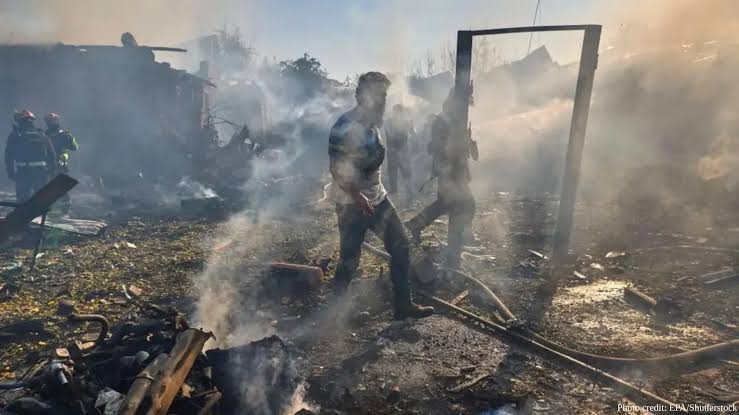
Ukrainian President Volodymyr Zelensky has accused Russia of striking at least six Ukrainian energy facilities hours after United States President Donald Trump announced an agreement for both countries to stop attacking each other's energy infrastructure.
The allegation, made on Monday, October 12, 2026, has raised fresh questions about the prospects of a temporary truce in the Russia-Ukraine war, as continued attacks threaten electricity supplies, heating infrastructure and other essential services ahead of winter.
According to Reuters, Zelensky said Russian forces struck at least six energy targets during a series of attacks across Ukraine. The Ukrainian president described the incidents as evidence that Moscow was unwilling to respect the ceasefire announced by Trump.
“It is increasingly evident that Russia is unwilling to accept an energy ceasefire proposed by the United States,” Zelensky said, warning that Russian attacks against Ukrainian communities were continuing despite Washington's announcement.
The Ukrainian leader also told Fox News that Ukraine had refrained from attacking Russian energy facilities while Russian forces continued striking Ukrainian infrastructure.
“I think it was Putin’s answer to President Trump,” Zelensky said, referring to Russian President Vladimir Putin.
The allegations came amid renewed diplomatic efforts to limit attacks on energy infrastructure, which has become a major target throughout the conflict.
Gas Facility and Petrol Station Among Targets
Zelensky identified a gas facility and a petrol station among the sites struck by Russian drones. The attacks reportedly formed part of a broader campaign against energy-related infrastructure and other targets across the country.
Ukraine's energy facilities have repeatedly come under attack during the war, disrupting electricity production and distribution while creating additional pressure on the country's economy and emergency services.
According to PBS NewsHour, Zelensky said the attacks continued even after Trump's announcement, challenging the expectation that the proposed arrangement would immediately reduce pressure on critical infrastructure.
The consequences were also visible in several Ukrainian regions. Ukraine's state-owned grid operator, Ukrenergo, reported new power cuts in Kharkiv, Donetsk and Zaporizhzhia on October 12 because of damage to energy equipment caused by Russian attacks.
In the northeastern city of Izyum, a Russian strike reportedly damaged power infrastructure, causing blackouts. Energy and railway facilities in western Ukraine were also targeted overnight, according to Ukrainian reports cited by ZMINA.
The incidents demonstrate how attacks on power grids and related infrastructure can affect essential services far beyond the immediate locations of military strikes.
For Ukrainian civilians, damage to energy facilities raises concerns about electricity availability, heating, water supply and the ability of hospitals and other critical services to operate reliably.
Trump Announces Energy Truce Amid Rising Fuel Prices
Trump announced the proposed energy ceasefire over the weekend after discussions involving Russia and the United States. He said Russia and Ukraine had agreed to stop attacks on each other's energy infrastructure.
The announcement followed wider efforts to address rising energy prices and reduce the economic consequences of the conflict.
Trump has argued that attacks on Russian oil refineries have contributed to energy-market pressures, particularly higher diesel prices. His administration has sought arrangements that could restore additional Russian fuel supplies to international markets.
The proposed ceasefire therefore carries implications beyond the battlefield. A reduction in attacks on refineries, gas facilities, electricity infrastructure and fuel distribution networks could help reduce the risk of further disruptions to energy supplies.
However, the announcement immediately encountered uncertainty because Ukraine said it had not been given clear advance details about the arrangement. Russia also had not formally confirmed its acceptance of the proposed truce.
According to Al Jazeera, Zelensky had previously pushed for a broader 60-day ceasefire covering the war, rather than an arrangement limited to energy infrastructure.
The distinction is significant because a temporary halt to attacks on energy facilities would not necessarily end fighting elsewhere or resolve the underlying political and territorial disputes.
Moscow's Position Raises Questions About the Agreement
Russia's response has added to uncertainty surrounding the proposed arrangement.
Kremlin spokesman Dmitry Peskov said discussions were continuing and that further information would be provided when available. He also rejected Zelensky's proposal for a comprehensive 60-day ceasefire, saying Moscow wanted a longer-term peace settlement.
Russian Foreign Minister Sergei Lavrov also questioned the prospect of granting Ukraine a pause in fighting, according to reports published on October 13.
The absence of a clearly confirmed, mutually accepted agreement makes it difficult to determine how the proposed energy truce would be implemented, monitored or enforced.
For a ceasefire to work, both sides would need a shared understanding of which facilities were protected, when restrictions began and how alleged violations would be investigated.
Without such arrangements, attacks against energy infrastructure could continue to trigger accusations and retaliation, undermining confidence in diplomatic efforts.
The dispute also places pressure on Washington to clarify the terms of the arrangement and establish whether both governments have formally committed to observing it.
Civilian Casualties and Damage to Critical Infrastructure
The attacks reported by Ukraine occurred alongside strikes on residential areas and other civilian infrastructure, highlighting the wider human cost of the conflict.
Reuters reported that Russian strikes on Kyiv and other regions killed civilians, while additional attacks damaged residential buildings and caused injuries. Kharkiv, Ukraine's second-largest city, was among the areas affected by the continuing bombardment.
These developments have intensified concerns about the vulnerability of Ukrainian communities as temperatures begin to fall and demand for electricity and heating increases.
Energy infrastructure has remained a central feature of the conflict because damage to power stations, substations, gas facilities and distribution networks can weaken a country's ability to sustain essential services.
Repeated attacks can also make repairs difficult. Engineers and emergency workers may have to restore damaged equipment while facing the possibility of further strikes, increasing the financial and operational burden on the government.
Ukraine has spent much of the war repairing energy facilities damaged by Russian missile and drone attacks. The latest allegations raise concerns that another sustained campaign could place additional pressure on electricity supplies during the coming winter.
For households and businesses, prolonged outages can interrupt work, education, healthcare and industrial production. Hospitals may need backup power, while companies dependent on reliable electricity face additional operating costs.
European Allies Express Concern
The dispute over the proposed ceasefire has also raised concerns among Ukraine's European partners, who have questioned whether an announcement without clear commitments from both sides can deliver lasting results.
According to Reuters' coverage of the diplomatic response, European Union foreign ministers backed additional sanctions against individuals and businesses linked to Russia.
German Chancellor Friedrich Merz argued that Moscow would negotiate seriously only under sustained pressure, signalling continued European support for maintaining sanctions.
The diplomatic disagreement reflects different approaches to ending the war. Washington has pursued arrangements intended to reduce energy-market pressures and encourage negotiations, while European governments have stressed the need to maintain pressure on Russia.
Ukraine, meanwhile, has sought guarantees that any reduction in attacks will be reciprocal and enforceable.
The competing positions underline the difficulty of securing even a limited ceasefire when the two sides remain deeply divided over the conditions for ending hostilities.
Latest Developments and Prospects for Peace
On Tuesday, October 13, Reuters reported that Russia had not struck Ukrainian energy targets during the latest overnight period, marking the first such pause since Trump's ceasefire announcement. However, Russian attacks on transport and logistics infrastructure continued, and the Kremlin had still not formally confirmed the arrangement.
The development offered a possible sign of restraint, but it did not establish that a durable ceasefire was in place. Ukrainian officials continued to express concern about attacks on critical infrastructure, while the circumstances surrounding the temporary pause remained unclear.
The latest developments are being closely watched because an effective energy truce could reduce civilian suffering and help protect essential services without requiring an immediate settlement of every issue in the war.
For Ukraine, the priority remains protecting its population and maintaining essential infrastructure. For Russia and Ukraine, a verifiable agreement could provide an opportunity to demonstrate whether limited cooperation is possible despite continuing hostilities.
For the United States, the challenge will be turning Trump's announcement into a clearly defined arrangement accepted and observed by both parties.
Conclusion
Zelensky's allegation that Russia struck six Ukrainian energy facilities after Trump's ceasefire announcement has exposed the uncertainty surrounding efforts to halt attacks on critical infrastructure.
The reported strikes, power disruptions and civilian casualties illustrate the continuing risks facing Ukraine as winter approaches. Although the subsequent pause in attacks on energy targets offered a potential opening for diplomacy, the absence of formal confirmation from Moscow leaves the agreement's durability uncertain.
The immediate test will be whether both sides can stop targeting energy facilities, establish credible monitoring arrangements and sustain a reciprocal pause.
Until that happens, Ukrainian civilians and essential services will remain vulnerable to renewed attacks, while international efforts to secure a broader peace settlement face another significant challenge.