Rubio Looks to Jamnagar to Ease Pressure on Oil Prices
US Secretary of State Marco Rubio has turned to Jamnagar, a coastal city in India's western state of Gujarat, as Washington searches for ways to increase oil supplies and ease pressure on energy prices.
Jamnagar is home to the world's largest oil-refining complex, operated by Reliance Industries, the conglomerate chaired by billionaire Mukesh Ambani. The facility's scale and ability to process different grades of crude make it strategically important to US efforts to expand the market for Venezuelan oil.
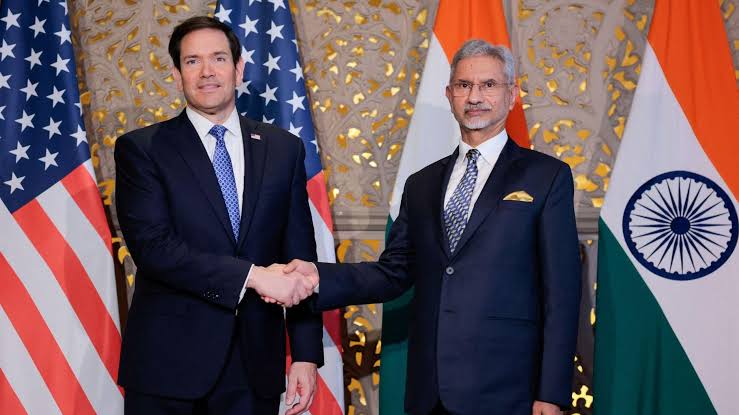
Rubio visited India this week for talks on energy cooperation, trade and defence. His itinerary included meetings with Indian officials in Mumbai before travelling to Jamnagar to engage with Reliance executives.
The visit comes as the Trump administration seeks to expand Venezuelan oil production and identify additional buyers capable of processing its heavy crude. Rubio said India could help absorb increased Venezuelan supplies, potentially supporting greater availability in international oil markets.
“They have the capability to refine heavy crude,” Rubio said of Indian refiners, according to the Associated Press. He added that India had processed such oil in the past and could play a role as Venezuelan production increased.
The strategy reflects Washington's effort to use international energy partnerships to address supply concerns, although any effect on petrol prices in the United States would depend on how much additional oil reaches the market and how quickly it can be processed and delivered.
Why Jamnagar's Refinery Matters
The Jamnagar complex has a crude-processing capacity of approximately 1.4 million barrels per day, making it one of the most important refining facilities in the global petroleum industry.
Its advanced equipment allows it to process more than 240 grades of crude oil, including heavy and ultra-heavy varieties that many conventional refineries cannot handle efficiently.
This capability is particularly relevant to Venezuela, which possesses some of the world's largest proven oil reserves but has struggled with years of sanctions, underinvestment and deteriorating infrastructure.
Venezuelan crude is generally heavier than many other commonly traded oil grades. Processing it often requires specialised equipment capable of converting dense crude into commercially valuable products such as petrol, diesel and aviation fuel.
Reliance's facilities are therefore well positioned to absorb additional Venezuelan supplies if commercial terms, shipping arrangements and US policy allow the trade to expand.
India's extensive refining infrastructure has transformed the country into a major exporter of refined petroleum products despite its dependence on imported crude. (India Today)
The country exported approximately 61.5 million tonnes of petroleum products in the 2025 - 26 financial year, illustrating the importance of its refining sector to international energy markets.
Venezuela Emerges as a Key Part of Washington's Strategy
The Trump administration's interest in Jamnagar is closely connected to its efforts to revive Venezuela's oil industry and expand the availability of its crude on international markets.
Washington wants more Venezuelan oil to reach refineries capable of processing it, creating an additional source of petroleum products at a time when geopolitical tensions have threatened established supply routes.
Rubio's visit also reflects the importance of Reliance as a potential commercial partner in this strategy. The company has experience processing Venezuelan crude and has previously maintained business interests connected to Venezuela's petroleum sector.
However, increasing Venezuelan output will require more than identifying buyers. The country's oil industry needs sustained investment, reliable infrastructure, sufficient equipment and stable arrangements governing production and exports.
Even if these challenges are addressed, additional supplies would take time to reach international markets in quantities large enough to influence global prices substantially.
Rubio's initiative is therefore part of a wider effort to improve energy availability rather than an immediate solution to high fuel prices.
Can the Plan Lower Petrol Prices in America?
The central question is whether increased Venezuelan oil processing in India can translate into cheaper petrol for American consumers.
The answer depends on several interconnected factors, including global crude prices, refinery margins, transportation costs, insurance premiums and the availability of finished petroleum products.
More crude entering the international market could ease supply pressures, particularly if production increases are sustained and shipments reach buyers efficiently.
However, the relationship between crude prices and petrol prices is not automatic. Retail fuel costs also reflect refining expenses, distribution, taxes and local market conditions.
Moreover, shipping Venezuelan crude to India for processing does not necessarily mean the resulting petrol or diesel will be sent to the United States. Refined products are traded internationally according to commercial demand, contractual arrangements and price competitiveness.
A separate challenge is the cost of transporting crude across long distances. A report published by Business Standard on October 23 found that elevated freight costs had made US crude relatively expensive for Indian refiners, while discounted Venezuelan supplies offered better economics for some buyers.
Consequently, any price relief from Rubio's initiative would depend on the economics of additional production, processing and distribution.
India Balances Energy Security and US Pressure
The visit also carries diplomatic significance because India remains heavily dependent on imported oil and has sought to diversify its sources of supply.
Russian crude has become an important component of India's oil imports, partly because discounted supplies have offered commercial advantages to refiners.
Washington has pressured New Delhi to reduce its reliance on Russian energy, linking oil purchases to wider discussions over trade and relations between the two countries.
Yet India's refiners must consider prices, shipping expenses, crude quality and the technical requirements of their facilities when deciding which supplies to purchase.
Noted that US crude shipments to India had declined in 2026 compared with the previous year, underlining the commercial challenges Washington faces in encouraging greater purchases. (S&P Global Energy analysis of India-US energy relations)
The Jamnagar discussions therefore present an opportunity for both countries to pursue energy cooperation while navigating differences over Russian oil and trade policy.
A Strategic Visit, but No Immediate Guarantee of Cheaper Fuel
Rubio's visit to Jamnagar highlights how energy diplomacy increasingly depends on refining capacity, private-sector investment and the ability to redirect global oil supplies.
Reliance's facilities offer Washington a potential route to expand the market for Venezuelan crude, while India could benefit from additional supply options and opportunities for its refining industry.
Nevertheless, the initiative should not be interpreted as a guarantee that American petrol prices will fall immediately. Additional production, commercially viable purchases and reliable transportation arrangements will all be necessary before any meaningful effect can be assessed.
For now, Jamnagar's importance lies in its ability to process difficult crude grades at enormous scale. Whether that advantage can help ease US energy costs will depend on what follows the diplomatic meetings: actual supply agreements, increased Venezuelan production and competitively priced petroleum products reaching the market.