Riyadh Airport Attack: 12 Killed, 309 Injured as Saudi Arabia Blames Houthis
Twelve people have been killed and 309 injured in a missile attack on Riyadh’s King Khalid International Airport, prompting airport closures and fears of wider Middle East conflict.
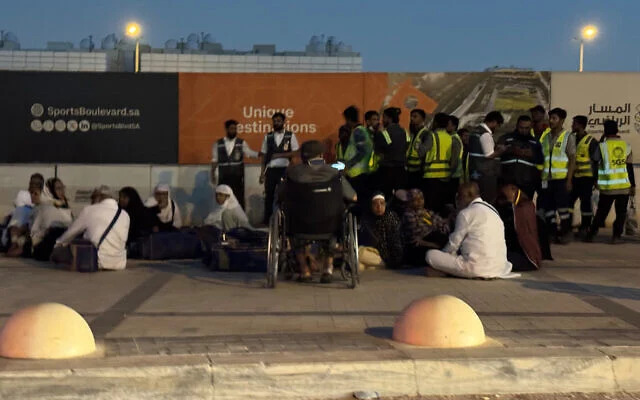
At least 12 people have been killed and 309 others injured following a missile attack on King Khalid International Airport in Riyadh, Saudi Arabia, in a major escalation of regional hostilities that has raised fears of a wider conflict across the Gulf.
Saudi Arabia’s General Authority of Civil Aviation confirmed the casualties after the attack on Saturday, October 10, as emergency services rushed victims to hospitals. Some of the injured were reported to be in critical condition, while authorities assessed damage to the airport and suspended operations at the facility.
The Saudi-led coalition fighting in Yemen blamed the attack on the Iran-backed Houthi movement, describing it as a serious violation of international humanitarian law. However, the Houthis had not claimed responsibility for this particular strike in reports available on Sunday morning.
Foreign nationals among the dead
The attack claimed the lives of Saudi citizens and foreign nationals, highlighting the international character of the airport and the potential consequences of strikes against civilian aviation facilities. According to Saudi civil aviation authorities, the dead included four Saudi citizens, two Bangladeshi nationals and one citizen each of the United States, Egypt, Jordan, Palestine, Syria and Sudan. The nationalities of the victims reflect the diverse population living and working in Saudi Arabia, as well as the large number of international travellers who pass through Riyadh.
Officials said the injured were receiving medical treatment, with some requiring urgent care. The authorities did not immediately provide a comprehensive breakdown of the victims' identities or the full extent of the damage caused by the attack. The scale of the casualties makes the incident one of the deadliest attacks on a Gulf Arab country since the current Iran-related regional conflict began.
Airport operations suspended amid security concerns
King Khalid International Airport, one of Saudi Arabia’s principal aviation gateways, was forced to suspend operations following the attack. The closure disrupted air travel and left passengers facing uncertainty over departures, arrivals and connecting flights. Saudi authorities extended the suspension as security agencies continued evaluating the damage and the risk of further attacks.
Foreign embassies, including those of the United States, Canada, Germany and Spain, warned their citizens to avoid the airport amid the heightened security situation. The disruption comes at a sensitive time for Saudi Arabia, which is preparing for a busy season of international conferences, investment events and entertainment activities.
A prolonged closure could affect airlines, tourism, business travel and the movement of passengers through one of the region’s important aviation hubs. Authorities have not provided a definitive timetable for the full restoration of normal airport operations.
Third reported airport assault in one week
The latest attack followed other reported strikes against King Khalid International Airport earlier in the week, underscoring the growing threat to Saudi Arabia’s civilian infrastructure. Saudi authorities said attacks on Thursday had killed three people, including a pilot, while damaging an aircraft. Earlier incidents had already prompted concern over the security of the capital’s aviation facilities.
The succession of attacks suggests that the conflict is expanding beyond military positions to include infrastructure essential to civilian life and the economy. The coalition warned that it would respond decisively to the latest strike in accordance with international humanitarian law.
Separately, the coalition reported that a projectile had landed near King Fahd International Airport in Dammam, another major Saudi aviation hub. Authorities also reported intercepting a missile southeast of Riyadh on Sunday.
These developments have increased concerns that airports, oil facilities and other strategic sites could remain vulnerable as hostilities intensify.
Saudi-Houthi conflict intensifies
The attack comes amid renewed fighting between Yemen’s internationally recognized government, which receives Saudi support, and the Houthi movement, which controls significant territory in Yemen. The wider conflict has become increasingly entangled with regional tensions involving Iran, the United States and other Middle Eastern countries.
Saudi Arabia has supported Yemen’s government militarily since 2015, when it led a coalition intervention against the Houthis. A United Nations-brokered truce helped reduce hostilities for several years, but the ceasefire collapsed in July 2026, according to reports. More recently, fighting has intensified around strategic areas near the Bab al-Mandab Strait, a critical passage for international shipping between the Red Sea and the Gulf of Aden.
The renewed violence has increased the risk that attacks could spread to additional countries and disrupt commercial aviation, maritime trade and energy supplies. The Houthis have previously launched attacks against Saudi targets, citing the kingdom’s military involvement in Yemen. However, responsibility for individual incidents must be established using reliable evidence, particularly when the potential consequences include further military escalation.
Trump considers possible US military involvement
The attack has also placed renewed pressure on Washington to clarify its position on the escalating conflict. US President Donald Trump said the United States could consider joining Saudi military action against the Houthis following the latest attack.
Trump described the incident as unacceptable and indicated that he intended to speak with Saudi Crown Prince Mohammed bin Salman. Any direct US participation in additional strikes could widen the confrontation and increase the possibility of retaliatory attacks against American interests or regional allies.
For now, the precise nature and timing of any potential US military response remain uncertain. Diplomatic engagement and efforts to protect civilian infrastructure will be important in determining whether the latest escalation leads to a broader confrontation.
International concern grows over civilian safety
The attack on Riyadh’s airport has renewed concerns about the protection of civilians during armed conflict. International humanitarian law requires parties to distinguish between civilian objects and legitimate military targets. Airports used for civilian aviation are generally protected civilian infrastructure unless and for such time as they qualify as military objectives under applicable law.
The high number of casualties, the involvement of foreign nationals and the disruption to international air travel have made the incident a matter of international concern. As Saudi authorities continue assessing the damage and treating survivors, attention is turning to whether additional security measures can prevent further attacks.
The immediate priority remains the treatment of the injured, identification of victims and restoration of safe airport operations. Beyond that, the attack presents another challenge to regional diplomatic efforts to contain the conflict. With hostilities intensifying across several fronts, the consequences of further escalation could extend well beyond Saudi Arabia and Yemen, affecting international travel, energy markets and regional security.