Rivers Political Quagmire Deepens as Wike’s Power Moves Stir Controversy while Fubara Maintains Silence
Rivers State’s political crisis intensifies as Nyesom Wike is accused of consolidating influence while Governor Siminalayi Fubara remains silent. A deep dive into the power struggle shaping 2027 politics.
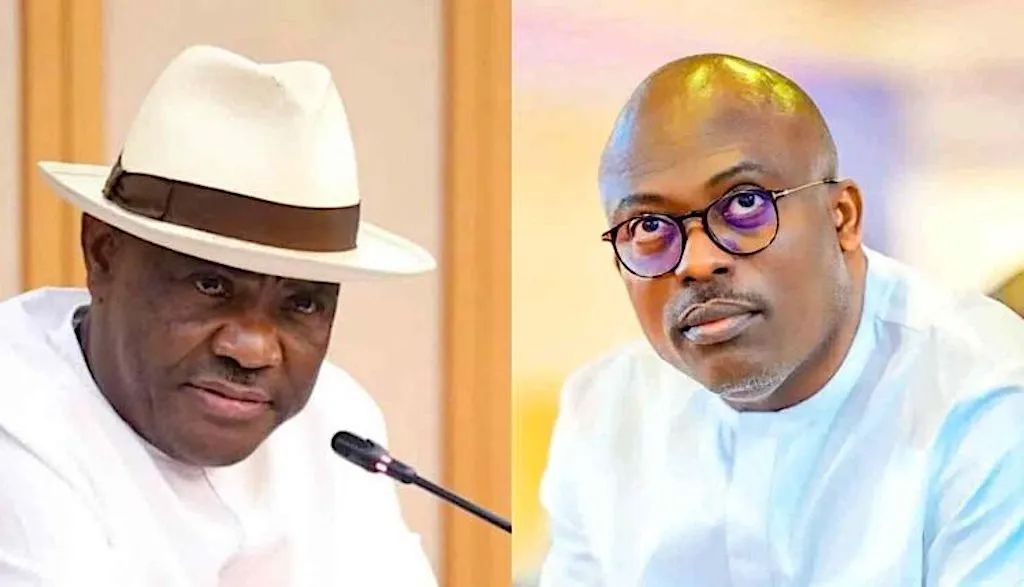
The political crisis in Rivers State has entered a new and more complex phase, with accusations that Nyesom Wike is actively consolidating power by positioning loyalists across key structures, while Governor Siminalayi Fubara maintains a conspicuous silence. The unfolding situation has sparked widespread debate about the future of governance in the oil-rich state and its implications for Nigeria’s broader political landscape ahead of the 2027 general elections.
At the heart of the crisis lies a fragile power arrangement that has steadily unraveled since Fubara assumed office. Once seen as a political protégé of Wike, the relationship between the two leaders has deteriorated into a high-stakes contest for control, influence, and political survival.
The Shadow of Wike: A Battle for Continued Influence
Since leaving office as governor, Wike has remained a dominant force in Rivers’ politics. Now serving at the federal level, he continues to wield significant influence over political structures within the state, particularly within the People's Democratic Party (PDP).
Recent developments suggest a deliberate effort by Wike to install loyalists often described by critics as “political stooges”- in strategic positions across local government councils, party leadership, and legislative bodies. These moves are widely interpreted as an attempt to retain control over the state’s political machinery despite no longer holding the governorship.
Supporters of Wike argue that his actions are aimed at preserving political stability and continuity, while critics see them as undermining democratic processes and the authority of the sitting governor.
Fubara’s Silence: Strategy or Weakness?
In stark contrast to Wike’s visible political maneuvering, Governor Fubara has largely refrained from public confrontation. His silence has become one of the most defining features of the crisis, prompting mixed reactions from political observers and citizens alike.
Some analysts interpret Fubara’s approach as a calculated strategy designed to avoid escalating tensions. By maintaining a low profile, they argue, the governor may be seeking to consolidate support quietly while preventing the crisis from spiraling into open conflict.
Others, however, view his silence as a sign of political weakness. They contend that the lack of a strong and public response risks eroding his authority and emboldening rival factions. In a political environment as dynamic as Rivers State, perception often carries as much weight as action.
Legislative Tensions and Institutional Strain
The political struggle has also spilled into the state’s legislative arm, where divisions among lawmakers have mirrored the broader conflict between Wike and Fubara. Competing loyalties have led to procedural disputes, leadership tussles, and occasional disruptions within the assembly.
These tensions have raised concerns about the functionality of key state institutions. Governance, policy implementation, and service delivery risk are being undermined as political actors prioritize factional interests over public welfare.
Observers warn that prolonged institutional instability could have lasting consequences for Rivers State’s development trajectory.
Implications for Governance and Development
Rivers State occupies a critical position in Nigeria’s economy, given its significant contribution to oil production and revenue generation. As such, political instability in the state has implications that extend beyond its borders.
Investors and stakeholders are closely monitoring the situation, wary of potential disruptions to economic activities. Uncertainty surrounding political leadership can affect decision-making, project execution, and overall business confidence.
For residents, the impact is more immediate. Concerns about governance effectiveness, infrastructure development, and public services have become increasingly pronounced as the crisis persists.
The 2027 Factor: Positioning for the Future
Underlying the current power struggle is a broader contest for influence ahead of the 2027 general elections. Both Wike and Fubara are seen as key players in shaping the political direction of Rivers State and, by extension, the South-South region.
Wike’s efforts to maintain a strong political base could position him as a kingmaker in future elections, while Fubara’s ability or inability to assert independence may determine his political longevity.
The outcome of this contest will likely influence party alignments, candidate selections, and electoral strategies in the years leading up to 2027.
Public Sentiment: Growing Frustration and Uncertainty
Among the people of Rivers State, the ongoing crisis has generated a mix of frustration, and cautious optimism. Many citizens express concern about the potential impact on governance and development, while others remain hopeful that a resolution can be reached.
Civil society organizations have called for dialogue and restraint, urging political actors to prioritize the interests of the people rather than personal ambitions. The need for transparent and accountable leadership has become a recurring theme in public discourse.
A Test for Nigeria’s Political System
The Rivers' political quagmire also serves as a microcosm of broader challenges within Nigeria’s political system. Issues such as godfatherism, party fragmentation, and weak institutional frameworks are all evident in the unfolding crisis.
Addressing these challenges will require more than short-term political solutions. It calls for structural reforms that strengthen democratic institutions, promote accountability, and ensure that political power is exercised in the public interest.
Conclusion: Uncertain Path Ahead
The evolving political drama in Rivers State underscores the complexity of governance in a highly competitive political environment. As Nyesom Wike continues to assert influence and Siminalayi Fubara remains largely silent, the state finds itself at a crossroads.
Whether this crisis will lead to a recalibration of political relationships or further entrenched divisions remains to be seen. What is clear, however, is that the decisions made in the coming months will have lasting implications not just for Rivers State, but for Nigeria’s democratic evolution.