Rivers Impeachment Crisis: A Turning Point for Nigerian Politics and Citizen Trust
As impeachment proceedings against Rivers governor Siminalayi Fubara unfold, the political rift threatens to reshape governance, trust and stability across Nigeria.
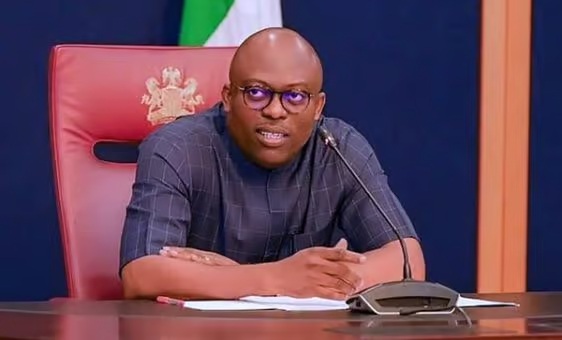
The political storm in Rivers State has taken a new and unsettling turn in early 2026: the Rivers State House of Assembly has commenced impeachment proceedings against Governor Siminalayi Fubara and his deputy, igniting intense debate about governance, political allegiance, constitutional order, and what it means for citizens’ safety and Nigeria’s broader political climate. This is not merely a local quarrel; it could signal a shift in how power is exercised and contested across the federation. (NUJ FCT)
The crisis has roots in a long-running dispute between Fubara, his predecessor and political godfather Nyesom Wike (now Minister of the Federal Capital Territory), and factions within the state’s political establishment. Power struggles have surfaced multiple times since Fubara took office, with impeachment threats dating back years and even prompting a state of emergency declared in 2025 at the height of political conflict.
In January 2026, the House, led by Speaker Martins Amaewhule and backed by 26 lawmakers formally read allegations of gross misconduct against Fubara, pursuant to Section 188 of the 1999 Constitution. A notice of gross misconduct is to be served on the governor within seven days, marking the opening phase of what could be a prolonged and polarising political confrontation.
Political Turmoil and Citizen Impact
The Anatomy of the Impeachment Push
The impeachment notice reflects accusations ranging from reckless and unconstitutional expenditure of public funds, obstruction of legislative duties, misappropriation of state resources, unlawful appointments, and refusal to present a proper 2026 budget. Lawmakers argue these actions undermine constitutional accountability and effective governance. (Authority NGR)
Yet, the impeachment move is fiercely contested. The Rivers chapter of the All Progressives Congress (APC), the party under which Fubara defected from the Peoples Democratic Party (PDP) in late 2025, has publicly rejected the impeachment process. Party officials describe it as destabilising, unnecessary, and politically motivated, urging lawmakers to resist pressures they say stem from intra-party conflicts and external influences. (The Telegraph Nigeria)
This conflicting narrative that of constitutional duty versus political vendetta has put average citizens in a difficult position. Many view the impeachment as symptomatic of a deeper malaise in Nigerian politics: insecurity of tenure, factional interests supplanting public interest, and the weakening of governance fundamentals.
Political Division and Governance Fatigue
For decades, Nigerian politics has been plagued by factionalism, where allegiance to powerful godfathers, patronage networks, and party hierarchies often overshadow policy and citizen welfare. Fubara’s impeachment battle encapsulates this pattern. Rather than focusing on delivery of basic services—like security, infrastructure, healthcare, and education, leaders spend political capital on internal power struggles.
This dynamic has profound effects on citizens:
Eroded Trust in Institutions: When impeachment is perceived as a tool for political settling of scores rather than accountability, public faith in legislative processes diminishes.
Policy Paralysis: Ongoing political instability inhibits progress on key issues such as poverty alleviation, economic investment, and social services.
Perception of Impunity: If governors can be summarily targeted or protected based on political ties, the perception of fairness and rule of law suffers.
Security and Social Cohesion Risks: Prolonged political fights can deepen societal divisions, embolden violent actors, and undermine the sense of unified governance citizens depend upon.
Citizens in Rivers State and beyond are closely watching this saga, with many expressing concern that political elites are prioritising power games over tangible improvements in daily living conditions. When politics crowds out governance, everyday Nigerians often pay the price.
How This Shapes the National Political Landscape
The Rivers impeachment controversy matters because it reflects a broader trend in Nigerian politics: friction between constitutional governance and entrenched political interests.
1. Federal-State Relations Under the Microscope
The impeachment occurs in a context where the Federal Capital Territory (FCT) Minister, Nyesom Wike, has been a polarising figure. While state Assembly spokespeople have dismissed claims linking Wike’s influence directly to impeachment efforts, the perception remains potent—particularly given Wike’s storied political clout in Rivers and federal politics. (Daily Post)
Wike has previously emphasised that constitutional duties must not be conflated with personal politics, warning against interpretations that would reduce legislative actions to political maneuvers.
Such high-stakes intersections between federal power and state politics stir debate about political interference, decentralisation of authority, and the independence of legislative arms of government. If citizens believe federal figures can shape state outcomes, confidence in democratic governance erodes.
2. Party Politics and Unity
The case also exposes fractures within and between Nigeria’s major political parties. The APC’s public rejection of the impeachment underscores how party identity and loyalty can become entangled with institutional checks and balances. Parties are now being challenged to articulate whether they stand for principled constitutionalism or partisan advantage.
Political analysts warn that if impeachment becomes a default tool for settling party disputes, Nigeria may witness a proliferation of politically motivated removals, thereby destabilising state governance systems nationwide.
3. Legal and Rule of Law Considerations
The impeachment process is governed by constitutional provisions, yet its legitimacy is being tested in practice. Historical attempts to impeach Fubara have encountered legal hurdles, including a court order restraining the Rivers chief judge from accepting past impeachment notices—a sign that judicial intervention may become inevitable.
The back-and-forth between legislature and judiciary over impeachment legitimacy raises critical questions about separation of powers, adherence to due process, and the ability of courts to mediate political disputes without compromising independence.
Citizens’ Voices: Between Fear and Hope
For everyday Nigerians, whether in Port Harcourt, Abuja, or beyond, this political crisis triggers mixed emotions. Many lament that political elites engage in endless wrangling while essential public goods are neglected. Others hope that impeachment may be a legitimate step toward accountability and responsive governance.
Citizens across social media and public discourse have underscored that political stability and economic progress are intertwined. A state embroiled in legislative hostility struggles to attract investment, create jobs, or institute reforms that improve living standards. Nigerians are more interested in roads, schools, healthcare, and safety than in who controls party postures.
Long-Term Implications for Nigerian Democracy
A Democratic Stress Test
If the Fubara impeachment moves forward, it will be a test of Nigeria’s democratic institutions:
Can the legislature hold executives accountable without being seen as partisan?
Will the judiciary act as an impartial arbiter or become a political battleground?
Can political parties prioritise governance over factional rivalry?
And critically will citizens perceive these processes as advancing justice or merely as political spectacle?
Towards Institutional Reforms
Many analysts argue that the controversy highlights the need for broader reforms, including:
Strengthening state legislative procedures for impeachment to ensure transparency and fairness.
Clarifying roles and limits of federal political figures in state governance.
Investing in civic education so citizens understand the constitutional basis of political accountability.
Reaffirming judicial independence through clear protocols for political dispute adjudication.
Conclusion: A Defining Moment for Citizens and Leaders
The impeachment proceedings against Governor Siminalayi Fubara transcend the politics of one state. They encapsulate the crucible in which Nigeria’s federal system, democratic norms, and citizen expectations are being tested.
Whether the process ultimately succeeds, fails, or is withdrawn, its impact will reverberate across Nigeria’s political and governance landscape. Citizens are watching, not only to see who holds office, but whether the instruments of democracy are wielded transparently, constitutionally, and in the broader interest of public welfare.
For a nation striving to solidify democratic practices, ensure stable governance, and deliver public goods, the outcome in Rivers State may become more than a headline ; it may become a precedent for how power is contested and accountability enforced in Nigeria’s evolving polity.
Sources:
Rivers State House of Assembly begins impeachment process against Gov Fubara NUJ FCT (9 Jan 2026) (NUJ FCT)
Rivers APC rejects impeachment move — The Telegraph Nigeria (8 Jan 2026) (The Telegraph Nigeria)
APC warns Rivers lawmakers against impeachment — Abuja Press (8 Jan 2026) (Abuja Press)
Rivers Assembly addresses Fubara as ‘madam’ in impeachment notice — TheCable (9 Jan 2026) (TheCable)