Renewed Terror as Suspected Suicide Attacks Kill 23 in Northeast Nigeria
At least 23 people were killed in suspected suicide bombings in Maiduguri, northeast Nigeria. Here’s what happened, who may be responsible, and the wider security implications.
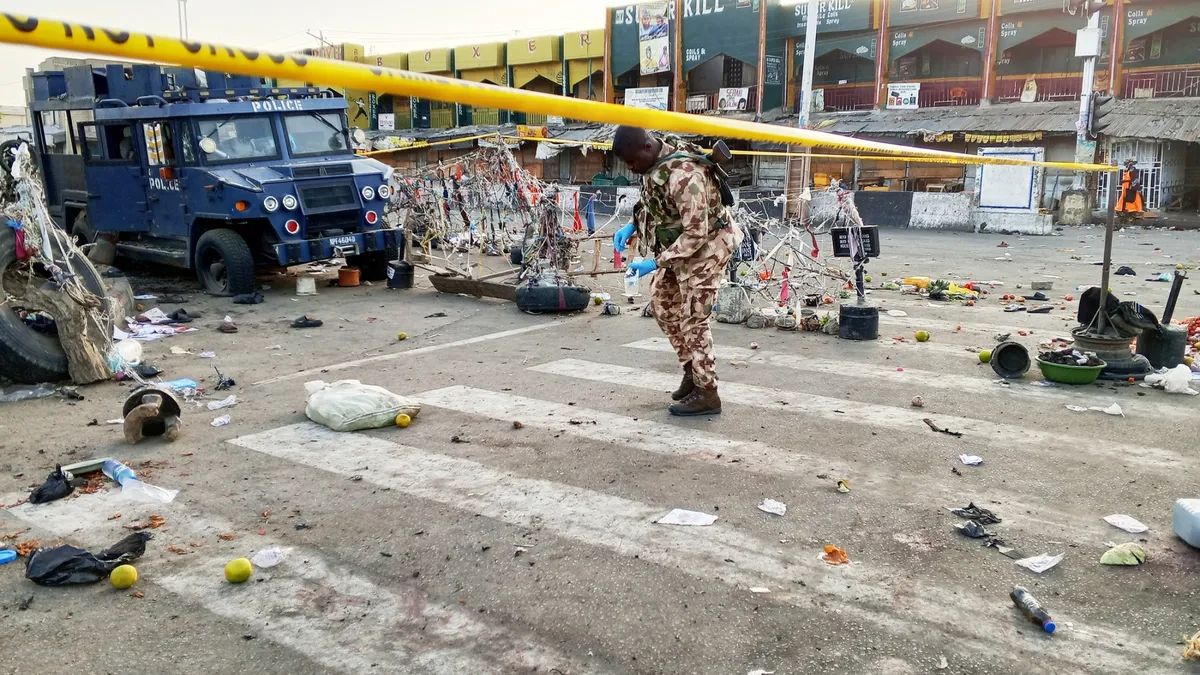
At least 23 people have been killed and more than 100 others injured in a series of suspected suicide bombings in Maiduguri, the capital of Borno State in northeast Nigeria.
The coordinated attacks, which struck crowded civilian locations, have reignited fears of a resurgence of terrorism in a region long plagued by insurgency, raising serious questions about Nigeria’s security architecture and the evolving tactics of extremist groups.
What Happened
According to police and emergency officials, multiple explosions occurred on the evening of March 16, 2026, targeting densely populated areas in Maiduguri. (Courthouse News)
The blasts were reported at:
- A major market (Monday Market)
- The Post Office area
- Entrance of the University of Maiduguri Teaching Hospital
Authorities confirmed that the attacks were carried out by suspected suicide bombers, with at least 23 fatalities and 108 people injured.
Eyewitnesses described scenes of chaos, with victims rushed to hospitals and emergency responders struggling to cope with the scale of injuries. (AP News)
The attacks reportedly occurred during iftar (the breaking of the Ramadan fast), a time when many residents were gathered in public spaces, increasing the impact of the explosions. (The Guardian)
Who Is Responsible?
Although no group has officially claimed responsibility, suspicion has quickly fallen on **Boko Haram and its offshoot, the Islamic State West Africa Province.
Both groups have a long history of carrying out suicide bombings and coordinated attacks in northeast Nigeria.
Security analysts note that the attack bears the hallmarks of Boko Haram operations, particularly: use of multiple suicide bombers, targeting of crowded civilian locations, and timing during religious gatherings.
Experts also warn that there may be increased collaboration between Boko Haram and ISWAP, which could signal a more dangerous phase of the insurgency. (Reuters)
A Return to Violence in Maiduguri?
Maiduguri, once considered the epicenter of Boko Haram’s insurgency, had experienced relative calm in recent years due to sustained military operations.
However, this attack marks one of the deadliest incidents in the city in recent times, raising concerns that militant groups are regaining operational capacity.
Historically, the city has been a strategic target for insurgents due to its role as a military stronghold, symbolic importance as the birthplace of Boko Haram, and large civilian population.
The resurgence of attacks in Maiduguri suggests that despite years of counterinsurgency efforts, the threat remains far from neutralized.
Government and Security Response
President Bola Ahmed Tinubu condemned the attacks, describing them as “desperate acts of terrorists,” and directed security chiefs to take control of the situation.
Security forces have since increased patrols across Maiduguri, deployed bomb disposal units, and intensified intelligence operations.
Authorities have also urged residents to avoid crowded areas and remain vigilant as investigations continue.
Humanitarian Impact
Beyond the immediate loss of life, the attacks have placed significant strain on local healthcare systems.
Hospitals in Maiduguri have been overwhelmed, with medical staff struggling to treat over 100 injured victims.
The psychological impact is also profound, as residents who have begun to experience a sense of normalcy are once again confronted with the reality of insecurity.
Broader Security Implications
1. Resilience of Terror Groups
Despite years of military campaigns, extremist groups have shown remarkable resilience, adapted their tactics, and maintained operational networks.
2. Shift Back to Urban Attacks
The return of suicide bombings in a major city suggests a shift from rural insurgency to high-impact urban terrorism, designed to generate fear and media attention.
3. Intelligence Gaps
The coordinated nature of the attacks raises concerns about intelligence failures and the ability of security agencies to prevent such incidents.
4. Regional Instability
The resurgence of violence in northeast Nigeria could have spillover effects across the Lake Chad region, affecting neighboring countries like Chad, Niger, and Cameroon.
Political and Public Reaction
The attacks have sparked widespread condemnation across Nigeria.
Opposition figures and civil society groups have criticized the government, arguing that the incident highlights ongoing failures in addressing insecurity.
Some critics have also pointed to the timing of the attack - coinciding with President Tinubu’s foreign engagement - as raising concerns about leadership priorities.
Lessons and the Way Forward
Strengthening Intelligence
Improved surveillance, intelligence gathering, and inter-agency coordination are essential to preventing future attacks.
Community Engagement
Local communities play a critical role in identifying suspicious activities and supporting security efforts.
Addressing Root Causes
Long-term solutions must address the underlying drivers of extremism, including poverty, unemployment, and lack of education.
Regional Cooperation
Nigeria must strengthen collaboration with neighboring countries to combat cross-border insurgency.
Conclusion
The killing of at least 23 people in suspected suicide attacks in Maiduguri is a stark reminder that Nigeria’s fight against terrorism is far from over.
While significant progress has been made over the years, the resurgence of coordinated attacks highlights the evolving nature of the threat.
For Nigeria, the challenge now is not only to respond decisively to this latest tragedy but also to build a more resilient security framework capable of preventing future attacks.