Presidency Debunks Claims of “Foreign Deportation Burden,” Explains Key Terms of Nigeria-UK Migration Deal MoU
The Nigerian presidency clarifies the Nigeria–UK migration agreement, dismissing claims that Nigeria will accept foreign deportees. Here’s what the MoU says and its implications.
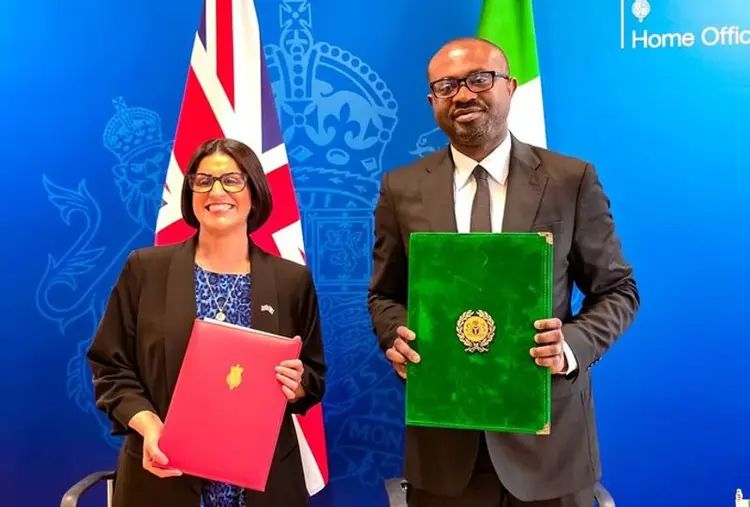
The Nigerian presidency has moved to quell growing public concern and misinformation surrounding the recently signed Nigeria–United Kingdom Migration Partnership, insisting that the agreement does not require Nigeria to accept foreign nationals deported from the UK.
In a detailed statement issued by presidential spokesman Bayo Onanuga, the government clarified the provisions of the Memorandum of Understanding (MoU), which was signed during President Bola Ahmed Tinubu’s historic state visit to the United Kingdom.
The statement comes amid widespread speculation and public backlash, particularly on social media, where claims had circulated that Nigeria had agreed to serve as a destination for deported migrants from third countries.
Government Moves to Correct “Misinformation”
According to the presidency, the migration agreement is being misrepresented in public discourse, prompting the need for clarification.
“The memorandum on immigration cooperation… aims to strengthen partnership between Nigeria and the United Kingdom,” the statement noted, emphasizing that the agreement focuses on regulated migration and bilateral cooperation.
Officials stressed that at no point does the 12-page document compel Nigeria to accept non-Nigerians.
Instead, the agreement strictly applies to citizens of both countries, in line with international laws and existing migration frameworks.
What the Agreement Actually Says
The MoU establishes a structured framework for: facilitating safe and legal migration flows, combating irregular migration, and ensuring the orderly return of nationals who no longer have the legal right to remain in the other country.
Under the agreement, both Nigeria and the UK are expected to cooperate in returning their own citizens, with clear procedures for identification, documentation, and repatriation.
A key provision requires that returnees must be verified as nationals of the receiving country through multiple identification checks.
Where errors occur, the agreement states that the individual will be returned to the requesting country at its own cost - a clause the Nigerian government highlighted as a safeguard against wrongful deportation.
No Acceptance of Foreign Deportees
Perhaps the most controversial issue addressed by the presidency is the claim that Nigeria would accept deportees from third countries.
The statement firmly rejected this narrative that the MoU does not include any provision requiring Nigeria to accept foreign nationals; only individuals confirmed to be Nigerian citizens can be repatriated to Nigeria, and the responsibility for identity verification lies with Nigerian authorities.
This clarification is particularly significant given the sensitivity of migration issues and the potential political implications of such claims.
Safeguards for Returnees
Beyond addressing misinformation, the presidency also highlighted provisions designed to protect the dignity and rights of returnees. Under the agreement that returnees must be treated with respect and dignity, their human rights and fundamental freedoms must be upheld, and they are allowed to travel with their legally acquired personal belongings.
In a departure from past practices, the MoU ensures that migrants are not returned empty-handed.
Article 12 further guarantees that returnees will have adequate time to manage their assets, including transferring or disposing of property before departure.
Legal Protections and Right of Appeal
The agreement also includes provisions for individuals facing deportation to challenge their return under relevant human rights laws.
Such appeals may be based on long-term lawful residence in the host country, social and cultural integration, and potential difficulties in reintegrating into the country of origin.
These safeguards align the MoU with international human rights standards, reinforcing the government’s position that the agreement is not punitive but procedural.
Role of the Nigeria Immigration Service
A critical aspect of the agreement is the preservation of Nigeria’s sovereignty over its immigration processes. The Nigeria Immigration Service retains exclusive authority to issue travel documents, verify the identity of returnees, and approve or reject repatriation requests
The statement emphasized that the UK cannot unilaterally determine the nationality of individuals or impose documentation on Nigeria. This provision directly counters concerns that Nigeria had ceded control over its immigration system.
Reintegration Support for Returnees
The MoU also outlines a comprehensive reintegration framework for returning nationals.
Support measures include:
Short-Term Assistance, which includes airport reception, temporary accommodation, basic care packages, and Small financial support.
Medium-Term Support, which includes family reunification assistance, access to documentation, and counselling and mental health services.
Long-Term Opportunities, which include access to a Returnee Education and Entrepreneurship Fund, vocational training and job placement, and business startup support.
These provisions aim to ensure that returnees are not only received but also successfully reintegrated into society.
Duration and Continuity of the Agreement
The MoU is not unprecedented. According to the presidency, similar agreements were signed in 2012, 2017, and 2022, making the current framework part of an ongoing bilateral effort.
The new agreement will run for an initial five-year period, with the option for renewal based on mutual consent.
Public Reaction and Political Implications
Despite the government’s clarification, the controversy surrounding the agreement highlights a deeper issue: public trust in government communication.
The rapid spread of misinformation reflects high sensitivity around migration issues, growing skepticism toward government policies, and the influence of social media narratives.
Analysts say the situation underscores the need for proactive and transparent communication, especially on agreements with international implications.
What This Means for Nigerians
The clarified agreement carries several implications:
1. Protection of Sovereignty: Nigeria retains full control over who is recognized as its citizen.
2. Structured Migration System: The MoU provides a clearer framework for handling migration between the two countries.
3. Improved Treatment of Returnees: Enhanced safeguards ensure dignity and support for returning nationals.
4. Stronger Bilateral Relations: The agreement reinforces Nigeria’s diplomatic and strategic ties with the UK.
Conclusion
The Nigerian government’s clarification of the migration partnership with the United Kingdom seeks to reassure citizens and correct the widespread misconceptions.
Far from being a concession, the MoU appears to be a structured and reciprocal agreement designed to manage migration more effectively while protecting national sovereignty and human rights.
However, the episode serves as a reminder that in an era of rapid information flow, public perception can shape policy impact as much as policy itself.
For the Tinubu administration, the challenge now is not just implementing the agreement - but ensuring that Nigerians understand, trust, and ultimately benefit from it.