Pope to Lead Mass in Cameroon City Scarred by Post-Election Protest Deaths
Pope Leo XIV will lead a major Mass in Douala, Cameroon, a city shaken by deadly post-election protests. His visit brings a message of peace amid political tension and unrest.
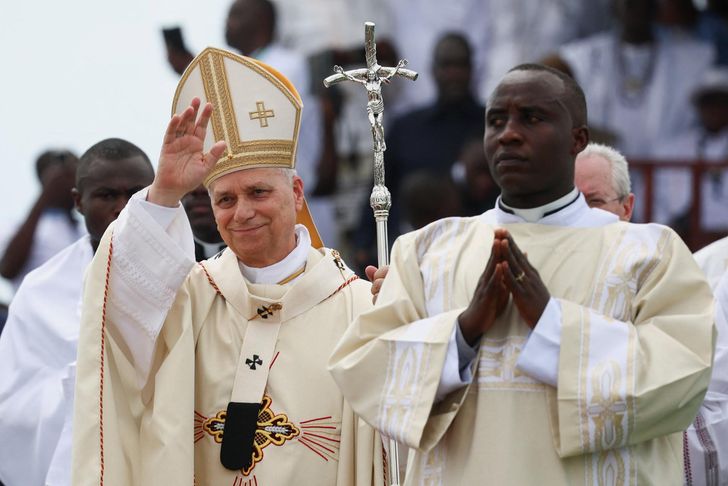
In a moment charged with symbolism and urgency, Pope Leo XIV is set to lead a massive public Mass in the Cameroonian city of Douala, a location still reeling from deadly post-election protests that exposed deep political and social fractures within the country.
The event, expected to draw tens of thousands of worshippers, is part of the pontiff’s broader African tour. But beyond its religious significance, the Mass is widely seen as a strategic intervention - an attempt to restore hope, call for peace, and address a nation grappling with violence, political unrest, and long-standing grievances.
A City Marked by Protest and Bloodshed
Douala, Cameroon’s economic capital, has in recent months become a focal point of political tension. Following the controversial re-election of long-time president Paul Biya, protests erupted across parts of the country, including the Littoral region, where Douala is located.
Security forces responded forcefully. According to UN-linked sources cited in international reports, dozens of civilians were killed during these demonstrations, with nearly half of the deaths recorded in the Douala region alone. (Reuters)
The protests reflected growing frustration among citizens over economic hardship, political stagnation, and leadership that has remained in power for over four decades. For many Cameroonians, especially the youth, the unrest symbolized a breaking point.
Against this backdrop, the Pope’s decision to hold a Mass in Douala carries profound meaning.
A Mass for Peace and Healing
The open-air Mass, held near the Japoma Stadium, is expected to attract a crowd of more than 100,000 people, making it one of the largest religious gatherings in Cameroon in recent years.
In his message ahead of the event, Pope Leo XIV has emphasized unity, peace, and moral renewal. Addressing the faithful, he urged Cameroonians to “reject every form of abuse or violence,” warning that such paths only deepen suffering and division.
The Pope’s message is carefully calibrated. While not directly condemning specific political actors, his call for nonviolence and ethical leadership implicitly addresses the tensions that led to the deadly protests.
He has also used the platform to highlight broader societal issues, including corruption, inequality, and the erosion of trust between citizens and institutions.
Youth at the Center of the Message
A significant portion of the Pope’s address has been directed toward Cameroon’s young population. With a median age of around 18, the country is one of the youngest in the world - yet many of its youth face unemployment, limited opportunities, and political marginalization.
During his engagements, Pope Leo XIV urged young people to resist corruption and despair, encouraging them instead to build a future rooted in integrity and shared responsibility. (AP News)
This focus is particularly relevant in the context of post-election protests, which were largely driven by younger citizens demanding change.
By placing youth at the center of his message, the Pope is not only addressing immediate tensions but also pointing toward long-term solutions grounded in generational transformation.
Security Tight but Symbolic
Given the recent unrest, security around the Mass has been significantly heightened. Authorities have deployed additional personnel to ensure the safety of attendees, reflecting concerns about potential disruptions.
At the same time, the Pope’s visit has prompted rare moments of calm in other conflict zones within Cameroon. In the country’s Anglophone regions where a separatist conflict has claimed thousands of lives, armed groups declared a temporary ceasefire to allow for safe passage during the papal visit.
This development underscores the unique moral authority of the papacy, capable of influencing even entrenched actors in conflict situations.
A Broader Message to Leadership
Beyond the Mass itself, Pope Leo XIV has used his visit to deliver pointed messages to Cameroon’s political leadership. In meetings with government officials, he called for an end to corruption and urged leaders to act as “bridges” rather than sources of division.
He also emphasized that security measures must always respect human rights, a statement that resonates strongly, considering the recent crackdown on protesters.
While diplomatic in tone, these remarks signal a clear stance: lasting peace cannot be achieved through force alone but must be built on justice, accountability, and inclusion.
Cameroon’s Complex Crisis
The unrest in Douala is only one dimension of Cameroon’s broader challenges. The country has been dealing with multiple overlapping crises, including the ongoing Anglophone conflict, extremist threats in the north, and economic pressures affecting millions.
Since 2017, violence between separatist groups and government forces in the English-speaking regions has resulted in thousands of deaths and widespread displacement.
Meanwhile, political tensions remain high nationwide, fueled by concerns over governance, electoral transparency, and the concentration of power.
The Pope’s visit, therefore, comes at a critical juncture; one where the need for dialogue and reconciliation is more urgent than ever.
Faith as a Unifying Force
Despite the challenges, the turnout for the Mass in Douala reflects the enduring strength of faith as a unifying force in Cameroon. Crowds have gathered in large numbers, many traveling long distances and enduring difficult conditions to witness the event.
For many attendees, the Pope’s presence represents more than a religious occasion - it is a moment of collective hope in a time of uncertainty.
Local church leaders have described the visit as a “moment of blessing” for a nation in need of healing, emphasizing the role of faith in bridging divisions and fostering resilience.
Global and Regional Implications
The significance of the Pope’s visit extends beyond Cameroon. It highlights the growing role of religious diplomacy in addressing conflicts and promoting peace, particularly in regions where political solutions have stalled.
It also underscores the importance of international attention in situations where human rights concerns and political tensions risk being overlooked.
For Africa as a whole, the visit serves as a reminder of the continent’s central place in global religious and geopolitical conversations.
Conclusion
Pope Leo XIV’s Mass in Douala is more than a ceremonial event; it is a powerful statement in a nation grappling with the aftermath of deadly protests and enduring conflict.
By choosing to stand in a city marked by loss and tension, the Pope is sending a clear message: that even in the face of violence and division, there remains a path toward peace, unity, and renewal.
Whether that message translates into lasting change will depend not only on leaders and institutions, but on the willingness of ordinary citizens to embrace the values of justice, dialogue, and hope that the pontiff has so passionately articulated.