Pivotal U.S.-Iran War Deadline Approaches with No End in Sight for Conflict
A crucial U.S.-Iran war deadline has arrived with no clear resolution. Explore the political tensions, ceasefire disputes, and why the conflict shows no signs of ending.
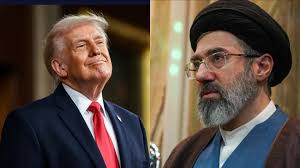
A critical moment in the ongoing U.S.-Iran conflict has arrived, as a legally significant deadline tied to America’s war powers expires without a clear resolution. Instead of signaling an end to hostilities, the deadline has exposed deep political divisions in Washington, unresolved military tensions in the Middle East, and a fragile ceasefire that many fears could collapse at any moment.
The situation reflects a broader reality: despite diplomatic gestures and temporary pauses in fighting, the conflict between the United States and Iran remains far from over.
The Deadline Explained
At the center of the controversy is the War Powers Resolution of 1973, a U.S. law that requires the president to either secure congressional approval or end military action within 60 days of initiating hostilities.
That 60-day clock began after U.S. and Israeli forces launched strikes on Iran on February 28, 2026, triggering the countdown. By May 1, 2026, President Donald Trump faced a legal obligation: either justify continued military engagement to Congress or halt operations. (The Washington Post)
But instead of a decisive move, the deadline is passing amid legal ambiguity and political maneuvering.
Ceasefire Complication: Pause or Loophole?
A ceasefire between the U.S. and Iran, in effect since early April, has complicated the legal interpretation of the deadline.
Defense Secretary Pete Hegseth argued that the ceasefire effectively “pauses” the 60-day clock, meaning the administration does not need immediate congressional authorization.
However, legal experts and lawmakers strongly dispute this claim. They argue that the War Powers Resolution contains no provision allowing the clock to stop, even during a pause in fighting. (Al Jazeera)
This disagreement has turned a legal deadline into a constitutional debate, with critics warning that ignoring it could weaken congressional oversight of military action.
Congress Divided, No Clear Direction
The political response in Washington has been deeply divided.
Democrats have pushed for resolutions requiring the administration to either seek approval or withdraw U.S. forces. But these efforts have repeatedly failed, blocked by a Republican majority in Congress. (Reuters)
Even within Republican ranks, however, there are signs of unease. A small number of lawmakers have questioned the lack of congressional involvement, emphasizing that presidential war powers are not unlimited.
Despite this, no comprehensive authorization or clear exit strategy has emerged.
War Without a Clear Endgame
The larger issue is not just the deadline; it is the absence of a clear path forward.
The war itself began with coordinated U.S.-Israeli strikes targeting Iranian military and government infrastructure. Iran responded with missile and drone attacks across the region, including strikes on U.S. bases and allied territories.
The conflict quickly escalated beyond a bilateral confrontation, drawing in regional actors and threatening key global trade routes such as the Strait of Hormuz.
Even with the ceasefire in place, tensions remain high:
- U.S. naval blockades continue to disrupt Iranian shipping.
- Iran has seized vessels in retaliation.
- Strategic waterways remain unstable.
In practical terms, the war has slowed but not stopped.
Fragile Ceasefire, Stalled Talks
While the ceasefire initially raised hopes of de-escalation, negotiations have since stalled.
Both sides have accused each other of violations, and military readiness remains high. The U.S. continues to maintain a strong presence in the region following its largest military buildup in years, while Iran retains its capacity for retaliation.
Diplomatic talks have yet to produce a breakthrough, and analysts warn that without progress, the ceasefire could unravel.
Global Impact: Oil, Trade, and Uncertainty
The conflict’s effects are being felt far beyond the Middle East.
The Strait of Hormuz, through which a significant portion of the world’s oil supply passes, has been disrupted, pushing global energy prices higher.
Economic consequences include rising oil prices and inflation pressures, disrupted shipping and supply chain, and increased military spending.
These ripple effects have added urgency to calls for resolution, even as political disagreements delay action.
Public Pressure and Political Risk
Public opposition to the war is also growing.
Protests have taken place across multiple countries, with demonstrators questioning the legality and human cost of the conflict.
In the United States, declining approval ratings and economic concerns are increasing pressure on the administration to clarify its strategy.
Yet, despite this pressure, no decisive shift has occurred.
Why There Is No End in Sight
Several factors explain why the conflict remains unresolved:
1. Legal Ambiguity: Disagreement over the War Powers deadline allows the administration to continue operations without clear authorization.
2. Political Gridlock: Congress remains divided, preventing unified action or a clear mandate.
3. Strategic Stakes: Both the U.S. and Iran see the conflict as tied to broader geopolitical goals, making compromise difficult.
4. Fragile Diplomacy: Negotiations have stalled, and trust between both sides remains low.
5. Regional Complexity: Multiple actors and overlapping conflicts complicate any simple resolution.
Lessons From the Crisis
1. War Powers Still Matter: The controversy highlights the ongoing struggle between executive authority and congressional oversight in modern warfare.
2. Ceasefires Are Not Peace: A pause in fighting does not resolve underlying tensions or strategic conflicts.
3. Modern Wars Are Open-Ended: Unlike traditional wars, contemporary conflicts often lack clear beginnings or endings.
4. Global Interdependence Raises the Stakes: Economic and security consequences extend far beyond the battlefield.
What Happens Next?
As the deadline passes, attention will shift to what the U.S. administration does next.
Possible scenarios include seeking retroactive congressional authorization, extending the ceasefire and delaying decisions, and resuming full-scale military operations if talks collapse.
For now, however, uncertainty remains the defining feature of the conflict.
Final Analysis
The approaching and now effectively passing U.S.-Iran war deadline was supposed to force clarity. Instead, it has revealed confusion.
Legally, politically, and militarily, the situation remains unresolved. A ceasefire exists, but peace does not. A deadline has arrived, but decisions have not.
In many ways, that is the most telling outcome of all: a war that continues not because of a clear strategy, but because no one has yet decided how to end it.