Pirates Seize Another Vessel Off Somali Coast as Security Threat Level Rises Across Shipping Routes
Suspected pirates have hijacked another vessel off Somalia’s coast, raising alarm over renewed maritime insecurity in the region. Here’s what happened, why piracy is resurging, and what it means for global shipping.
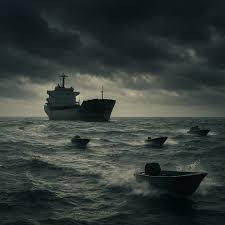
The fragile security situation off the Somali coastline has worsened again after suspected pirates seized another commercial vessel in a fresh attack that has raised international concern about a possible resurgence of piracy in the Horn of Africa.
The latest incident occurred off the coast of Puntland, northeastern Somalia, where armed men boarded and took control of a cargo vessel sailing through one of the world’s most important maritime corridors connecting the Red Sea, Indian Ocean, and Gulf of Aden.
Security officials confirmed that the ship was hijacked by armed attackers, with early reports suggesting the use of speedboats and automatic weapons in a coordinated boarding operation.
The attack comes just days after another vessel was seized in the same region, signaling a troubling pattern of escalating maritime insecurity. (AP News)
How the Hijacking Happened
According to maritime security sources, the vessel was travelling along a common commercial route when it was approached by multiple small boats carrying armed men.
Witness accounts and regional security monitoring reports indicate:
- The attackers intercepted the vessel offshore
- Armed men boarded using ladders and force
- The crew was overpowered and communications were disrupted
- The ship was redirected into Somali territorial waters
The hijacking reportedly occurred near Garacad, a coastal area in Puntland that has seen increased pirate activity in recent months.
Although full details of the crew and cargo have not yet been confirmed, authorities say they are working with international naval forces to track the vessel’s movements.
A Growing Pattern of Attacks
The latest seizure is not an isolated case. It forms part of a series of recent hijackings and attempted attacks along the Somali coast.
In just the past weeks:
- A fuel tanker was hijacked while sailing toward Mogadishu
- A cargo vessel carrying essential goods was seized offshore
- Armed men used “mother ships” to extend their operational range
- Multiple fishing and commercial vessels have been targeted
One recent hijacking involved a tanker seized by six-armed men, highlighting the small but highly mobile nature of modern pirate groups in the region. (The Eastleigh Voice)
Why Piracy Is Returning
Somali piracy, once considered largely suppressed after peak activity in the early 2010s, is now showing signs of revival due to several factors:
1. Weak Maritime Enforcement: International naval patrols that once heavily secured the region have been reduced, creating gaps exploited by armed groups.
2. Political Instability: Ongoing insecurity within Somalia, particularly in coastal regions, has limited government control over maritime zones.
3. Economic Pressure: Local poverty and unemployment in coastal communities have contributed to recruitment into piracy networks.
4. Tactical Evolution: Modern pirate groups are more organized, using:
- “Mother ships” to travel farther offshore
- Faster skiffs for interception
- Coordinated multi-boat attacks
- Improved weapons and communications
Experts say these methods mirror earlier piracy waves but with greater sophistication and coordination.
Why the Somali Coast Matters Globally
The waters off Somalia sit near some of the busiest shipping lanes in the world, including routes linking:
- Asia to Europe via the Suez Canal
- Gulf energy exports to global markets
- East African trade corridors
More than tens of thousands of merchant vessels pass through the region annually, making any disruption a major risk to global supply chains.
Even limited piracy activity can lead to:
- Higher shipping insurance premiums
- Longer shipping routes to avoid danger zones
- Increased military escort requirements
- Delays in global trade logistics
International Naval Response
In response to the renewed threat, international maritime security forces have stepped up monitoring efforts.
Naval patrol missions, including EU-led operations, have previously succeeded in reducing piracy incidents significantly through:
- Armed escort patrols
- Air surveillance
- Intelligence sharing
- Rapid-response boarding teams
At its peak in 2011, Somali piracy caused hundreds of attacks annually, costing the global economy billions in ransom payments and security measures. (Wikipedia)
However, recent reductions in patrol intensity have coincided with a gradual increase in incidents since late 2023.
Economic and Human Impact
Beyond the geopolitical implications, piracy has direct consequences for:
Shipping companies
- Increased insurance premiums
- Higher operational costs
- Crew safety risks
Seafarers
- Kidnapping risks
- Psychological trauma
- Extended hostage situations in past cases
Regional economies
- Reduced investor confidence
- Trade disruptions
- Higher import costs for coastal nations
In some previous incidents, ships and crews were held for weeks or months before release, sometimes after ransom negotiations.
Experts Warn of a “Fragile Resurgence”
Maritime security analysts describe the current wave as a “fragile resurgence”, meaning piracy has not returned to its 2011 peak levels but is trending upward due to weakening enforcement.
The concern is not only the number of attacks but also:
- Improved coordination among pirate groups
- Expansion of operational reach far offshore
- Increased willingness to target commercial shipping again
What Happens Next
Authorities are currently tracking the hijacked vessel while coordinating with international naval partners.
Next steps typically include:
- Locating the vessel via satellite and maritime tracking systems
- Attempted interception by naval forces
- Negotiations for crew release if necessary
- Investigation into the pirate network involved
No ransom demands have yet been publicly confirmed in the latest incident.
Final Analysis
The seizure of another vessel off the Somali coast is a stark reminder that piracy in the region, though reduced in recent years, has never been fully eliminated.
What is emerging now is a more adaptive and resilient form of maritime crime, taking advantage of reduced surveillance and regional instability.
If the trend continues, global shipping routes through East Africa could once again become a high-risk corridor, forcing international powers to reconsider maritime security strategies in one of the world’s most strategically important waterways.