Peter Obi’s Convoy Blocked in Benue as NDC Demands Probe into Alleged Attack
Peter Obi’s convoy was blocked by youths in Benue while he travelled to Yelwata to visit victims of the 2025 massacre. NDC demands investigation and prosecution.
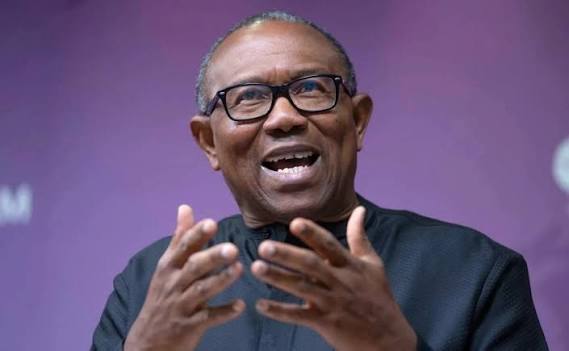
The Nigeria Democratic Congress (NDC) presidential candidate, Peter Obi, has come under the spotlight after his convoy was blocked by youths in Benue State, prompting the party to demand an investigation into what it described as an attack and obstruction of its candidate.
The incident occurred on Tuesday, September 8, 2026, as Obi was travelling towards Yelwata in Guma Local Government Area, where he planned to visit families affected by the June 2025 massacre that claimed more than 200 lives.
Videos circulating on social media showed a group of youths, some carrying sticks, blocking the road as Obi's convoy attempted to proceed along the Gboko Road area of Makurdi. The convoy was subsequently forced to turn back. (TheCable)
The circumstances surrounding the incident remain disputed, with the NDC accusing suspected thugs of deliberately obstructing Obi while the Benue State Government denied involvement and said it was unaware of the visit.
NDC Condemns Obstruction of Obi’s Convoy
The NDC condemned the incident as unacceptable and called on the Benue State Government and security agencies to investigate what happened.
The party's National Publicity Secretary, Osa Director, said Obi's visit was intended as a humanitarian mission rather than a political campaign activity.
According to the party, the former Anambra State governor wanted to meet families who lost relatives in the Yelwata killings, offer condolences and listen to residents affected by the tragedy.
The NDC argued that preventing a presidential candidate from travelling to a community to sympathise with victims represents a serious threat to democratic freedoms.
The party consequently demanded that those responsible for the blockade be identified and prosecuted, while urging authorities to guarantee the safety of political leaders and citizens exercising their constitutional rights. (Punch Newspapers)
What Happened on Gboko Road?
Reports indicate that Obi's convoy encountered the youths around Gyado Villa along Gboko Road, near the Nigerian Air Force Base and Makurdi Airport.
The group reportedly prevented the vehicles from moving forward and, according to video footage circulated online, some individuals appeared to pursue the convoy as it withdrew.
The exact motive behind the blockade has not been established.
The Benue State Police Command confirmed that it was aware of Obi's planned movement to Yelwata and that police operatives provided security for the journey.
However, police spokesperson DSP Peter Aondongu said the reason the convoy was blocked remained unclear and that the circumstances surrounding the incident were being investigated.
This police position is significant because it leaves open the question of who organised the youths and why they attempted to stop the NDC presidential candidate.
Obi Alleges Political Interference
Obi, who served as governor of Anambra State and was the Labour Party's presidential candidate in the 2023 election, described the incident as troubling.
He alleged that the youths had been mobilised to prevent him from reaching Yelwata and said he had been informed that an aide to the Benue governor was involved.
However, that allegation has not been independently established.
Obi maintained that his purpose in travelling to Benue was to sympathise with families affected by the massacre rather than conduct campaign activities.
The NDC also rejected suggestions that the visit was politically motivated, saying that offering solidarity to victims of violence should not be interpreted as a partisan activity.
Benue Government Denies Involvement
The Benue State Government has strongly denied involvement in the incident.
The Chief Press Secretary to Governor Hyacinth Alia, Kula Tersoo, said the state government was not aware of Obi's visit.
Tersoo expressed surprise that youths could intercept the convoy and rejected allegations that the individuals were acting on behalf of the government.
He said the administration did not use thugs and maintained that Obi was not considered a threat to Governor Alia.
The government also questioned whether adequate coordination had taken place between Obi's security team and authorities in the host state before the visit.
The conflicting accounts have increased pressure for an independent investigation capable of establishing who knew about the visit, who organised the road blockade and whether any political or security officials were involved.
Kwankwaso Condemns the Incident
The incident has also attracted condemnation from Rabiu Kwankwaso, Obi's running mate on the NDC presidential ticket.
Kwankwaso described the reported attack on Obi's convoy as disturbing and called on the Benue State Government to identify and prosecute those responsible.
He also appealed to President Bola Tinubu to caution state governors against actions that could undermine democratic freedoms.
Kwankwaso argued that freedom of movement should apply to every Nigerian, including opposition politicians and presidential candidates. (Vanguard News)
The former Kano State governor further called on diplomatic missions, international organisations and election-monitoring bodies to take note of the incident as Nigeria moves towards the 2027 general elections.
Sowore Also Condemns Blockade
The incident has attracted criticism beyond the NDC.
African Action Congress presidential candidate Omoyele Sowore condemned what he described as an apparent sponsored blockade and attack against Obi.
Sowore said political disagreements should not result in intimidation or obstruction of opposition politicians.
His intervention is notable because it reflects concerns among opposition figures that political intolerance could become a bigger issue as parties intensify preparations for the 2027 elections.
Concerns Over Political Intolerance
The Benue incident has renewed debate about the safety of political candidates and freedom of movement ahead of the 2027 elections.
Nigeria's electoral environment has historically witnessed confrontations between political supporters, allegations of intimidation and disputes over campaign activities.
The controversy surrounding Obi's convoy therefore goes beyond the immediate incident.
Opposition parties and civil society groups are likely to scrutinise whether political actors can freely travel to communities, meet supporters and visit victims of violence without facing obstruction.
For an election expected to feature intense competition among major political parties, maintaining a peaceful environment will be critical.
Humanitarian Visit or Political Activity?
One of the central questions surrounding the incident is whether Obi's visit should be regarded as a humanitarian mission or political activity.
The NDC insists that it was a humanitarian visit to families affected by the Yelwata massacre.
The Benue State Government, meanwhile, says it was not informed about the visit and has questioned the protocol surrounding the movement.
The distinction could become important as political parties begin increasingly visible activities ahead of the 2027 election.
Even if political considerations are involved, however, the right to peaceful movement and protection from violence remains a fundamental issue.
Investigation Needed to Establish the Facts
With the NDC demanding prosecution and the Benue Government denying involvement, an impartial investigation is now necessary to establish what actually happened.
Authorities will need to determine who organised the youths, whether anyone directed them to block the convoy, whether security personnel were involved and whether any laws were violated.
The police have already indicated that the reason for the obstruction was unclear.
A transparent investigation could therefore help prevent the incident from becoming another unresolved political controversy.
2027 Elections Put Political Conduct Under Spotlight
The blockade of Peter Obi's convoy comes at a politically sensitive time, with Nigeria moving towards the 2027 general elections.
The incident has already generated condemnation from opposition politicians and heightened concerns about political tolerance.
For the NDC, the immediate priority is accountability and the protection of its presidential candidate.
For the Benue State Government, the challenge is to demonstrate that it had no role in the incident and that residents are free to express their views without being used to intimidate political opponents.
Ultimately, the incident provides another reminder that Nigeria's democratic process depends not only on elections themselves but also on the ability of political candidates to move freely, campaign peacefully, engage communities and participate in public life without intimidation or violence.
The facts surrounding Obi's blocked convoy should therefore be established quickly, transparently and independently, particularly as the country approaches another crucial electoral cycle.