Partial U.S. Government Shutdown Begins Despite Senate Funding Deal: Economic Impacts and Global Ripple Effects
A partial U.S. government shutdown has begun after funding lapsed despite a Senate deal. Explore how this affects the U.S. and the global economy - including Africa - what it means for markets, services, and international trade, and why prolonged shutdowns matter beyond U.S. borders.
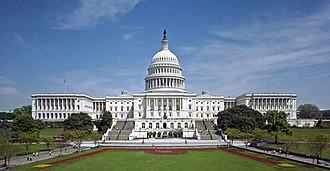
A partial U.S. government shutdown began at midnight on January 31, 2026, after federal funding lapsed even though the Senate had approved a bipartisan spending package late Friday. The funding deal still requires approval by the U.S. House of Representatives, which is out of session and not expected to vote until Monday, triggering the shutdown in the interim.
The impasse stems from ongoing disagreements, particularly over funding for the Department of Homeland Security (DHS) and proposed reforms to immigration agencies. Senate Democrats made DHS funding contingent on oversight provisions for agencies like Immigration and Customs Enforcement, creating a political divide that could not be resolved before the funding deadline. (PRAI NEWS)
What’s Happening in Washington
The Senate passed a comprehensive funding bill covering most federal agencies - with a two-week extension for DHS - but the House’s delay pushed the nation into a partial government shutdown. Under current procedures, dozens of agencies have seen their budgets lapse; only essential services will continue to operate.
Shutdowns occur when Congress fails to enact or extend appropriations by the fiscal year deadline. When this happens, federal agencies cannot legally spend money on non-essential operations, forcing furloughs and service suspensions until lawmakers act.
The current shutdown is being viewed as temporary and likely short-lived, given the broad Senate support for the funding deal and bipartisan desire to avoid a prolonged closure similar to the 43-day shutdown in 2025 - the longest in U.S. history. (Reddit)
Who Is Affected - and How
Essential services such as national security, emergency responses, air traffic control, and social safety net programs like Social Security and Medicare generally continue even during funding lapses; these programs are classified as “mandatory spending” and are not subject to annual appropriations lapses. (Business Today)
However, non-essential operations at federal agencies have paused. This includes many administrative functions at the Departments of Transportation, Labor, Health and Human Services, and Homeland Security. Federal employees in these areas may be furloughed (placed on temporary unpaid leave) or required to work without pay. (Wikipedia)
Federal contractors - unlike government employees - typically do not receive retroactive pay for days not worked, meaning even a short shutdown can hit small businesses and subcontractors especially hard.
U.S. Economic Impact
Even brief shutdowns impose economic costs. A Congressional Budget Office report on the 2018-19 U.S. shutdown estimated a reduction in real GDP and disruptions to economic activity. Historical analysis shows that shutdowns can shave off 0.1 to 0.3 percentage points of quarterly GDP growth for each week they persist, largely due to lost pay and delayed government spending. (EY)
Economists also emphasize that shutdowns can dampen business confidence, cause delays in regulatory approvals, and disrupt travel and administrative services - for example, the Federal Aviation Administration may operate with reduced oversight, potentially affecting flight schedules and logistics.
A prolonged shutdown could have more visible effects on financial markets, consumer sentiment, and credit outlooks. Ratings agencies have previously warned that repeated political stalemates over spending could eventually weigh on the United States’ fiscal credibility.
Global Economic and Market Consequences
Though the immediate impacts of this partial shutdown are largely domestic, the U.S. economy’s sheer size means even short-term disruptions can ripple globally.
Financial markets react to political uncertainty. Extended shutdowns can delay economic data releases and create volatility in equity, bond, and currency markets - a phenomenon observed during prior shutdowns when investors pivoted toward safe-haven assets and commodity prices shifted.
Foreign investors, including in Europe, Asia, and Africa, often view U.S. fiscal stability as a cornerstone of global financial equilibrium. Even short funding gaps can result in temporary risk-off sentiment, influencing stock markets and investment flows abroad.
Implications for Africa
For African economies, the impact of a U.S. shutdown is more indirect but still significant:
• Trade and Investment: The U.S. is a major trade partner and investor in African markets. Political uncertainty in Washington can slow approvals for trade agreements, foreign direct investment decisions, and export financing - all of which can dampen economic momentum in African countries.
• Aid and Development Funding: Many U.S. international aid programs and development initiatives operate on annual budgets that could be delayed during shutdowns, potentially affecting timelines for infrastructure, health, and education projects across Africa.
• Currency and Commodity Markets: External demand for commodities and foreign exchange stability can be influenced by shifts in global investor risk appetite. An extended U.S. fiscal standoff could contribute to short-term volatility in oil, metals, and agricultural markets on which many African producers depend.
Even though this particular shutdown may be brief, recurring budget battles create uncertainty that can feed into longer-term economic planning decisions across continents.
Political and Institutional Risks
Beyond financial costs, repeated federal shutdowns expose institutional weaknesses in governance. Frequent funding standoffs can undermine confidence in a government’s ability to manage essential public functions - from border security to scientific research and public health preparedness. This perception can have long-lasting political consequences, including investor caution and public distrust.
For global partners - including African states - stable U.S. policy frameworks are often seen as necessary for predictable economic cooperation and security partnerships. Recurring shutdowns risk painting the U.S. as a less reliable partner, with ramifications for diplomacy and international collaboration.
What Happens Next
The shutdown’s duration hinges on how quickly the House of Representatives votes on the Senate’s funding plan when it returns to session. If the bill is approved early in the week, the shutdown could be resolved swiftly with minimal economic fallout. Failure to act might lengthen the closure, deepening economic costs and market unease.
In previous shutdowns, when lawmakers eventually passed appropriations or stopgap measures, federal workers were granted retroactive pay under existing law, though contractors did not receive such compensation. (TIME)
Conclusion
A partial government shutdown beginning despite a Senate funding deal highlights the fragility of budget negotiations and the economic costs of political stalemate. While the immediate effects may be limited if resolved quickly, any extended lapse can slow GDP growth, disrupt markets, and create uncertainty that resonates beyond U.S. borders - especially in globally connected regions like Africa. Understanding these dynamics is crucial for policymakers and investors alike as they navigate political risk in a complex global economic environment.