Palestinian Parents Fear for Children’s Lives at School as Settler Attacks Grow
Palestinian parents in the occupied West Bank fear for their children as settler attacks increase, with schools becoming targets and pupils facing growing violence on their way to class.
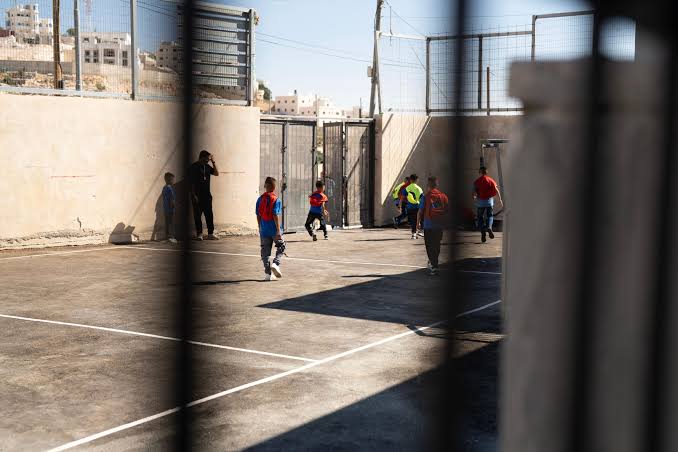
For many Palestinian parents in the occupied West Bank, sending their children to school has become an increasingly frightening experience.
Instead of representing a safe place for learning, some schools are now surrounded by barbed wire, reinforced gates and the fear of attacks as violence by Israeli settlers and military forces continues to increase.
The concern has become particularly acute in al-Mughayyir, a village northeast of Ramallah, where pupils and teachers have experienced deadly violence in and around their school. The latest escalation has left parents questioning whether they can safely send their children to class each morning. (yahoo.com)
The fears come as the new Palestinian school year begins against a backdrop of rising settler violence across the West Bank.
School Becomes a Place of Fear
At al-Mughayyir boys' school, school officials have strengthened security around the compound after a series of violent incidents.
According to reporting by the BBC, the school's head teacher, Bassam al-Assaf, said students and parents were frightened by the escalating attacks. The school has installed additional fencing and reinforced its gates as pupils return to classes.
The concern is rooted in experience rather than speculation.
In April, 14-year-old student Aws al-Naasan was shot dead near the school during an incident involving an Israeli settler. Teachers reported that pupils ran for cover inside classrooms while gunfire struck near the school building.
The incident has remained deeply traumatic for students and teachers.
Since then, violence around the village has continued.
Two More Teenagers Killed
The situation deteriorated further on September 2 when two Palestinian teenagers were killed during an attack involving Israeli settlers and Israeli troops in al-Mughayyir.
The victims were identified as Khalil Abu Alia, 16, and Omar al-Nassan, 19, according to Palestinian officials and Reuters.
Witnesses said Israeli settlers and soldiers entered the village during an incident involving livestock. The Israeli military said its forces had responded to what it described as a violent disturbance involving stone throwing and said those killed were among people it considered key instigators. The military said the circumstances were being investigated. (reuters.com)
The deaths have heightened concerns among families with children attending schools in the area.
For parents, the danger is no longer confined to remote farmland or isolated clashes. It can occur near school gates, on roads used by pupils and in communities where children live.
Settler Attacks Rising Across West Bank
Al-Mughayyir is part of a broader pattern.
United Nations data cited by Save the Children showed that settler attacks increased by 45% during the first six months of 2026 compared with the same period in 2025.
More than 1,020 incidents were recorded between January and June, compared with 757 during the same period the previous year.
Save the Children said more than 1,000 Palestinian children had been displaced by settler violence during the first six months of 2026 alone.
The organisation also reported that 13 settler attacks on schools had affected approximately 700 students during that period. (savethechildren.ca)
The figures illustrate how violence is increasingly affecting children's access to education as well as their physical safety.
Children Face Danger on the Way to School
The threat does not necessarily begin once children enter school.
In some Palestinian communities, pupils must pass through areas where settlers live or travel along roads where confrontations have occurred.
UNICEF has warned that escalating violence in the West Bank is having a profound effect on children.
The UN children's agency said children are being exposed to killings, injuries, displacement and psychological distress as violence increases. UNICEF has called for children to be protected from violence and for their access to essential services, including education, to be safeguarded. (unicef.org)
For parents, the journey to school can therefore become as worrying as the hours children spend inside classrooms.
Schools Also Facing Demolition and Disruption
Physical attacks are not the only challenge confronting Palestinian education.
In parts of the West Bank, schools face demolition orders, access restrictions and threats linked to settlement expansion.
In Masafer Yatta, Palestinian children returned to school this academic year while facing uncertainty over whether some school buildings will remain standing.
Al Jazeera reported that children in the area were returning to classrooms amid Israeli demolition threats affecting educational facilities. (aljazeera.com)
Palestinian education authorities have also accused settlers of deliberately targeting schools.
The Palestinian Ministry of Education reported attacks on educational institutions, including an incident at a boys' school in Jenin where a settler allegedly entered school grounds and threatened to shut the institution.
The ministry said attacks and intimidation have disrupted education and created an unsafe environment for pupils and teachers. (moe.pna.ps)
Psychological Impact on Children
Beyond physical injuries and deaths, the continuing violence is leaving a psychological mark on Palestinian children.
Children who witness shootings, hear gunfire near classrooms or see friends and relatives killed can experience fear, anxiety and trauma.
UNICEF has repeatedly warned that prolonged exposure to violence can have serious consequences for children's mental health and development.
The disruption to education compounds those effects. School provides children with routine, social interaction and a sense of normality. When attendance becomes irregular because of violence or displacement, another layer of instability is introduced into their lives.
Save the Children has reported that families displaced by settler violence face major disruptions to schooling, safety and children's overall wellbeing.
International Concern Over Settler Violence
The escalation has attracted increasing international criticism.
Human Rights Watch said in August that settler violence was driving displacement in parts of the West Bank and accused Israeli authorities of failing to adequately protect Palestinians from attacks.
The organisation documented patterns of violence, intimidation and displacement affecting Palestinian communities.
Israel disputes many Palestinian and international allegations concerning its conduct in the West Bank and maintains that its military operations are intended to protect Israeli citizens and respond to security threats.
Israeli authorities have also argued that some Palestinian communities are built without required permits or in areas subject to military restrictions.
However, the expansion of Israeli settlements and settler violence remains a major point of international concern.
Parents Demand Safety, Not Fear
For Palestinian parents, the issue is ultimately straightforward: they want their children to attend school without fearing that they may not return home.
The experience of al-Mughayyir has demonstrated how quickly violence can enter the educational environment. A school gate, classroom wall or road leading to class can suddenly become part of a conflict zone.
Teachers have responded by strengthening school security, while parents remain deeply concerned about what could happen beyond the school's reinforced gates.
The broader figures indicate that the problem is not isolated. Rising settler attacks, displacement and restrictions are increasingly affecting children's ability to learn in safety.
As the school year progresses, Palestinian families will continue to face the difficult choice of balancing their children's right to education with fears for their safety.
For thousands of children across the West Bank, going to school should mean books, teachers, friends and the promise of a better future.
Instead, for many families, it now begins with a question no parent should have to ask: Will my child come home safely?