Pakistan Airstrike on Afghan Rehab Centre Leaves 269 Dead as Families Demand Answers
Families in Afghanistan are demanding answers after a reported Pakistani strike on a rehabilitation centre allegedly killed 269 Afghans. The tragedy has intensified regional tensions, sparked humanitarian outrage, and raised urgent questions about accountability and civilian protection.
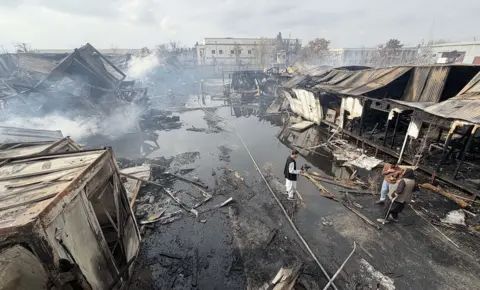
Grief, anger, and confusion continue spreading across parts of Afghanistan after a reported Pakistani military strike on a rehabilitation centre allegedly killed 269 Afghan civilians, triggering one of the deadliest cross-border incidents in recent regional history.
As survivors and relatives search for answers, families of the victims are demanding accountability and clarity over why the facility was targeted and whether intelligence failures or mistaken military assessments contributed to the mass casualties.
The incident has intensified tensions between Pakistan and Afghanistan while drawing international concern over civilian protection, cross-border military operations, and the growing humanitarian crisis affecting communities already devastated by years of war and instability.
According to reports emerging from local officials and humanitarian sources, the facility struck during the attack was allegedly being used as a rehabilitation and recovery centre housing vulnerable individuals, including patients undergoing treatment and displaced civilians seeking shelter.
Witnesses described scenes of devastation after the strike, with buildings reduced to rubble and rescue workers struggling to recover bodies from collapsed structures.
Families of the victims say many of those killed had no connection to militancy or armed activity.
Families Searching for Answers
For relatives of the victims, the tragedy has become not only a humanitarian disaster but also a painful mystery.
Many families insist they still do not understand why the rehabilitation centre was targeted.
“We lost innocent people who were trying to heal and survive,” one grieving relative reportedly told local media. “We want to know why this happened.”
Others accused authorities of failing to distinguish between civilians and security threats in a region already traumatized by decades of conflict.
Several survivors reportedly claimed there was no warning before the strike occurred.
Human rights advocates say the scale of casualties raises serious concerns about intelligence accuracy, target verification procedures, and proportionality under international humanitarian law.
As funeral ceremonies continue across affected communities, pressure is mounting on both Pakistani and Afghan authorities to explain the circumstances surrounding the attack.
Pakistan’s Security Concerns
Pakistan has long accused militant groups operating near the Afghan border of launching attacks inside Pakistani territory.
Islamabad has repeatedly expressed concern about armed organizations allegedly using remote Afghan regions as safe havens for planning cross-border operations.
In recent years, tensions between the two neighboring countries have worsened due to security disputes, border clashes, refugee issues, and accusations of insufficient counterterrorism cooperation.
Pakistani military officials have often defended cross-border operations as necessary responses to militant threats targeting civilians and security personnel inside Pakistan.
However, critics argue that such operations frequently risk civilian casualties in densely populated or poorly monitored areas.
The reported strike on the rehabilitation centre may now become one of the most controversial incidents linked to the ongoing security crisis between the two nations.
Humanitarian Outrage Growing
International humanitarian organizations and rights groups have expressed alarm over reports of large-scale civilian deaths.
Several organizations called for an independent investigation into the incident and urged all parties to respect international humanitarian law.
Civilian protection advocates warn that repeated attacks affecting non-combatants deepen trauma, fuel resentment, and complicate long-term peacebuilding efforts across the region.
Medical workers and humanitarian responders reportedly struggled to cope with the scale of injuries and fatalities following the strike.
The destruction of a rehabilitation facility has also intensified concerns regarding the vulnerability of healthcare and humanitarian infrastructure in conflict zones.
Aid organizations fear the tragedy may discourage vulnerable civilians from seeking assistance in already unstable regions.
Regional Tensions Intensify
The incident threatens to further strain already fragile relations between Pakistan and Afghanistan.
Political observers note that mistrust between both countries has remained deeply rooted for decades due to border disputes, insurgency concerns, refugee movements, and competing security narratives.
Afghan officials and local leaders reportedly condemned the attack, with some demanding international intervention and accountability.
Public anger has also grown among Afghan communities, where many view cross-border strikes as violations of sovereignty and civilian rights.
Meanwhile, Pakistani officials continue emphasizing national security concerns linked to armed groups operating near the border.
Analysts warn that escalating tensions could increase instability in a region already struggling with economic hardship, humanitarian pressures, and extremist violence.
Questions About Intelligence and Accountability
One of the central questions surrounding the tragedy involves whether the strike resulted from faulty intelligence or mistaken identification of the target.
Military operations in remote border regions often rely heavily on intelligence assessments that may become difficult to verify independently.
Critics argue that insufficient surveillance or rushed operational decisions can lead to devastating civilian consequences.
International law experts emphasize that military forces are obligated to distinguish between civilian and military targets during armed operations.
If investigations determine that the rehabilitation centre was knowingly or negligently targeted despite civilian presence, demands for accountability could intensify significantly.
Families of victims continue insisting that transparency is essential.
“We deserve the truth,” another relative reportedly stated. “People cannot simply disappear without explanation.”
Psychological Impact on Survivors
Beyond the immediate loss of life, the attack has left deep psychological scars on survivors and affected communities.
Many people in the region have already endured years of violence, displacement, and instability linked to prolonged conflict.
Mental health specialists warn that repeated exposure to traumatic events can have lasting emotional consequences, especially for children and vulnerable populations.
Survivors reportedly described scenes of panic, confusion, and horror following the strike, with some still searching for missing relatives days later.
The destruction of a rehabilitation centre associated with recovery and healing has added another painful dimension to the tragedy.
International Community Under Pressure
The incident is likely to increase pressure on international organizations and regional actors to address growing instability along the Pakistan-Afghanistan border.
Diplomatic observers say the tragedy underscores the urgent need for stronger communication channels, intelligence coordination, and conflict prevention mechanisms between neighboring states.
Some analysts fear that without improved cooperation, civilian populations may continue paying the price for unresolved security disputes.
The broader humanitarian crisis in Afghanistan has already been worsened by economic collapse, displacement, food insecurity, and limited healthcare access.
Large-scale civilian casualties could further deepen instability and public anger.
Demands for Justice Continue
As mourning continues, families of the victims say their primary demand remains simple: they want to know why their loved ones died.
For many survivors, accountability matters not only for justice but also for preventing future tragedies.
Whether investigations ultimately reveal intelligence failures, operational mistakes, or broader security miscalculations, the incident has already become a powerful symbol of the devastating human cost of conflict in the region.
The attack on the rehabilitation centre may fade from global headlines over time, but for grieving families across Afghanistan, the search for answers is only beginning.