Over 250 Killed After Coordinated Separatist Attacks in Pakistan’s Balochistan Province
More than 250 people have been killed in coordinated separatist attacks across Balochistan, Pakistan. We examine the violence, key actors, government response, and wider regional impacts
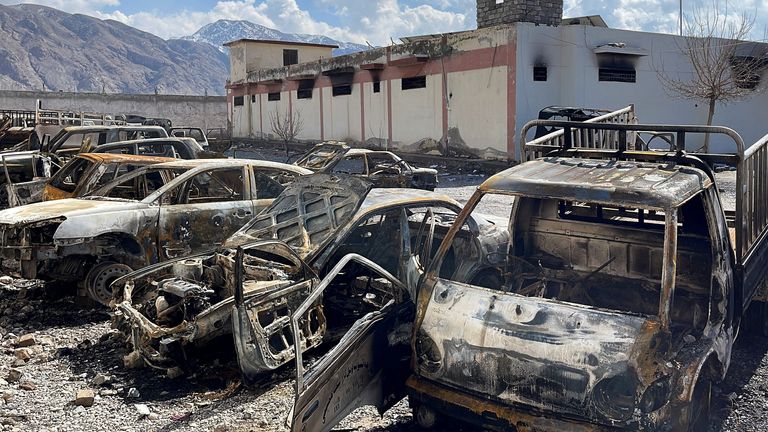
Islamabad, Pakistan - A wave of coordinated separatist attacks sweeping across Balochistan province in southwestern Pakistan has left more than 250 people dead, officials said, in one of the deadliest escalations of militant violence in the country’s recent history.
According to senior Pakistani security sources, the attacks began over the weekend and have continued through the week, prompting a large-scale counter-terrorism response from the Pakistani military and security forces. (The Daily Star)
Deadly Wave of Violence
The Pakistani government has reported that civilian deaths and security force fatalities numbered at least 58, with separatist insurgents responsible for widespread strikes on police stations, jails, banks, and military installations across dozens of towns and districts in Balochistan. (Reuters)
A senior official speaking on condition of anonymity confirmed that “more than 250 people have been killed” in the ongoing violence - including militants, security personnel, and civilians - making this series of attacks a major escalation in the long-running Baloch separatist insurgency.
The Baloch Liberation Army (BLA), an outlawed separatist group campaigning for greater autonomy or independence from Islamabad and control over local resources, claimed responsibility for the violence, saying it struck military, police, and administrative targets with gunfire and suicide bombings. (The Daily Star)
Officials said that, in response, security forces have killed nearly 200 militants during clearance operations.
What Happened?
The assaults, described by authorities as “coordinated terror attacks,” reportedly occurred across multiple districts, including Quetta, Gwadar, Nushki, and areas near the provincial capital, as well as smaller towns across the mineral-rich but impoverished province.
According to reports, militants stormed numerous sites over several days - targeting civilians and security personnel alike. Some of the attacks involved suicide bombings, while others saw separatist fighters equipped with firearms and explosive devices. (NewsGram)
Government and Military Response
The Pakistan Army and paramilitary forces responded with aerial and ground operations, including helicopter and drone sorties aimed at flushing out militants from seized positions and isolating insurgent strongholds.
In one of the largest military maneuvers in years, security forces reclaimed key towns and disrupted separatist lines of operation. Government spokespersons have characterized the militants as “terrorists” and, controversially, suggested external support from rival states, a claim that has been denied by India and others.
The United Nations Security Council condemned the wave of violence, describing the coordinated attacks as “heinous and cowardly” while expressing deep condolences for the lives lost among civilians and security personnel. (AP News)
Who Are the Baloch Separatists?
The BLA and several other factions have existed in Balochistan for decades, rooted in ethnic-based grievances over political marginalization, lack of local control over natural resources, and perceived economic exploitation by Pakistan’s central government.
Balochistan holds significant strategic value due to its vast deposits of minerals and energy resources, as well as its position along key trade routes, making it both economically important and politically sensitive. (South China Morning Post)
Separatist groups have periodically carried out attacks on security forces, government installations, and infrastructure, but rarely on such a wide and coordinated scale until this recent surge.
Humanitarian Impact
The mass violence has caused widespread fear and disruption across the province. Hospitals in Quetta and other cities reported being overwhelmed by casualties, and many districts saw temporary displacement as civilians fled combat zones.
The strikes on civilian infrastructure, including schools, markets, and transport routes, have further exacerbated the humanitarian situation, with local economies paralyzed and essential services strained.
Domestic and International Reactions
Prime Minister Shehbaz Sharif and other Pakistani leaders publicly condemned the violence and pledged to “root out militancy” and restore order. They also emphasized the need for a comprehensive political solution to address long-standing grievances in Balochistan.
Internationally, governments and global institutions have urged restraint and strengthened support for Pakistan’s sovereignty, while urging respect for human rights in counter-terrorism operations.
The UN’s condemnation underscores the global community’s growing concern over rising militancy in South Asia and the potential for wider regional instability.
Long-Term Implications
Internal Security and Governance: The scale of these attacks challenges Pakistan’s internal security apparatus, raising questions about intelligence effectiveness, border control, and the resilience of local governance structures in Balochistan.
Analysts warn that repeated heavy-handed military responses without political engagement could fuel further alienation among the Baloch population, entrenching support for separatist causes rather than diminishing them. (Dawn)
Economic and Strategic Consequences: Balochistan’s strategic importance - especially as a focal point of China-Pakistan Economic Corridor (CPEC) projects, means instability could have broader economic ramifications. Disruptions to infrastructure and investment projects may slow development and deter foreign investment in the region.
Regional Security Dynamics: The attacks and subsequent military response could also affect regional geopolitics. Pakistan’s framing of militant activity as having external backing - particularly from neighboring states with whom relations are already tense - may intensify diplomatic friction in South Asia.
There are concerns that continued instability in Balochistan could have spill-over effects, including cross-border militant activity and increased militarization along the Pakistan-Afghanistan border.
Looking Ahead
As Pakistan continues to pursue militant groups in Balochistan, authorities face the dual challenge of maintaining security and addressing the political and socio-economic root causes of the insurgency. Without progress on governance, development, and meaningful political dialogue with local communities, analysts warn that such cycles of violence may persist.