Over 150 UK Flights Cancelled After Air Traffic Control Glitch as Travel Chaos Deepens
More than 150 UK flights have been cancelled after a technical failure at NATS disrupted air traffic control, affecting Heathrow, Gatwick, Manchester and other major airports.
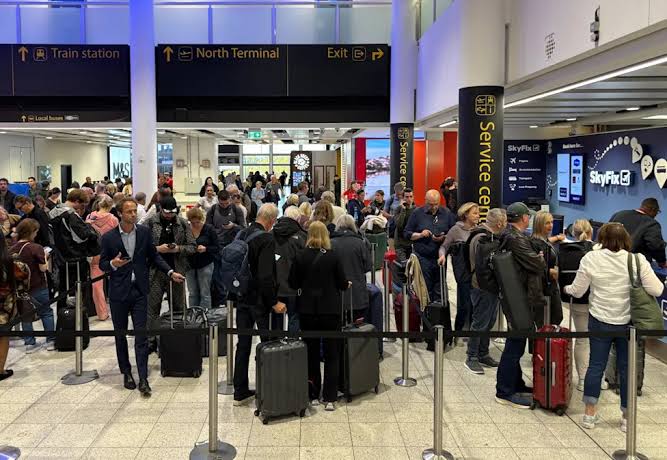
More than 150 flights have been cancelled across the United Kingdom following a major technical failure affecting the country's air traffic control system, leaving thousands of passengers facing delays, cancellations and uncertainty.
The disruption, which began on Tuesday, September 8, was caused by a fault in the flight data processing system operated by National Air Traffic Services (NATS), the organisation responsible for managing UK airspace.
Although NATS said the technical problem had been fixed, the disruption continued into Wednesday as airlines struggled to clear a large backlog of flights, aircraft and crews. Reports indicated that more than 2,000 flights had been cancelled across two days, illustrating the scale of the knock-on effects from the original failure. (Reuters)
What Caused the UK Flight Disruption?
NATS said the incident involved its flight data processing system, which is essential for handling and coordinating flight plans.
The system failure affected the ability of air traffic controllers and airlines to process flights normally, forcing restrictions on aircraft movements at airports across Britain.
NATS later confirmed that the technical problem had been resolved and said that flight safety was not compromised during the incident.
However, restoring the system did not immediately restore normal operations.
When hundreds of flights are delayed or cancelled, aircraft and crews can end up in the wrong locations. Passengers can also be stranded at airports, creating a complex logistical problem that can continue long after the original technical fault has been repaired.
NATS acknowledged that recovery was taking longer than expected as it worked to clear the backlog.
Major Airports Hit by the Glitch
The disruption affected some of Britain's busiest airports, including Heathrow, Gatwick, Manchester, Birmingham and airports across Scotland.
Heathrow was particularly affected, with arrivals temporarily suspended during the disruption. Gatwick and other airports also reported substantial delays and cancellations.
The problem was not restricted to London.
Airports in Scotland, including Edinburgh, Glasgow and Aberdeen, experienced significant disruption, while passengers travelling through Birmingham and other major UK hubs also faced delays. (AP News)
Because Britain's aviation network is closely connected to airports across Europe, the effects also spread internationally.
Flights arriving from or departing for other countries were affected, meaning passengers outside the UK also experienced cancellations and delays.
Airlines Criticise NATS
The technical failure has triggered strong criticism from airlines, particularly because it comes only a few years after another major NATS failure caused widespread disruption.
Ryanair has been among the most vocal critics, with the airline calling for NATS Chief Executive Martin Rolfe to resign.
Ryanair argued that the latest failure demonstrated serious weaknesses in the resilience of Britain's air traffic control infrastructure.
Budget airline Wizz Air also called for urgent reforms, while other airlines expressed frustration about the disruption and the time required to restore normal operations.
The criticism reflects the enormous financial and operational consequences that can result when an air traffic control system fails.
Airlines must reorganise aircraft schedules, reposition crews, accommodate stranded passengers and deal with airport capacity restrictions.
Thousands of Passengers Affected
For travellers, the technical failure translated into long queues, cancelled flights and lengthy waits for alternative arrangements.
Some passengers reported being stranded on aircraft or at airports, while others were forced to rearrange hotels, transport connections and onward journeys.
British Airways, easyJet, Ryanair and other airlines were among those affected.
The Financial Times reported that British Airways cancelled all short-haul flights for an evening during the disruption, while easyJet cancelled almost 100 flights. (Financial Times)
The impact was particularly severe because the disruption occurred during a period of substantial international air travel.
Even after NATS restored the system, passengers were warned that delays could continue because airlines needed time to return aircraft and crews to their scheduled positions.
NATS Faces Questions Over Reliability
The latest incident has renewed scrutiny of the reliability of Britain's air traffic control infrastructure.
NATS suffered a major system failure in August 2023 that disrupted hundreds of thousands of passengers and resulted in more than 1,500 flight cancellations over two days.
The similarity between the two incidents has intensified questions about whether enough investment has been made in ensuring that critical aviation systems can withstand technical failures.
Reuters reported that the 2023 incident caused significant industry losses and that the latest breakdown has renewed concerns about the resilience of Britain's aviation infrastructure.
Airlines are now demanding answers about why another major technical failure was able to cause such widespread disruption.
Government Demands Answers
The British government has also moved to address the crisis.
Transport Secretary Heidi Alexander summoned NATS chief Martin Rolfe for discussions and sought assurances about the cause of the failure and the measures being taken to prevent another incident.
The UK's Civil Aviation Authority is expected to scrutinise the incident and assess whether further action is required.
The government faces pressure to ensure that passengers and airlines are protected from repeated failures, particularly given the importance of aviation to Britain's economy.
Cyberattack Ruled Out
Despite the scale of the disruption, authorities have not indicated that the incident was caused by a cyberattack.
NATS has described the problem as a technical failure involving its flight processing system.
NATS chief executive Martin Rolfe also rejected suggestions that the incident was the result of a cyberattack, although a detailed investigation will be required to establish precisely what went wrong and why recovery took so long.
The distinction is important because air traffic control systems are considered critical national infrastructure and are potential targets for malicious cyber activity.
Wider Impact on European Aviation
The disruption has also demonstrated how interconnected modern aviation has become.
A technical failure inside one country's air traffic control network can rapidly affect flights, passengers and airlines across international borders.
European airports experienced delays as aircraft and crews became displaced from their normal schedules.
The consequences could continue for several days as airlines work to rebuild their timetables.
That means passengers who were not directly affected on Tuesday or Wednesday could still face delays or cancellations later in the week.
What Passengers Should Do
Passengers travelling through UK airports have been advised to check directly with their airline before going to the airport.
Travellers should confirm whether their flight is operating, particularly if they are connecting through Heathrow, Gatwick, Manchester, Birmingham or affected Scottish airports.
Passengers whose flights are cancelled or significantly delayed should also keep receipts for reasonable expenses and check their airline's policies and legal obligations concerning refunds, rebooking, meals and accommodation.
A Warning for Britain's Aviation System
The latest UK air traffic control failure has become more than a temporary travel inconvenience.
The cancellation of more than 150 flights initially followed by more than 2,000 cancellations reported across two days highlights how vulnerable a highly interconnected aviation system can be when a critical digital platform fails.
While NATS says safety was never compromised, the scale of the disruption has raised serious questions about reliability, contingency planning and investment.
For passengers, the immediate priority is getting home or reaching their destinations.
For Britain's aviation authorities, however, the bigger challenge is ensuring that the next technical glitch does not produce another nationwide travel crisis.