Ondo to Roll Out Electric Buses, Charging Stations in ₦900m Transport Initiative
Ondo State partners with ADMINSERV to introduce five electric buses and charging stations in Akure, targeting lower transport costs, improved passenger safety and cleaner mobility.
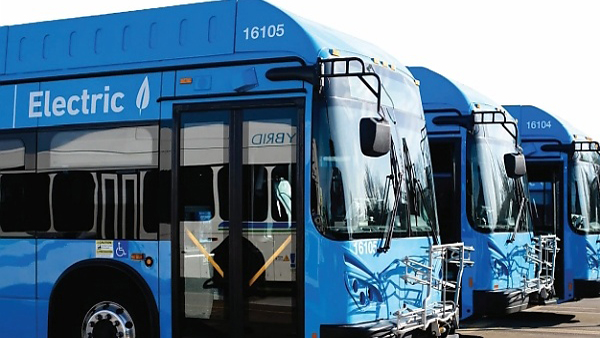
Ondo State is preparing to introduce electric buses and electric-vehicle charging stations as part of efforts to reduce transportation costs, improve public mobility and promote cleaner energy alternatives.
The initiative, announced on October 19, 2026, follows the signing of a Memorandum of Understanding (MoU) between the Ondo State Government and technology company ADMINSERV. The pilot project will begin with five electric buses in Akure, the state capital, alongside charging facilities at selected bus stops.
Each bus is valued at ₦180 million, bringing the cost of the initial fleet to ₦900 million. The wider initiative is expected to provide an alternative to petrol-powered transport while creating opportunities for the expansion of electric mobility across the state. (Tribune Online)
The project is being pursued under the administration of Governor Lucky Aiyedatiwa, with plans to extend charging infrastructure beyond Akure as the scheme develops.
Electric buses to target high transport costs
The Special Adviser to Governor Aiyedatiwa on Transport, Olumuyiwa Ogunyemi, said the partnership was designed to address rising transportation costs and make electric-vehicle infrastructure accessible to a wider segment of the population.
Ogunyemi explained that the proposed charging stations would not be reserved exclusively for buses operating under the scheme. Individuals, businesses and organisations with electric vehicles would also be able to use the facilities. (Punch)
The arrangement could help encourage the adoption of electric vehicles by reducing one of the major barriers to their use: limited access to public charging infrastructure.
The government also plans to extend the charging network to other local government areas after the initial rollout in Akure. However, the precise timeline for the expansion and the number of charging stations to be installed have not yet been publicly established in the reports reviewed.
ADMINSERV projects lower commuting expenses
ADMINSERV Managing Director, Peter Nnamani, said the proposed transport system would combine electric buses with digital technology to improve service delivery.
Nnamani projected that monthly transportation spending could decline from approximately ₦9,000 to between ₦5,000 and ₦6,000 per user under the proposed arrangement.
If achieved, that would represent a potential monthly saving of ₦3,000 to ₦4,000, equivalent to a reduction of roughly 33 to 44 per cent against the stated baseline.
Projected monthly transport savings
Current estimated spending
₦9,000
Projected spending
₦5,000 - ₦6,000
Potential monthly savings
₦3,000 - ₦4,000
Figures are ADMINSERV's projections reported by the media, not verified results from an operating service.
The actual savings commuters experience will depend on fares, routes, service frequency and how frequently they use the buses. The projections will need to be assessed against the fares and operating arrangements announced when the service becomes operational.
AI-powered application to improve transport services
Another feature of the proposed initiative is an artificial intelligence-enabled application intended to make public transport more predictable and easier to monitor.
Nnamani said the technology would support bus and driver tracking, improve punctuality and help address security concerns. The buses are expected to operate on scheduled routes, with digital monitoring intended to reduce waiting times and improve the passenger experience.
The proposed system could also help passengers identify buses and plan journeys more efficiently, provided the application offers reliable real-time information.
In a country where commuters frequently face unpredictable waiting times and rising fares, digital tools could make public transport more convenient. However, the effectiveness of the technology will depend on implementation, network availability, data protection and the reliability of the tracking system.
The extent to which passenger information will be collected, stored and protected has not been detailed in the reports reviewed. Clear privacy safeguards will be important as the project develops.
Ondo combines electric mobility with CNG
The electric-bus initiative is part of a broader effort by the state government to explore alternatives to petrol-powered transport.
Ogunyemi said the administration was also developing compressed natural gas (CNG) infrastructure, including facilities at the Federal University of Technology, Akure, and near an NNPC facility in Ore.
The planned infrastructure is intended to improve access to alternative transport energy across Ondo's three senatorial districts.
Electric vehicles and CNG-powered vehicles offer different approaches to reducing dependence on petrol. Electric buses produce no exhaust emissions at the point of use, while CNG vehicles burn natural gas. Their overall environmental benefits depend on factors such as electricity generation, fuel production and vehicle efficiency.
By pursuing both options, Ondo is seeking to broaden the range of energy sources available to transport operators rather than relying on a single alternative.
The development also comes amid wider interest in electric mobility across Nigeria, where rising fuel costs have increased attention on the running costs of conventional vehicles.
Electricity supply remains a major challenge
Despite the potential benefits, the proposed project faces infrastructure challenges that extend beyond Ondo State.
A highlighted Nigeria's limited electricity supply and shortage of public electric-vehicle charging stations as obstacles to the country's transition to electric mobility. (Reuters)
These challenges are relevant to Ondo's plans because charging stations require dependable power, while electric buses need sufficient charging capacity to maintain scheduled services.
The state and its private-sector partner will therefore need to ensure that charging facilities can support daily operations, including during periods of unreliable grid supply. Backup power, suitable charging equipment and effective maintenance arrangements may be important considerations.
The commercial sustainability of the service will also depend on how the operator manages electricity costs, battery performance, vehicle maintenance and passenger demand.
Job creation and expansion prospects
ADMINSERV said the project could create employment through the installation and management of charging stations and the recruitment of bus drivers and other personnel.
The development of a new electric-transport network could also create opportunities for technical workers, maintenance providers and businesses supplying supporting services. The number of jobs that may be created, however, has not been specified.
For now, the five-bus deployment represents the proposed first phase rather than a fully established statewide network. The project's longer-term impact will depend on whether the pilot service attracts sufficient passenger demand and delivers the anticipated savings and operational improvements.
The government has indicated that the charging infrastructure could eventually extend to other local government areas, potentially widening access to electric mobility beyond the state capital.
Conclusion
Ondo State's planned introduction of electric buses and charging stations marks a new step in its efforts to address transportation costs and expand alternative-energy mobility.
The proposed ₦900 million fleet, open-access charging facilities and AI-enabled transport application could offer commuters another travel option while supporting employment and the adoption of electric vehicles.
However, the signing of an MoU represents a commitment to pursue the project, not proof that the buses and charging stations are already operational. The key measures of success will be the rollout timetable, affordable fares, dependable electricity, passenger safety and the ability to expand beyond Akure.
If the pilot scheme delivers on its stated objectives, it could provide a practical foundation for broader electric public transport across Ondo State.