Ogun Lawyers Begin Three-Day Court Boycott Over ₦100,000 Virtual Hearing Fee, New Judiciary Policies
Lawyers across Abeokuta, Sagamu and Ota in Ogun State have commenced a three-day boycott of court proceedings to protest a ₦100,000 virtual hearing fee, increased oath charges, and other judiciary policies they say hinder access to justice.
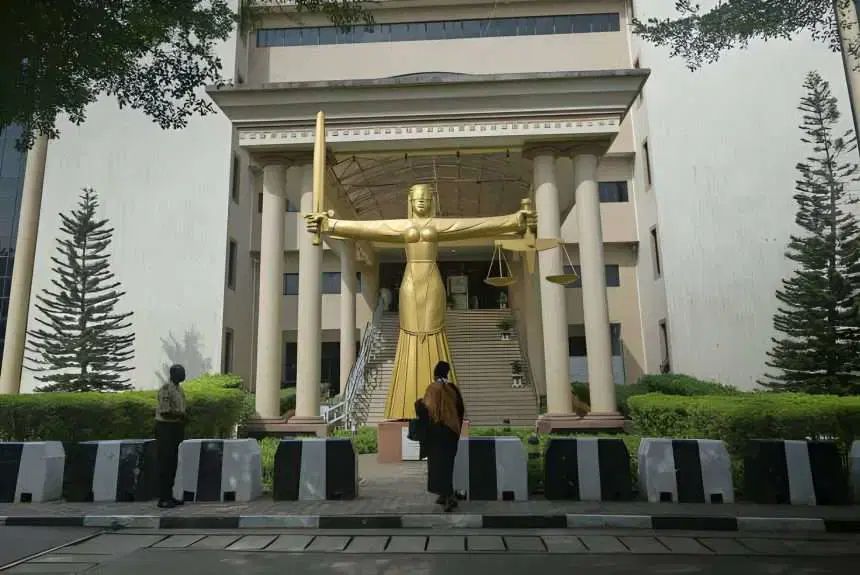
Courtrooms across major judicial divisions in Ogun State witnessed reduced legal activity on Monday as lawyers under the Nigerian Bar Association (NBA) commenced a three-day boycott of court proceedings in protest what they describe as anti-lawyer and anti-justice policies introduced by the Ogun State Judiciary.
The industrial action, involving NBA branches in Abeokuta, Sagamu and Ota, is expected to last from July 6 to July 8, affecting proceedings at the High Courts, Magistrates’ Courts, Customary Courts and the Customary Court of Appeal across the affected jurisdictions. (Punch Newspapers)
At the heart of the protest is the introduction of a ₦100,000 fee for each virtual court sitting, a policy legal practitioners argue is excessive and capable of denying many litigants access to justice.
Lawyers Protest Multiple Judiciary Policies
While the virtual hearing charge has generated the most public attention, the NBA insists that it is only one of several contentious measures implemented by the Ogun State Judiciary.
The lawyers are also protesting the significant increase in fees for administering oaths, which reportedly rose from ₦200 to more than ₦1,500, representing an increase of approximately 650 percent.
In addition, they have criticized restrictions placed on the processing of affidavits and the implementation of what has been described as a "Four-Oaths-Per-Day Policy," which limits the number of oaths that can be administered daily.
According to the lawyers, these measures have been combined to create unnecessary bottlenecks that slow down legal practice while increasing the financial burden on litigants.
NBA Says Dialogue Failed
Speaking after monitoring compliance with the boycott across various courts in Abeokuta, the Chairman of the NBA Abeokuta Branch, Chief Kayode Aderemi, said the association had exhausted every available avenue to resolve the issues before resorting to industrial action.
According to him, the NBA held several meetings, exchanged correspondence with judicial authorities and engaged in consultations with relevant stakeholders, but none of the discussions produced meaningful changes.
He maintained that the decision to boycott court proceedings was taken only after repeated efforts at dialogue failed to yield results.
Aderemi emphasized that the legal profession has a responsibility not only to protect lawyers' interests but also to safeguard public access to justice.
Court Activities Disrupted
The boycott resulted in noticeably quieter court premises across Abeokuta, where many lawyers stayed away from scheduled proceedings.
Several cases were either adjourned or experienced delays because legal representatives were absent.
Although judges and court officials reported for duty, the absence of lawyers significantly affected proceedings in numerous courts.
The industrial action also extended to Ota and Sagamu, where NBA branches instructed their members to suspend appearances before state courts throughout the three-day period. (Platform Times)
However, urgent matters involving fundamental rights, criminal cases requiring immediate attention and other exceptional circumstances may still receive limited legal representation, depending on the decisions of individual practitioners.
Concerns Over Access to Justice
Legal practitioners argue that the newly introduced fees disproportionately affect ordinary Nigerians who already struggle with the rising cost of litigation.
They contend that charging ₦100,000 for every virtual hearing discourages lawyers from requesting remote proceedings, even in situations where virtual hearings would save both time and travel costs.
Many lawyers believe virtual proceedings were introduced primarily to improve efficiency and expand access to justice, particularly following the technological reforms accelerated during the COVID-19 pandemic.
They argue that imposing such a substantial fee defeats the very objective of digital justice.
Similarly, the increase in oath administration fees, according to the NBA, places additional financial pressure on litigants who require sworn affidavits for court proceedings and administrative purposes.
Judiciary Yet to Reverse Policies
As of Monday, the Ogun State Judiciary had not announced any reversal of the disputed policies.
Judicial authorities have previously defended efforts to modernize court administration and improve operational efficiency, though they have not publicly responded in detail to every concern raised by the NBA.
Observers say the dispute highlights the delicate balance between funding judicial reforms and ensuring that access to justice remains affordable for citizens.
Court administrators across Nigeria have increasingly adopted digital technologies, electronic filing systems and virtual hearings to improve efficiency.
However, legal experts caution that such innovations must remain financially accessible if they are to achieve their intended objectives.
Broader Implications for Justice Delivery
The boycott has drawn attention beyond Ogun State, with members of the legal community across Nigeria closely monitoring developments.
Some legal analysts argue that the dispute could influence conversations about judicial administration nationwide, particularly regarding court fees and digital justice reforms.
Others believe the disagreement underscores the importance of regular consultation between the judiciary and the legal profession before implementing significant policy changes.
Maintaining confidence in the justice system, they say, requires collaboration among judges, lawyers and court administrators.
Hope for Resolution
Despite the industrial action, NBA officials insist they remain open to constructive engagement with the Ogun State Judiciary.
The association says it is prepared to suspend the boycott if meaningful discussions result in the review of the disputed policies.
Lawyers expressed hope that both parties would reach an amicable resolution that protects judicial efficiency without placing excessive financial burdens on legal practitioners and court users.
For many litigants, a quick settlement would help minimize disruptions to pending cases and prevent prolonged delays in the administration of justice.
Looking Ahead
The three-day boycott is expected to conclude on Wednesday unless fresh developments emerge before then.
Whether the protest leads to policy adjustments or further negotiations remains uncertain, but the action has already succeeded in drawing national attention to concerns about court fees and access to justice.
As legal practitioners continue pressing for reforms, the outcome of discussions between the NBA and the Ogun State Judiciary could shape future debates on judicial administration, digital court services and the affordability of legal processes not only in Ogun State but across Nigeria.