Officers Condemn Presidential Promotion of ADC to Brigadier-General as Undermining Institutional Integrity
Controversy erupts as Tinubu’s ADC is promoted to Brigadier-General; military officers warn of morale loss and structural strain in Nigeria’s defence system.
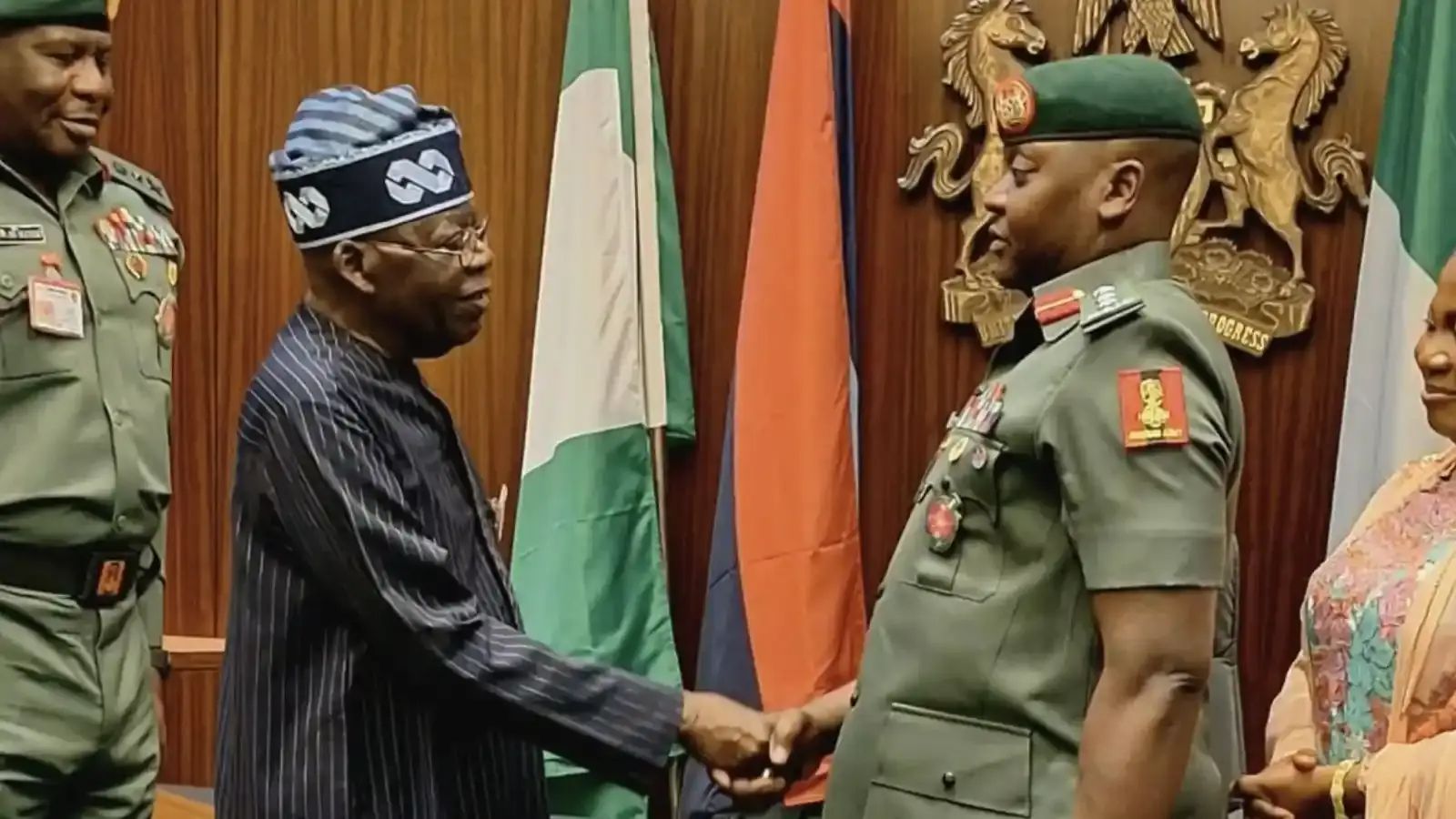
Discontent is rippling through the Nigerian Army after President Bola Ahmed Tinubu approved the promotion of his Aide-de-Camp (ADC), Colonel Nurudeen Alowonle Yusuf, to the rank of Brigadier-General - barely 12 months after his elevation to Colonel. Critics within military ranks describe the move as unprecedented, raising serious questions about institutional norms, morale, and long-term implications for the nation’s armed forces. (Premium Times Nigeria)
The controversial promotion, conveyed in a December 12, 2025 letter from the Office of the National Security Adviser, Nuhu Ribadu, to the Chief of Army Staff, Lt.-Gen. Wahid Shaibu, has triggered grumbling among officers who view the decision as bypassing established promotion protocols.
While the presidency has not publicly defended the decision, a source close to the Villa suggested the promotion aligns Mr. Yusuf’s rank with those of other senior security personnel attached to the Presidential Villa, whose counterparts in the Nigeria Police and State Security Service received equivalent rank boosts.
Tradition vs. Executive Discretion: A Clash Over Military Promotion Norms
The Nigerian Army, like many professional militaries worldwide, operates with a set of established criteria for advancement to senior ranks. These typically include significant time-in-rank, completion of advanced war-fighting courses such as the Army War College, and strategic leadership training at institutions like the National Defence College. Observers say these benchmarks ensure officers are adequately prepared for senior command responsibilities. (Sahara Reporters)
However, Colonel Yusuf - appointed ADC on May 1, 2023 and decorated as Colonel in January 2025 - did not fulfill these customary prerequisites before his elevation to Brigadier-General, according to sources within the Army. (Head Topics)
A senior officer, who asked not to be named, told Sahara Reporters that the rapid promotion risks undermining decades of tradition that serve as the backbone of the military’s ethos and professional hierarchy. “Promotion to Brigadier-General epitomizes professional scrutiny, intellectual preparation, and earned confidence,” he said. “Skipping these steps is a rupture with the moral code that sustains discipline and trust within the ranks.”
Institutional Impact: Morale, Cohesion, and Operational Integrity
The controversy has ignited broader concerns about morale and cohesion within the Army - issues that could have serious operational consequences if left unaddressed. Officers express worry that bypassing established pathways may depreciate long-earned qualifications and fuel resentment among peers who have completed rigorous professional development courses.
Service members emphasize that promotions not only recognize individual merit but also preserve the perception of fairness and predictability that underpins institutional stability. Rapid rank jumps - particularly when perceived to be politically motivated - risk eroding this trust.
In one account, a senior officer said the promotion could send a damaging message: “Once officers begin to believe that the rules no longer apply equally, the moral fabric of the institution starts to fray.”
Questions Around Procedure and Chain of Command
Further criticism has focused on the process by which the promotion was communicated and approved. Sources say the letter conveying the President’s approval was routed through the Office of the NSA and delivered directly to the Chief of Army Staff - bypassing both the Chief of Defence Staff and the Minister of Defence. Critics labelled this as “abnormal” and unaligned with usual military administrative procedures.
The unconventional promotion procedure has amplified concerns that political considerations are influencing decisions that traditionally fall solely under military governance structures - potentially diminishing the autonomy and institutional integrity of the armed forces.
Broader Implications for the Nigerian Military System
The fallout from this episode extends beyond individual career trajectories. Analysts warn that the controversy could have lasting structural implications which include:
1. Erosion of Professional Standards:
A military that appears susceptible to executive fiat in matters of rank risks diluting professional standards. Soldiers and officers draw confidence and order from systems perceived as merit-based and consistent.
2. Internal Cohesion and Discipline:
Rank and seniority are not merely formalities; they shape command relationships and operational effectiveness. Perceptions of unfairness or politicization could erode respect for hierarchical norms, complicating command dynamics during critical missions.
3. Civil-Military Relations:
While civilian oversight of the military is a cornerstone of democratic governance, abrupt or opaque interventions in military matters risk unsettling the delicate balance between political authority and professional military conduct.
4. Retention and Recruitment:
Ambitious young officers, observing what they perceive as arbitrary promotion patterns, may feel disillusioned, potentially affecting retention and morale. A perception that traditional milestones no longer matter could dissuade highly capable personnel from committing long-term to the service.
Comparisons with Official Promotion Cycles
To contextualize the controversy, it’s useful to note that the Nigerian Army recently approved a broad advancement of senior officers under standard procedures. In late November 2025, the Army Council elevated 77 Colonels to Brigadier-General and 28 Brigadier-Generals to Major-General as part of routine promotions that acknowledged tenure and professional qualifications. (PRNigeria News)
This highlights the contrast between traditional promotion patterns - which include multiple officers elevated through standard selection - and the outlier case of rapid elevation for one officer.
Looking Forward: Stability and Confidence in the Force
As the Nigerian Army grapples with internal dissatisfaction and public scrutiny, maintaining institutional stability is crucial. Nigeria’s armed forces play an indispensable role in addressing complex security challenges - from insurgency in the North-East to maritime threats in the Gulf of Guinea. Any erosion of morale or command integrity could have deleterious effects on operational readiness and national security outcomes.
For now, military leadership faces a delicate task: balancing respect for civilian oversight with the need to uphold robust professional standards that ensure confidence, fairness, and cohesion across the force. How the institution navigates this controversy may influence its trajectory well into the next decade.