Norway Opens New National Memorial Honouring Victims of 2011 Terror Massacre
Norway has unveiled a permanent national memorial to honour the 77 victims of the 2011 terror attacks carried out by far-right extremist Anders Behring Breivik. The monument, opened ahead of the 15th anniversary of the tragedy, serves as a lasting symbol of remembrance, democracy, and resilience.
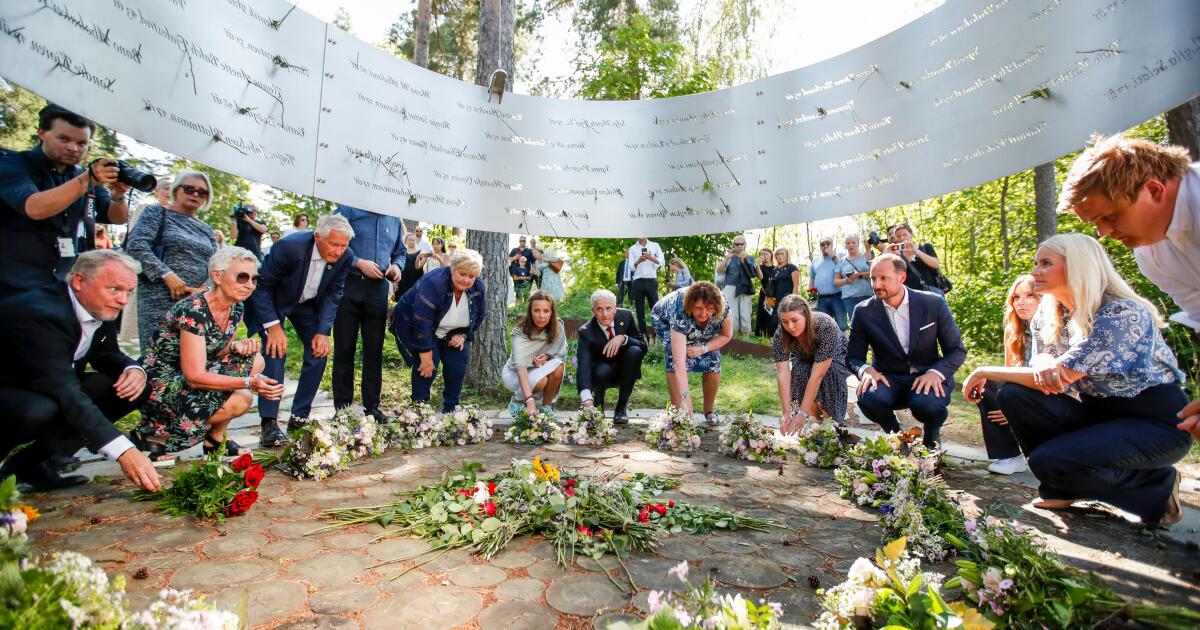
Norway has officially opened a new national memorial dedicated to the 77 victims of the country's deadliest peacetime terrorist attack, marking a poignant milestone nearly 15 years after the twin atrocities that shocked the Scandinavian nation and the world.
The memorial, inaugurated on Sunday, July 19, stands in Oslo's newly redeveloped Government Quarter, close to where the first attack unfolded on July 22, 2011, when far-right extremist Anders Behring Breivik detonated a powerful car bomb before carrying out a mass shooting on the island of Utøya.
The opening ceremony brought together survivors, bereaved families, government leaders, members of Norway's royal family, and representatives of youth organisations to honour those who lost their lives in the attacks that claimed 77 victims and left hundreds more physically and emotionally scarred. (Regjeringen.no)
A Place for Reflection and Remembrance
The newly unveiled memorial is intended to provide a permanent place where Norwegians and visitors can remember the victims while reflecting on the values of democracy, tolerance, and human dignity that came under attack in 2011.
At the centre of the memorial is "Upholding," a monumental mosaic created by acclaimed Norwegian artist Matias Faldbakken. The artwork rises approximately 12 metres high and depicts a delicate wading bird native to Utøya alongside blades of grass reflected in water.
According to Faldbakken, the bird symbolises both vulnerability and resilience qualities that have defined Norway's response to the tragedy over the past decade and a half.
The names of all 77 victims are engraved on the memorial, ensuring that everyone is permanently remembered. (Mynewsdesk)
Crown Prince Haakon Leads National Tribute
Among those attending the inauguration were Crown Prince Haakon, alongside Minister of Digitalisation and Public Governance Karianne Tung, Minister of Education Kari Nessa Nordtun, survivors of both attack sites, and members of the National Support Group after 22 July.
Musical performances, speeches, and personal reflections formed part of the emotional ceremony, while survivors spoke about the importance of ensuring future generations understand the significance of what happened.
Government officials described the memorial as more than a monument, it is intended to become a place where schoolchildren, families, researchers, and visitors can learn about the consequences of political extremism and the importance of protecting democratic institutions. (Regjeringen.no)
Remembering Norway's Darkest Day
The attacks of July 22, 2011, remain the darkest chapter in modern Norwegian history.
Breivik first parked a van packed with explosives outside government offices in central Oslo, killing eight people and causing extensive damage to surrounding buildings.
Disguised as a police officer, he then travelled to Utøya Island, where members of the Labour Party's youth organisation, AUF, were attending their annual summer camp.
Over the course of more than an hour, he systematically hunted down young participants, killing 69 people, many of them teenagers.
The coordinated attacks claimed 77 lives in total and injured hundreds more.
Breivik later admitted responsibility, claiming his actions were motivated by opposition to multiculturalism and immigration. In 2012, he was sentenced to Norway's maximum prison term of 21 years, a sentence that can be extended indefinitely if authorities determine he continues to pose a danger to society. (The Local Norway)
Learning from History
Following the opening of the memorial, Crown Prince Haakon also visited the newly relocated 22 July Centre, Norway's national memorial and educational institution dedicated to documenting the attacks and combating violent extremism.
The centre has moved into modern facilities within the Government Quarter and is scheduled to officially welcome the public on July 22, coinciding with the 15th anniversary of the attacks.
Education Minister Kari Nessa Nordtun said the centre would play a critical role in ensuring younger generations understand not only the events of July 22 but also the democratic values that extremists sought to destroy.
She stressed that remembrance must go hand in hand with education if societies are to resist hatred, intolerance, and political violence. (Regjeringen.no)
Years of Planning and Consultation
The creation of the national memorial follows years of debate, planning, and consultation involving survivors, victims' families, artists, architects, historians, and government agencies.
Previous proposals for a permanent memorial generated controversy, with some communities expressing concern that certain designs would reopen emotional wounds.
The final design by Faldbakken emerged from an extensive selection process aimed at balancing artistic expression with the wishes of survivors and bereaved families.
Many families welcomed the emphasis on dignity, reflection, and collective remembrance rather than dramatic symbolism. (The Guardian)
A Global Reminder of the Threat of Extremism
The opening of the memorial comes at a time when governments across Europe and beyond continue confronting the rise of political extremism, online radicalisation, and hate-fueled violence.
Norwegian officials have repeatedly described the 2011 attacks as not only an assault on innocent people but also an attack on democracy itself.
Speaking during the ceremony, representatives of victims' organisations urged societies never to underestimate the dangers posed by extremist ideologies and political hatred.
They emphasised that preserving democratic values requires constant vigilance, education, and a willingness to confront intolerance before it turns violent. (The Local Norway)
A Lasting Symbol of Hope
Nearly 15 years after the attacks, Norway's new national memorial stands not only as a tribute to those whose lives were cut short but also as a symbol of resilience.
For survivors, grieving families, and an entire nation, the monument serves as a reminder that while terrorism sought to divide society through fear, the enduring response has been one of unity, remembrance, and commitment to democratic ideals.
As thousands are expected to visit the site annually, Norwegian authorities hope the memorial will inspire reflection, preserve historical memory, and reinforce the message that hatred must never prevail over humanity.