NNPC Refineries Will Never Work Again - Obasanjo
Former Nigerian President Olusegun Obasanjo says NNPC-owned refineries will never work again under government control. Here’s why he said it, what it means for fuel prices, and the future of Nigeria’s energy sector.
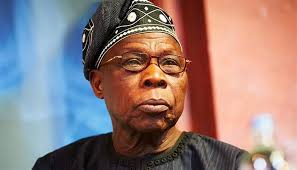
Former President Olusegun Obasanjo has reignited controversy in Nigeria’s petroleum sector after declaring that the state-owned refineries under the Nigerian National Petroleum Company Limited (NNPC) will never work again. His blunt assessment has reopened long-running debates about corruption, mismanagement, privatization, and whether Nigeria should continue funding facilities that have consumed billions of dollars with little output.
Obasanjo made the comments during a television interview aired on Sony Irabor Live, where he revisited years of frustration over Nigeria’s three major government refineries in Port Harcourt, Warri, and Kaduna. According to him, the structural problems inside the system are too deep for the plants to become viable under public ownership. (Punch Newspapers)
What Obasanjo Said
The former president reportedly stated that he had long warned Nigerians that the refineries would not function effectively. His criticism was not framed as a technical engineering problem alone, but as a governance problem involving poor management culture, weak accountability, and entrenched vested interests.
Obasanjo argued that Nigeria’s public enterprises often struggle because they are treated as political assets rather than commercial institutions. In his view, the NNPC refineries are examples of why government-run businesses can become inefficient when there is no discipline of profit, competition, or professional independence. (ThisDayLive)
His Failed Attempt with Shell
One of the most striking parts of his remarks was his recollection that while in office, he tried to involve Shell in operating the refineries. He said the multinational oil company declined. According to Obasanjo, Shell officials cited several reasons:
- Refining was not their preferred profit center compared with upstream oil production
- Nigeria’s refineries were relatively small by global standards
- Maintenance standards were poor
- Corruption risks were too high
Those comments, if accurately recalled, suggest that the challenge was not merely repairing machines but fixing the entire operating environment.
The Dangote Deal That Never Lasted
Obasanjo also referenced a previous privatization effort involving Aliko Dangote. He said Dangote had offered around $750 million for a majority stake in two refineries during his administration, but the deal was later reversed by a successor government. (Nigerian News Today)
That episode remains symbolic in Nigeria’s energy politics. Supporters of privatization argue that the reversal cost Nigeria a chance to modernize the sector earlier. Critics counter that strategic national assets should not be sold cheaply or concentrated in private hands.
Billions Spent, Limited Results
Nigeria has spent enormous sums over the years attempting to rehabilitate the Port Harcourt, Warri, and Kaduna refineries. Yet repeated restart announcements have often been followed by shutdowns, low utilization, maintenance closures, or disputes over whether meaningful production was occurring. (Wikipedia)
The Port Harcourt Refinery reportedly resumed partial operations in late 2024 before another shutdown in 2025. The Warri Refinery also announced a return to service before later interruptions. As of April 2026, multiple reports indicated that all three remained inactive or commercially uncompetitive.
For many Nigerians, that record explains why Obasanjo’s comments resonated so strongly.
Why This Matters to Nigerians
The refinery issue goes beyond politics. It directly affects petrol prices, diesel and aviation fuel costs, foreign exchange demand for imports, energy security, government finances, and inflation.
For decades, Africa’s largest crude producer paradoxically imported much of its refined fuel because domestic refining capacity failed to meet demand. That dependence exposed Nigeria to exchange-rate shocks and global price volatility.
The Rise of Dangote Refinery
The launch of the Dangote Refinery in Lagos changed the landscape. With a large-scale private facility now operating, many analysts believe Nigeria finally has a realistic path toward domestic fuel self-sufficiency.
That development also sharpens questions about whether the government should continue pouring money into aging public refineries or cut losses and let private operators lead the market.
Arguments Against Obasanjo’s Claim
Not everyone agrees with the former president’s sweeping conclusion. Critics of his statement say:
- Any refinery can work with the right investment and management.
- Public ownership does not automatically mean failure.
- Strategic refining assets can still serve national security goals.
- Selling all state assets may create monopolies or overdependence on one private player.
They argue that the problem is not that NNPC owns refineries, but that reforms were inconsistent and politicized.
Arguments Supporting Him
Those who support Obasanjo say he is simply stating what history has already shown. They point to decades of rehabilitation spending without sustained output and say Nigeria should stop funding a failed model.
Their preferred options include full privatization, long-term concession to global refinery operators, conversion of sites into storage/import terminals, joint ventures with private investors, and closure of uneconomic plants.
What NNPC Is Doing Now
NNPC has reportedly been searching for technical partners to help run the refineries more efficiently, with discussions expected to continue through 2026. That suggests the company itself recognizes that new expertise or new operating models may be required.
Whether that leads to a genuine turnaround or another cycle of promises remains uncertain.
Political Impact of the Statement
Obasanjo remains one of Nigeria’s most influential former leaders, so his remarks carry weight. They also place pressure on the current administration to explain its refinery strategy, especially at a time when Nigerians face high fuel prices and rising transport costs.
The timing is significant because energy policy has become one of the defining economic issues of the Tinubu era.
Final Analysis
When Obasanjo says “NNPC refineries will never work again,” he is making more than a technical forecast. He is issuing a verdict on Nigeria’s public-sector management model.
Whether one agrees or not, the underlying facts are difficult to ignore: decades of spending, repeated restart announcements, and little sustained refining success.
The real national question may no longer be whether the old refineries can work but whether Nigeria can afford to keep pretending they soon will.