Nigerian Court Nullifies Atiku's 2027 Presidential Candidacy, Sacks David Mark-Led ADC Leadership and All Party Candidates
A Federal High Court in Abuja has nullified Atiku Abubakar's 2027 presidential candidacy, sacked David Mark's ADC leadership and cancelled all party candidates' nominations following a legal challenge by Nafiu Bala Gombe. The ADC vows to appeal.
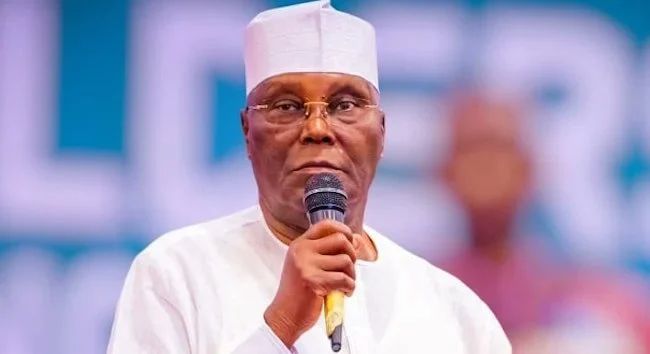
A Federal High Court in Abuja has nullified former Vice-President Atiku Abubakar's emergence as the presidential candidate of the African Democratic Congress (ADC) for the 2027 general elections, delivering a major setback to the opposition coalition challenging President Bola Tinubu.
The court also invalidated the leadership of the party under former Senate President David Mark, removed National Secretary Rauf Aregbesola and nullified the nominations of all ADC candidates presented to the Independent National Electoral Commission (INEC) for the forthcoming elections.
Justice Peter Odo Lifu delivered the judgment on Thursday, November 5, 2026, ruling that the processes through which the Mark-led leadership emerged were unlawful.
The decision followed a suit instituted by Nafiu Bala Gombe, a former Deputy National Chairman of the ADC, who challenged the legitimacy of the party's leadership transition and argued that he was constitutionally entitled to assume leadership following the resignation of former national chairman Ralph Nwosu.
The judgment has thrown the opposition party into fresh uncertainty, particularly as the 2027 presidential election approaches.
The court's decision effectively invalidates the actions taken by the disputed leadership, including the presidential primary that produced Atiku as the party's flag bearer.
Why the Court Sacked David Mark and ADC Leadership
The leadership crisis that culminated in Thursday's judgment began following the resignation of the ADC's former national executives and the emergence of a new leadership structure in July 2025.
David Mark subsequently emerged as national chairman, while former Osun State Governor Rauf Aregbesola became national secretary.
The development attracted several prominent Nigerian politicians seeking an alternative political platform to challenge the ruling All Progressives Congress (APC) in 2027.
Among those who joined the ADC were Atiku Abubakar, former Kaduna State Governor Nasir El-Rufai and former Minister of Transportation Rotimi Amaechi.
However, Bala Gombe challenged the process through which Mark and other members of the caretaker leadership assumed their positions.
He argued that the transition violated the ADC constitution and relevant provisions of the Electoral Act.
The plaintiff maintained that following Nwosu's resignation, he was entitled to assume the party's leadership in accordance with its constitutional provisions.
He consequently approached the Federal High Court, seeking an order invalidating the actions of the Mark-led leadership and preventing its members from presenting themselves as the legitimate national officers of the party.
Justice Lifu upheld Bala Gombe's claims, declaring the disputed leadership arrangements unlawful and setting aside the decisions taken under the committee.
The court also directed INEC not to recognise decisions arising from the ADC's 99th National Executive Committee meeting of July 27, 2025, and subsequent actions, including the nomination of candidates for the 2027 elections.
Atiku's Presidential Ambition Suffers Major Setback
The judgment directly affects Atiku, who secured the ADC presidential ticket in May 2026 after joining the party as part of efforts to build a broad opposition coalition.
The former vice-president had been preparing for what would have been his seventh attempt to become Nigeria's president.
Atiku, who served as vice-president between 1999 and 2007 under former President Olusegun Obasanjo, was the presidential candidate of the Peoples Democratic Party (PDP) in the 2023 election.
He finished second behind Tinubu, securing approximately 29 per cent of the votes.
His decision to pursue the 2027 election through the ADC was widely viewed as an attempt to consolidate opposition forces and present a stronger challenge to the ruling party.
However, the latest ruling has placed his candidacy in legal jeopardy, potentially disrupting the coalition's presidential campaign.
Speaking after the judgment, Atiku described the decision as an attempt to weaken his political support, particularly in northern Nigeria, and frustrate his presidential ambition.
He maintained that the timing of the ruling was suspicious, especially following the commencement of his campaign activities.
All ADC Candidates Affected by the Judgment
Beyond Atiku's presidential ambition, the ruling has far-reaching implications for the ADC's participation in the 2027 general elections.
The court nullified the nominations of all candidates presented by the disputed party leadership to INEC, covering presidential, governorship, senatorial, House of Representatives and state assembly contests.
Lawyers representing Bala Gombe said the judgment effectively left the ADC without valid candidates for every elective position in the forthcoming elections.
This means that hundreds of politicians who secured tickets through the Mark-led leadership could face uncertainty over their political future.
The decision also creates a serious organisational challenge for the opposition party, which had been positioning itself as a major platform for politicians seeking to challenge Tinubu's re-election.
However, the ruling remains subject to appeal, and its ultimate implications will depend on decisions by higher courts.
Atiku Vows to Challenge Court Judgment
Atiku has rejected the judgment and vowed to challenge it at the Court of Appeal.
His presidential campaign council has also announced plans to seek a stay of execution while pursuing legal remedies against the decision.
The former vice-president argues that the judgment conflicts with an earlier ruling delivered by another Federal High Court judge, Justice Musa Liman, on July 2, 2026, concerning the ADC leadership dispute.
Atiku maintains that the earlier proceedings had addressed important aspects of the leadership controversy and that the latest case amounts to an attempt to reopen issues that had already been considered.
His campaign council has described the judgment as legally defective and insisted that the presidential campaign would continue.
The legal team is preparing to challenge the ruling and obtain interim relief where legally available.
The appeal could become a crucial test of the ADC's ability to retain its political structure and participate in the 2027 elections.
Peter Obi, APC React to the Controversial Judgment
The ruling has generated reactions across Nigeria's political landscape, particularly among opposition figures concerned about the implications for democratic competition.
Peter Obi, the presidential candidate of the Nigeria Democratic Congress (NDC), expressed shock over the decision, describing it as unsettling given its proximity to the forthcoming elections.
Obi accused the ruling APC of engineering instability within opposition parties, alleging that the development was part of a broader effort to weaken political alternatives ahead of 2027.
He warned that excessive uncertainty surrounding candidates and political parties could undermine voters' ability to make informed choices.
However, the APC rejected the accusation.
Its spokesperson, Felix Morka, denied that the ruling party had any involvement in the legal proceedings, arguing that opposition politicians should respect judicial decisions even when they are unfavourable.
The ADC has also accused the ruling party of attempting to undermine its growing political influence, particularly following Atiku's campaign rally in Sokoto.
The APC and government representatives have consistently denied orchestrating the legal challenges.
What Happens Next for the ADC and 2027 Elections?
The immediate priority for the ADC is securing favourable decisions from the appellate courts before the electoral timetable advances further.
Nigeria's presidential and National Assembly elections are scheduled for January 16, 2027, while governorship and state assembly elections are scheduled for February 6.
The short interval between the court judgment and the elections increases the pressure on the party to resolve its leadership dispute quickly.
The Supreme Court had previously directed the Federal High Court to conclude proceedings over the ADC leadership dispute, leading to the judgment delivered by Justice Lifu.
Consequently, the latest ruling is another stage in a prolonged legal battle rather than an entirely new political controversy.
The appellate courts will now have an opportunity to examine the arguments surrounding the party's leadership, constitutional procedures and the validity of the nominations.
For Atiku, the outcome could determine whether he remains eligible to contest the presidency on the ADC platform.
For David Mark and Aregbesola, it could determine whether they retain their positions within the party.
For thousands of ADC aspirants, the decision could determine whether they participate in the forthcoming elections.
Conclusion
The Federal High Court's decision to nullify Atiku Abubakar's presidential candidacy, sack David Mark's ADC leadership and cancel all nominations under the disputed leadership has created one of the biggest political crises ahead of Nigeria's 2027 general elections.
Although the judgment represents a significant setback for the opposition coalition, Atiku and the ADC have vowed to challenge it through the judicial system.
With the APC denying allegations of political interference and opposition figures warning about the shrinking democratic space, the controversy is likely to remain a major issue in Nigerian politics.
Ultimately, the Court of Appeal and potentially the Supreme Court will play decisive roles in determining the future of the ADC, Atiku's presidential ambition and the party's participation in the 2027 elections.