Nigeria Will Break Up If You Continue Like This – Jonathan Warns Tinubu, Peter Obi, Atiku Ahead of 2027 Elections
Former President Goodluck Jonathan has warned President Bola Tinubu, Peter Obi, Atiku Abubakar and other politicians that Nigeria risks disintegration if ethnic rivalry, political violence and hate speech continue ahead of the 2027 elections.
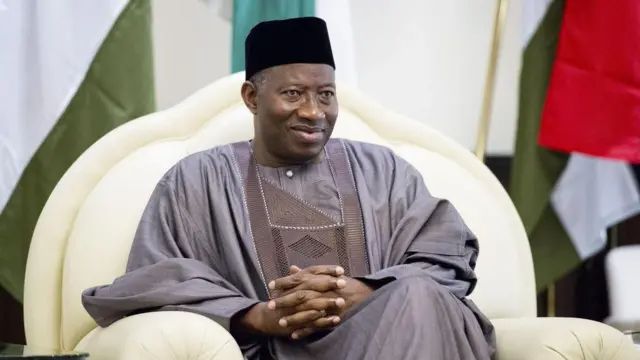
Former President Goodluck Jonathan has issued a strong warning to President Bola Tinubu, former Vice-President Atiku Abubakar, Peter Obi and other political leaders, cautioning that Nigeria could face serious instability and possible disintegration if politicians continue to exploit ethnic divisions, promote hatred and encourage political violence ahead of the 2027 general elections.
Jonathan said the country's increasingly hostile political environment posed a significant threat to national unity, warning that political ambition must not be allowed to destroy the bonds holding Nigerians together.
The former president delivered the warning on Tuesday, November 17, 2026, at the third edition of the Goodluck Jonathan Foundation's Peace and Security Conference in Abuja.
The conference, which brought together political leaders, peacebuilders, security stakeholders and representatives of democratic institutions, focused on safeguarding peace and strengthening social cohesion in an increasingly competitive political environment.
In what appeared to be a direct message to politicians preparing for the 2027 presidential election, Jonathan urged those seeking political offices to place Nigeria's survival above their individual ambitions.
According to him, the country cannot afford a political contest that encourages citizens to see one another as enemies because of their ethnic, religious or political affiliations.
Jonathan Warns Against Ethnic Rivalry
The former president identified the deliberate exploitation of ethnic differences for political advantage as one of the greatest dangers confronting Nigeria.
He argued that political competition should be based on ideas, competence, development plans and the ability of candidates to address the country's challenges rather than attempts to mobilise support through ethnic sentiments.
"Nothing could be more dangerous to our national existence than the deliberate encouragement of ethnic rivalry," Jonathan warned.
He further maintained that political ambition should never undermine the relationships and shared interests that unite Nigerians across different communities.
"We must never allow political ambition to undermine the bonds that hold us together as one nation and one country, both at the national level and at the state level," he said.
Jonathan's warning comes as political activities intensify ahead of the 2027 elections, with major political figures positioning themselves and their parties for the contest.
President Tinubu is seeking another term, while opposition figures, including Atiku and Obi, remain prominent in discussions surrounding the emerging political landscape.
The former president urged all political contenders to exercise restraint, respect opposing views and discourage their supporters from attacking individuals because of their political affiliations or ethnic backgrounds.
Political Violence Raises Fresh Concerns
Jonathan's intervention comes against the backdrop of reported attacks on political figures, campaign convoys and supporters in different parts of the country.
In recent weeks, political activities have increasingly been accompanied by allegations of intimidation, physical confrontations and violence.
The convoy of President Tinubu reportedly came under attack in Abuja on November 13, shortly after he attended Friday prayers in the Garki area.
Similarly, the campaign convoy of Nigeria Democratic Congress vice-presidential candidate Rabiu Kwankwaso and Kano governorship candidate Aminu Gwarzo was reportedly attacked in Bichi Local Government Area of Kano State on November 15.
Peter Obi's convoy had also reportedly come under attack in Calabar, Cross River State, while some of his supporters were allegedly assaulted during a town hall meeting in Lagos.
Other opposition figures, including supporters of Atiku Abubakar and Omoyele Sowore, have also reportedly experienced attacks and confrontations.
The developments have raised concerns about the possibility of electoral violence escalating as political parties intensify their campaigns.
Jonathan warned that political disagreements must not degenerate into hostility capable of threatening the country's stability.
He urged politicians to understand that opponents are not enemies and that every Nigerian has the constitutional right to participate in the democratic process.
Former President Raises Alarm Over Judiciary
Beyond political violence and ethnic divisions, Jonathan also expressed concern about declining public confidence in Nigeria's judicial system.
He particularly questioned the implications of conflicting judgments delivered by courts of coordinate jurisdiction, warning that such developments could weaken public trust in the judiciary.
According to him, when citizens begin to lose confidence in the courts, they may resort to self-help, a development that could have disastrous consequences for national stability.
The former president stressed that democratic institutions must be respected and strengthened to prevent political disagreements from developing into wider national crises.
He maintained that the judiciary plays an important role in resolving political disputes and ensuring that disagreements are settled through lawful and constitutional means.
Jonathan's concerns are particularly significant as Nigeria approaches another general election, when disputes over party leadership, candidate selection, electoral processes and election results are likely to test the country's democratic institutions.
INEC Warns Political Parties Against Electoral Violence
Also speaking at the conference, the Chairman of the Independent National Electoral Commission, Professor Joash Amupitan, warned political parties, candidates and their supporters against violence, intimidation and attacks on election officials.
Represented by National Commissioner May Agbamuche-Mbu, the INEC chairman maintained that political competition must not create an atmosphere of fear and insecurity.
He warned that individuals responsible for sponsoring or participating in violent political activities would face legal consequences.
Amupitan also highlighted emerging threats associated with misinformation, disinformation, artificial intelligence-generated content, deepfake videos and cloned voices.
He disclosed that INEC had established a dedicated Artificial Intelligence Division within its Information and Communication Technology department to monitor digital threats and verify online information.
The commission reiterated its commitment to conducting peaceful, credible and inclusive elections.
Jonathan Calls for Issue-Based Campaigns
Jonathan urged political parties and their candidates to concentrate on issues that directly affect Nigerians rather than turning election campaigns into platforms for promoting hatred and division.
He argued that the 2027 elections should provide an opportunity for citizens to choose competent leaders capable of addressing the country's economic, security and development challenges.
According to him, competence, integrity and national interest should take precedence over ethnic identity, political loyalty and personal ambition.
He also called on religious leaders, traditional rulers, civil society organisations and the media to play active roles in promoting peaceful political engagement.
The former president expressed concern that young Nigerians could become instruments of political violence when politicians encourage intolerance and mobilise supporters against opponents.
He therefore urged political leaders to take responsibility for the conduct of their supporters and discourage inflammatory statements capable of provoking violence.
Nigeria's Unity Must Come Before Political Ambition
Jonathan's warning carries particular significance given his experience as Nigeria's president during the 2015 general election, when he conceded defeat to the late Muhammadu Buhari, paving the way for a peaceful transfer of power between political parties.
His decision remains an important reference point in discussions about democratic maturity and the responsibility of political leaders to prioritise national stability over personal ambition.
As Nigeria moves towards the 2027 elections, the former president's message is that no political victory is worth the destruction of national peace.
Although political parties and candidates may have different ideologies, programmes and ambitions, he insisted that the country's unity must remain a common responsibility.
With concerns growing over political violence, ethnic hostility, institutional distrust and the possibility of post-election unrest, Jonathan's intervention serves as a warning to the country's political class.
Ultimately, the former president believes Nigeria's future depends not only on who wins the 2027 elections but also on how political leaders conduct themselves before, during and after the electoral process.
His message to Tinubu, Obi, Atiku and other political contenders is clear: political ambition must never be allowed to become more important than the survival, peace and unity of Nigeria.