Nigeria Unveils Gas Master Plan 2026, A Transformational Blueprint for National and Continental Energy Leadership
Nigeria launches the Gas Master Plan 2026 (NGMP) to unlock $60 billion in investment, boost production to 12 bcf/d, and drive industrialization, energy security, and export growth. Explore the implications for Nigeria and Africa.
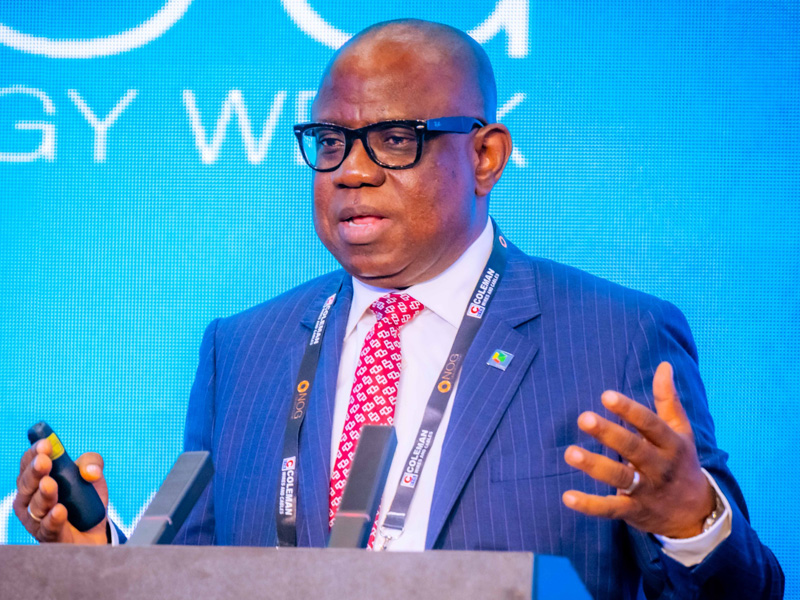
ABUJA, Nigeria - In a major policy shift with wide economic and geopolitical implications, Nigeria officially unveiled its Gas Master Plan 2026 (NGMP 2026) - a comprehensive roadmap to transform its abundant natural gas reserves into a cornerstone of national development, industrialization, and energy security. The launch, held at the NNPC Towers in Abuja and attended by government leaders, industry stakeholders and multinational executives, signifies a strategic pivot from relying primarily on crude oil towards harnessing natural gas as a key economic driver. (Voice of Nigeria Broadcasting Service)
The NGMP 2026 aims to overcome longstanding structural challenges in Nigeria’s gas sector - much of which historically suffered from under-investment, weak infrastructure and flaring of associated gas - and establish a commercially driven, investment-friendly framework that links gas production with domestic consumption, industrial expansion and export markets. (Africanews)
What the Gas Master Plan 2026 Entails
The Gas Master Plan sets out ambitious targets for Nigeria’s gas sector, including increasing natural gas production from approximately 8 billion cubic feet per day (bcf/d) today to 10 bcf/d by 2027, and 12 bcf/d by 2030. It also seeks to attract more than $60 billion in capital investments along the gas value chain - from upstream extraction and processing to midstream transport and downstream utilization.
Minister of State for Petroleum Resources (Gas), Ekperikpe Ekpo, underlined that the Gas Master Plan is not merely a policy document but a shift from policy formulation to disciplined execution, emphasizing commercial viability and robust supply networks that can reliably serve industries and power generation needs.
NNPC Ltd’s Group Chief Executive Officer, Bashir Bayo Ojulari, noted that Nigeria holds roughly 210 trillion cubic feet (Tcf) of proven gas reserves - with potential upside up to 600 Tcf - making it one of Africa’s most gas-rich countries. The plan seeks to optimize these resources to boost domestic economic activity and strengthen Nigeria’s role in global energy markets. (Businessday NG)
Among the strategic priorities of the NGMP 2026 are:
- Infrastructure expansion - building pipelines, processing plants, storage and distribution networks.
- Supply reliability - ensuring consistent gas delivery for power, industries, compressed natural gas (CNG) vehicles, liquefied petroleum gas (LPG) and mini-LNG applications.
- Domestic and export market development - linking domestic demand with export opportunities.
- Project execution and investment facilitation - providing regulatory clarity and risk mitigation for private investors.
Private Sector Alignment: Dangote, NLNG and Others
The unveiling of the plan coincided with strategic gas supply agreements between three Dangote Group subsidiaries - Dangote Petroleum Refinery, Dangote Fertilizer Plant and Dangote Cement Plc - and NNPC gas units in Abuja. These enhanced agreements aim to secure reliable gas supply for expanded industrial operations, illustrating how the master plan is already drawing private sector commitment to convert gas into real economic output.
Similarly, Nigeria LNG Limited (NLNG) has been active in securing long-term gas contracts that underpin export capacity and contribute significantly to national export revenue. While domestic gas supply constraints have posed challenges in the past, recent agreements seek to restore and stabilize operations, thus reinforcing the broader objectives of the Gas Master Plan. (Ecofin Agency)
In addition, NNPC and Heirs Energies recently signed flare-gas utilization deals with multiple firms to capture previously wasted gas - reducing environmental harm while expanding domestic supply for energy and industrial use. (APAnews - Agence de Presse Africaine)
Economic and National Implications
Boosting Industrialization and Economic Diversification
A core expectation of the Gas Master Plan is its ability to catalyze Nigeria’s industrial transformation. By offering a reliable and cleaner energy source at competitive costs, gas can stimulate manufacturing, petrochemicals, fertilizers, transport fuel (CNG/LPG) and power generation sectors - diversifying the economy beyond oil. (decadeofgas.com.ng)
Natural gas is widely viewed as a key enabler for electricity supply stability and industrial competitiveness. The current expansion of gas infrastructure - bolstered by the Midstream and Downstream Gas Infrastructure Fund (MDGIF) - aims to expand gas distribution and address historical bottlenecks in processing, storage and supply networks. (Thisdaylive)
By linking gas to domestic industries, the plan also seeks to create jobs and stimulate value-added economic activities, reducing Nigeria’s dependence on petroleum imports and volatile crude oil markets.
Energy Security and Consumer Impact
With domestic gas supply already exceeding two bcf/d for power generation and industrial use for the first time, Nigeria is beginning to shift away from erratic energy imports and unstable grid performance. Expanding gas utilization in power and households can lower electricity costs, reduce reliance on costly diesel-powered generators, and improve quality of life. (Peoples Gazette Nigeria)
The NGMP also envisions using gas as a transition fuel - a bridge to cleaner energy models - especially while renewable energy deployment scales up. While this approach garners support from industry and policymakers, some climate-focused analysts caution that over-dependence on fossil gas could delay investment in renewables. (Climate Home News)
Investment Attraction and Financial Markets
By structuring the master plan to be execution-oriented and commercially viable, Nigeria positions itself as an attractive destination for both foreign and domestic investment. Projects identified through the Decade of Gas initiative - which earmarks priority gas projects ripe for investment - could attract as much as $20 billion in new capital, create tens of thousands of jobs and accelerate industrial activity.
The plan’s emphasis on export market flexibility - particularly in compressed and liquefied gas products - could boost foreign exchange earnings and strengthen the national balance sheet.
Continental and Regional Significance
Nigeria’s Gas Master Plan 2026 extends implications beyond its borders. With the largest proven gas reserves in Africa, successful implementation could establish Nigeria as a continental energy hub, especially for West African markets where energy shortages and high costs constrain industrial growth. (afripoli.org)
Expanded gas infrastructure and production capacity could support cross-border energy trade, enhance regional integration and reduce energy deficits in neighbouring countries. Moreover, as European and Asian markets diversify away from traditional suppliers, Nigerian gas could play a pivotal role in global LNG markets, increasing Africa’s contribution to global energy security.
Challenges and Realism
Despite optimism, achieving the goals of the Gas Master Plan will face several challenges. Nigeria’s gas sector has historically been hampered by infrastructure gaps, vandalism, regulatory hurdles and financing constraints. While funds such as MDGIF are addressing midstream investment bottlenecks, coordinated implementation and policy consistency will be vital to turn ambitious targets into reality.
Further, global energy dynamics - especially shifts toward renewables and climate policies - may affect long-term demand for fossil gas, requiring adaptability in strategy.
Conclusion
The unveiling of the Gas Master Plan 2026 marks a pivotal moment in Nigeria’s economic and energy trajectory. Strategically, it places gas at the heart of national development - fostering industrial growth, energy security, and export expansion. If effectively executed, the plan could transform Nigeria into not only a domestic powerhouse but also a major driver of energy supply and industrialization across Africa. Yet realizing this vision will demand significant investment, infrastructure development, policy coherence, and alignment with global energy transitions.