Nigeria Successfully Secures Release of Three Citizens Cleared of Drug Charges in Saudi Arabia
After months of diplomatic intervention, the Federal Government says three Nigerians wrongly accused of drug trafficking in Saudi Arabia have been released. The move underscores Abuja’s commitment to protecting citizens abroad and dismantling criminal syndicates behind the frame-up.
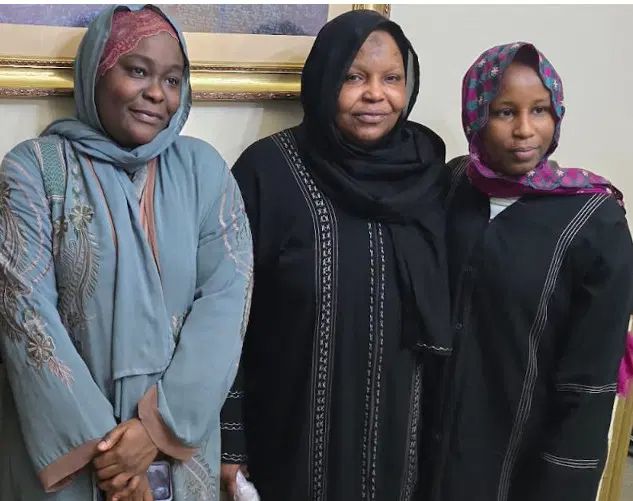
The Federal Government of Nigeria (FG) has confirmed that three Nigerians - Abdulhamid Sadieq, Maryam Hussein Abdullahi and Bahijah Aminu Abdullahi - previously detained in Saudi Arabia on suspicion of drug trafficking, have been released after investigations cleared them of the charges. (Businessday NG)
The trio were arrested in August 2025 at Saudi Arabia’s King Abdulaziz International Airport in Jeddah, after illicit substances were discovered in luggage fraudulently linked to their air tickets. According to the FG, the luggage had been tagged by a criminal syndicate operating at the Mallam Aminu Kano International Airport (MAKIA) in Nigeria, without the travellers’ knowledge.
In a statement issued on December 3, 2025, the Ministry of Foreign Affairs said that its Consulate General in Jeddah - led by Muazam I. J. Nayaya, immediately intervened upon the arrest, liaised with Saudi authorities, and notified headquarters in Abuja. The mission arranged for legal representation, conducted regular prison visits, and coordinated investigations involving the National Drug Law Enforcement Agency (NDLEA).
From accusation to acquittal: the unraveling of a drug-smuggling scheme
According to NDLEA investigations, the three Nigerians - part of a 2025 lesser Hajj pilgrimage - travelled from Kano to Jeddah on August 6, 2025 aboard Ethiopian Airlines flight ET940. The syndicate allegedly checked in six additional bags on their behalf, three of which contained illicit drugs. (ThisDayLive)
One bag belonging to Maryam Abdullahi - carrying her actual checked luggage - never arrived in Jeddah, while the extra bags tagged to her name arrived and were intercepted by Saudi narcotics authorities.
NDLEA traced the fraudulent luggage to a 55-year-old kingpin, Mohammed Ali Abubakar (alias “Bello Karama”), as well as three accomplices, including airport staff employed by the handling company involved. The suspects have been taken into custody and formally charged in Nigeria. (Nairametrics)
With this new evidence, Saudi authorities cleared the detained Nigerians. Two - Maryam Hussein Abdullahi and Bahijah Aminu Abdullahi - were released on September 14 and 15, 2025, and returned to Nigeria on November 5. Abdulhamid Sadieq’s travel ban was lifted on December 2, 2025, and the Nigerian mission is making final arrangements for his return.
FG commends cooperation, cites doctrine of citizen protection
In its Dec 3 press release, the Foreign Affairs Ministry commended the Saudi authorities for their “professionalism and cooperation throughout the process,” and acknowledged the critical role of the NDLEA and the Jeddah Consulate in securing the exoneration and release.
The ministry further invoked President Bola Ahmed Tinubu’s 4D Foreign Policy Doctrine - under which the “Defence and Welfare of Nigerians Abroad” remains a central tenet - as guiding the government’s effort to protect citizens unjustly accused abroad.
NDLEA also expressed satisfaction with the outcome, declaring the incident a landmark success for inter-agency cooperation and reaffirming its resolve to dismantle criminal networks that attempt to exploit unsuspecting travelers.
Implications: travel safety, legal oversight and renewed vigilance at airports
The case has exposed vulnerabilities in Nigeria’s aviation and travel systems - specifically, how criminal syndicates at airports might clandestinely exploit luggage-tagging mechanisms to frame innocent travelers. The FG’s swift response and the subsequent clearance reflect progress in diplomatic intervention and inter-agency coordination.
But security experts say more needs to be done: airport handling companies should face stricter oversight, passenger luggage must be thoroughly verified before check-in, and travellers should be advised to guard their travel documents closely. The arrest of six suspects, including airport staff, hints at deep-rooted criminal infiltration that needs systematic attention.
For Nigerians travelling abroad - especially pilgrims, expatriates, and migrant workers visiting countries with strict drug laws - the incident constitutes a wake-up call. It underlines the importance of personal vigilance, proper documentation, and awareness of potential syndicate activity aimed at smuggling drugs under false names.
What’s next: tracking the accused syndicate and ensuring justice
Authorities say investigations are ongoing. The kingpin, Mohammed Ali Abubakar, and other members of the alleged syndicate are in NDLEA custody and will face prosecution in Nigeria. Legal proceedings are expected soon.
Political observers note that the case may prompt broader reforms in Nigeria’s handling of national airport security, baggage tagging procedures, and international cooperation with foreign anti-narcotics agencies.
The Nigerian mission in Jeddah has also been urged to extend consular outreach - ensuring returned citizens receive psychological support, debriefing, and reintegration assistance if needed.
A diplomatic and legal win - but systemic safeguards needed
The release of Abdulhamid Sadieq, Maryam Hussein Abdullahi, and Bahijah Aminu Abdullahi marks a significant success for Nigeria’s diplomatic corps, underscoring the government’s commitment to protecting its citizens abroad. The swift identification and prosecution of the syndicate behind the alleged trafficking adds credibility to official claims of justice and accountability.
Yet the incident also highlights systemic vulnerabilities in airport operations, baggage handling, and international travel oversight. Unless addressed, these gaps risk repeating - potentially endangering more innocent travelers.
In this light, the case serves as both a diplomatic victory and a cautionary tale. It underlines the need for stronger airport security, transparent handling of luggage, rigorous oversight of travel-related operations, and constant vigilance by government, agencies and travelers alike.
For now, justice has prevailed for three Nigerians. But for millions of travelers from Nigeria, the broader fight against trafficking syndicates, wrongful arrests, and travel-related exploitation continues.